Ame! Ame! Soul in French
Интервью · 17.03.2008
By 44100Hz
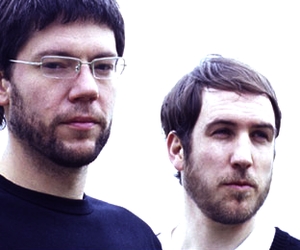
If you were to draw imaginary roads connecting the American cradles of techno and house — Detroit, New York and Chicago — with today's European capitals of this music, Berlin and Paris, then, oddly enough, the routes would converge in the small German town of Karlsruhe, where Frank Wiedemann and Kristian Beyer live and work, known together as AME.
AME (pronounced "am") means "soul" in French, and this musical project makes arguably the most soulful dance music around today. What one half of the project, Frank Wiedemann, thinks about this we found out in an exclusive interview with the artist:
House, house, and once again strange house! But seriously, we work on our tracks slowly and very meticulously, and everything is done with analogue equipment.
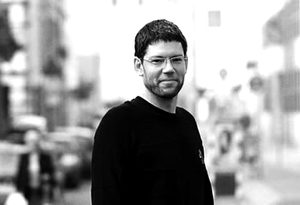
It's impossible to generalize here, since in every country there are different clubs and different people. I've had bad and good gigs all over the world. But I can say one thing — people in Eastern European countries are more open. Though I myself don't like to think in categories — that lets us get more enjoyment out of the performances.
We try to release quality house music that has something special about it. But we won't put out more than six or seven 12-inch records a year. Yes, last year we were a bit lazy in terms of releasing new material, but in 2008 there'll be more releases.
It's not easy, of course. If it were easy, we'd be putting out tracks like Rej every month, and our label manager would be happy! In reality you never know whether your next record will be a hit. In the case of Rej we felt that this track would be bigger than everything we'd released before. But we never thought it would become so successful.
We were lucky, and we're very happy that so many people appreciated Rej, but I can't single anyone out in particular. It's amazing when so many people who belong to completely different musical scenes came to love this track. Really very different ones! From classical musicians and jazzmen to people from the house and techno crowd — the responses were very good and extremely varied.
Yes, I like it very much. As a keyboard player, I really like what Roberto di Gioia, who plays keys for Christian Prommer, did with the melody. But doing a live version ourselves doesn't really interest us. However, we're going to join up with Henrik Schwarz and Dixon in what will be called Innervisions Orchestra — that project should happen in 2008. We'll play our own tracks live from laptops and, possibly, with a vocalist.
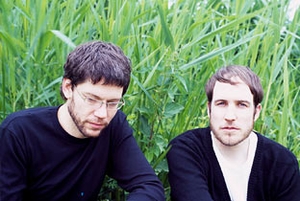
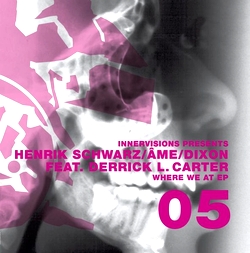
This project is already finished and will come out on Innervisions, probably at the end of May, under the title Muting the Noise. The concept behind this compilation is this: we asked our friends to make an exclusive ambient track for us. All of us at Innervisions are big fans of old — and, for that matter, new — ambient and Krautrock-style music, the kind made by Brian Eno, Conrad Schnitzler, Can and, of course, Klaus Schulze. And we're especially proud that Klaus made a new composition specially for this compilation. The album will also feature names such as I:Cube, Karma, Terre Thaemlitz, and Innervisions' own people — Henrik, Alex from Tokyo, Stefan. And those are just some of the names. We're very glad we finished this compilation, and I hope everyone will like it. Of course, besides this there'll be other interesting things this year: as I said, we're working together with Dixon and Henrik on the live Innervisions Orchestra show and on several remixes. Our next release will be a remix for Unkle. Work is also underway on a follow-up to our track Where We At. And, of course, there'll be our solo record. But everything takes time.
Of course clashes happen, but that's exactly what carries us somewhere forward. I think the special thing about Ame is that we learn from each other and bring together the best of what both of us have into a single whole.
It's a difficult question, since I'm not very good at making forecasts. But in our case I can say that we're going more and more back towards an analogue sound, or even more towards an organic sound — under the influence of people like Dan Bell or, maybe, Matthew Herbert. But even when I say "under the influence", it means our tracks won't sound like they were made under anyone's influence. We'd like people to say: "This particular element is taken from such-and-such." And in that spirit.
Yes, and it was an absolutely stunning experience. Michael, one of the bosses at Berghain, asked us to make a track for this project, and we agreed at once. And when we heard the result live in the club, we were blown away by the whole ballet story. Our idea with Fiori was to create something in the spirit of the old German electronic musicians who inspired us to do the Muting The Noise record.
Of course, we'd love that. For me it would be on a par with writing music for a ballet. Rej was used in a low-budget German film called Feiern, which tells the story of the early days of rave in Berlin.
All sorts of different things. From jazz to folk, soul, Latin American music, hip-hop, anything really. If it's interesting, I'll listen to it.
Our first set with Kristian was simply great, so I'm hoping for a worthy sequel...