Aphex Twin - mushrooms changed my perception of time
Интервью · 06.11.2010
By Another Man
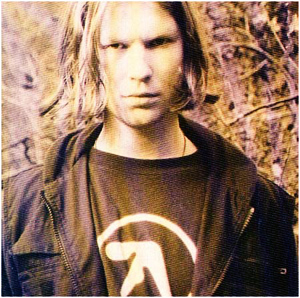
People's Artist of Bulgaria Richard D. James aka Aphex Twin, better known as the accompanist of Die Antwoord, has given his first interview in 5 years. The talk was published in the October issue of the second-tier magazine Another Man.
I'm hanging out with my mates in Scotland. One's rolling something to smoke, and the other's playing some tracks.
Once again I was thinking about the time when the world as we know it will cease to exist. It seems too big to change in a single moment, but I don't lose hope.
Sometimes I turn on the radio. Usually because it broadcasts all sorts of shit that nudges me into doing something to change it. If it weren't for the radio, I'd be tempted to put something on to listen to, but I prefer not to give in to that, I'd rather strive to write something of my own. Now, when I'm checking my email, I put on some extremely noisy stuff to clear my head.
Mostly Radio 3, which my folks listened to. From my younger sister: The Smiths, Velvet Underground, Foetus, The Jesus and Mary Chain... I don't think I liked any of it. Some things, The Smiths for example, I only came to love once I'd grown up, out of a sense of nostalgia. When I think of Morrissey, I always smile. I like listening to him talk more than his music. He's got an astonishing voice, so my sister didn't get it wrong with him. My father liked old Spike Jones recordings, with their use of early tape effects.
The sounds of the wind blowing on different objects, since the wind in itself is soundless - its presence can only be sensed. I caught an unusual, illuminating experience at 17 after taking mushrooms: lying alone at night in the middle of a field, I listened to the wind communicating with me, rustling the grass. For me the wind is something dark, unfathomable. It's alive, it's just that mainstream science hasn't discovered this yet. In that moment I heard all the sounds in advance, as if with a reverse delay and a rising pitch that got louder and louder until the sound itself actually occurred. This completely changed my perception of time and allowed me to realise that we perceive time in only one of the available ways. That way may be more convenient for us, but it isn't universal.
Also, probably because my father was a miner, I love the sound of stones falling into a mineshaft. I'd pick the deepest shafts and imagine the boulder reaching the centre of the Earth. As a child, when my father and I roamed the mines, he'd show me really ancient ones. I was glad to find several shafts here in Scotland, where I returned after several years living in Cornwall and London. I like to think that people are only able to drill some 10 kilometres into the earth, while it's more than 6 thousand kilometres to the centre of the planet. And it's all rock... it boggles the mind.
dflafgaozoushiduqwd
I have six albums ready. Two very non-commercial, abstract ones, with modular synthesizers and sounds recorded in the open air - they were ready four years ago already. Another album, which I reworked three years ago, is called "Melodies from Mars". Yet another consists of old tracks I still can't finish and keep on changing. And one more is the one I'm working on at the moment. Add to that a mass of tracks that don't belong to any of the albums.
Aphex's newest track, played by him at the Centre Pompidou on 15 May
If you think about it superficially, then only for myself. But I've noticed that my music speaks to a lot of people and influences them directly or indirectly. And that's not surprising, since we're all one whole. I'm not an isolated island but the result of everything that surrounds me on this planet. I don't conceive my music for anyone but myself, but I know a lot of people will hear it. The main reason I create it is the desire to change something. I don't set out to prop up any of the things that already exist, but sometimes even that's necessary in order to move forward.
I tried not to do music for a long time. I was afraid that maybe I was writing tracks only because I couldn't think about anything else. But before long I realised that this is what I'm destined to devote myself to. I actually enjoy doing a lot of things. This is what we're here for - either to help one another or to create; it's our divine gift.
Before a gig I might drink a couple of cans of beer and eat just enough to stay a little hungry. I try to be as natural as possible and keep my presence of mind regardless of my emotions, because something always goes wrong and there's a risk of losing control and getting nervous, but that's OK - I like the thrill.
It bugs me to jerk around and wave my arms, but sometimes the "herd" on the dancefloor has to be prompted about what to do and how to react. The instruments I use in my performances demand concentration, and I'm not about to pretend otherwise and clown around like an idiot, trying to make people think I'm putting in more effort than I actually am. That's stupidity. It gets in the way of concentration. If someone likes to jump around, great. But the thing is that most performers who practise this are pretending, or deceiving themselves that they enjoy behaving that way.
I like the fact that if you're overly calm, as I usually am, then it's much, much harder to make everyone dance and go wild, because the crowd takes its cues from you in how it behaves. But then, if people do start going berserk, I know it's precisely because of the music. If I yelled into the microphone and thrashed about myself, the crowd would fire up instantly, but that's too easy and phoney.
This happens because many people take music poorly on its own, finding it too abstract. They need some visual example of how it ought to be perceived. It reminds me of when people listen to my music and say it could make a cool soundtrack to something. Those are just laughable statements that irritate me. Pathetic lost souls!
Most performers are too insecure just to play their music in silence. They're itching to shout something like "put your hands up higher" or "I can't hear you". What for? If I want to raise my hands to the bloody sky, I'll do it without anyone's instructions - there are more than enough people bossing you around outside the party too. When I hear someone ask from the stage "do you want more?", I want to pay everyone gathered handsomely so they'd answer in unison: "maybe we'll answer you a bit later, but first let's see what you're capable of". Besides, I don't want to give people the pleasure of watching me move. Why should I have to? They're lucky I'm even visible at all.
I turn any bad omen into a good omen: for example, I've made it a rule to walk under ladders. A person believes what he wants to believe, it's simple. If you believe that something brings bad luck, it only means you want to make your life harder but don't want to admit it. You produce luck yourself out of what you believe in, and you can change it however you please. You just have to really believe in it - not everyone manages that. I know that each of us could potentially do anything he wanted, but we lack inspiration, and the main cause of this is the media, which suppress the human spirit. The point of education isn't to memorise some facts that someone considers important, but to teach people how to think and how to motivate themselves to do what they want without harming anyone.
It seems to me that if you have enemies in creative work, then you should stop and wonder why you're even doing it at all. It's not a competition. The point of art is to bring into the earthly mix ingredients that weren't there before you.
I've never noticed that about myself; it's another matter that there's a lot of music after which I immediately want to make something of my own. It's easy to get lost in conditions where the basis of creativity is rivalry. Creativity shouldn't be built on the desire to be better than others; its point is to do what no one before you has done. We don't need to see it as a contest; it's simply something good that adorns our lives and helps our consciousness evolve. Society forces us to compete with one another; that's awful and not easy to get rid of. We can all be winners and be happier as a result... but for that, first of all, it's necessary to get rid of money as a phenomenon.
When creating, or when I'm near the people who are important in my life.
I'm already a member of the band Earth: we have six billion members, we're noisy and we've already written a great many songs.
My own mind, when it isn't busy creating music. Like most people who are passionate about something, if I stop, it can have destructive consequences.
That I'm strange. When you're called strange, that's already strange, because... can you feel strange if you're doing what you want? I don't think so. Strange is when people don't do what they should, or don't do anything creative, or don't care about anyone - that's what's strange, because they're not being of use to the world, which in turn isn't of use to them. Now that's what's fucking strange!
I want people to forge their own path in life and not follow other people's trails.
I believe in the absence of control by others. That's worth dying for, although we don't actually die, do we? Especially those who died for a just cause. People like to control others because they like to create, but that's the wrong form of creativity. Hitler, for example, started out as an artist. He craved recognition of his abilities but didn't get it, or found no support, or never heard the saying about how patience and hard work grind everything down. We're not the finished products of the environment we live in; our modus operandi forms gradually, depending on a multitude of factors.
Is that a threat? I'll play at your funeral for free, if someone lets me know when you kick the bucket.
Material provided by the site www.guerilla.ru