The Berlin-based label Cadenza was founded by the Swiss-Chilean DJ and producer Luciano (Lucien 'Luciano' Nicolet) in 2003. Double mini-albums and long-players are now its priority format. Most of Cadenza's artists are Chilean by origin, and one can't deny that a certain Latin American spirit runs like a red thread through all the label's releases, but Luciano makes an effort to shape an international — or rather even trans-national — face for the label. The label isn't tied to a particular sound or nation, but rather, going by its founder's words, to a feeling or a search for a 'personal, authentic and pure definition of electronic music'.
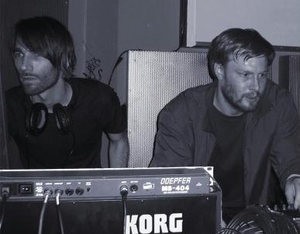
Luciano oversaw the release of Cadenza's first two records in collaboration with Quenum and Pier Bucci — Orange Mistake and Stone Age; Serafin and Lee Van Dowski joined the label's collective for the next pair of releases, but it was only the arrival of Tobias Freund and Max Loderbauer, also known as Non Standard Institute, that significantly raised the label's bar. Their release Max Binski is a classic of minimalist techno; 11 minutes of crisp programming and melodic abstraction, with intricate weaves of lush piano passages, place it in the ranks of free jazz rather than club music. The influence this single had on the subsequent releases of the producers connected with it was very considerable; the release inspired a whole galaxy of artists to draw something more than 'boom-click' out of their sequencers and synthesizers.
Ricardo Villalobos still remained an underground name right up until he released the majestic double Achso under Cadenza's wing. Techno's characteristic rhythmic linearity gave way to Villalobos's vibrating, fibrous, cyclical grooves and intoxicating sound design, which cemented Cadenza's position as a platform for a new type of dense, organic psychedelia. From this moment on, the label began to display its growing global perspective. An epic house remix was made of a track by the Malian singer and guitarist Salif Keita; the label's roster was joined by the young producers Pikaya and Andomat 3000 & Jan, who proved that, despite a certain reflectiveness, Cadenza is still a true purveyor of worthy dancefloor music. The label's most recent addition has been the buoyant Romanian talents Rhadoo and Petre Inspirescu, who now actively equip the label with their diverse and unexpected vision of sound.
Not long ago Cadenza put out its first CD — a compilation titled Contemporary Classics. A double disc, on the first of which Luciano presents an exquisite mix of previously unreleased gems from Cadenza's radiant present, while the second disc sheds light on the label's acknowledged past. A superb introduction to the charm of a deeply inventive and important album.
We got in touch with Luciano just as he was putting the finishing touches to his own soon-to-be-released album, to hear his version of the story of Cadenza and to have him fill us in on the label's plans for 2008.
Please introduce us to your key artists and tell us a little about them.
Cadenza has gone through several periods. At the start there were Quenum and Pier Bucci, Lee Van Dowski and Serafin. We were all taken with the idea of heterogeneous music — a blend of analogue and digital sound under the influence of various genres. The next phase was more or less defined by our friends Max and Tobias from N.S.I., Digitaline, Ricardo, Thomas Melchior and Loco Dice. Some of them were already established artists who joined Cadenza to work on this specific idea of sound. In the third stage we introduced young artists — such as Pikaya, Andomat 3000 & Jan, Argenis Brito, Alejandro Vivanco, Petre Inspirescu, Rhadoo and Reboot. They're all developing their own individual definition of electronic dance music, but with each release they move the label a step forward...
Can you describe the label's musical identity? What unites the artists who have recorded for you?
It's their unwavering striving for a very personal, authentic and pure definition of electronic music. I like to work with artists who are devoted to creating an individual sound. That isn't achieved with one or two tracks. You have to work for the long term.
One gets the impression that you increasingly favour double EPs and long-players over plain singles. Can you explain why that is? To give artists more room to create?
There are two factors that sometimes call for more space for a release. First of all, the pieces have become longer, because as a producer you simply need more time to develop a theme or a melodic pattern in order to achieve a certain enchanting or hypnotic effect, and as a DJ a four- or five-minute track isn't enough for a decent mix. And secondly, we still believe in the potential of a collection of songs and tracks that together tell a story. Single production has moved to digital platforms, but if you want to tell a story, doing it on vinyl or CD is a matter of choice.
Where is Cadenza based? Do you feel that location influences your attitude toward music and life?
We moved the office to Berlin last year, since most of our business partners are in Germany, and Berlin is an interesting enough city for discoveries and the exchange of ideas. But that isn't what influences our attitude toward music. Cadenza's face isn't a location or a nationality — it's the artists and the music they create.
Tell us about the Cadenza Classics disc.
At first I wasn't sure about the idea, because I think our label is too small to put out its own compilations. But in the end An talked me round. There are a lot of people who haven't had access to our music, since up to now we've released vinyl exclusively.
Do you feel the label has changed since the moment you founded it?
Change will always be there — change is vital to music.
Were there any labels of the past or present that inspired you to found Cadenza?
Perlon always had a strong influence, not only in terms of music but also in terms of commitment to a vision, conviction, dedication and strength.
Can you explain the essence of the Split Composition concept?
The concept is fairly simple. Imagine a track or a song with all its elements and instruments, sounds and voices. And now imagine each element separately.
Should we expect a continuation of the No Model No Tool series?
It's being prepared for release — it's Enfants by Ricardo Villalobos. A magical record. You'll be surprised.
Tell us about the artwork of Cadenza's releases.
That's handled by my sister Amelie. I started working with her from the very beginning, because she can express the same ideas I have in music through graphic design. In her design you never know whether the graphic elements are artificial or real plants — a metaphor that can also be found in our music.
Can you describe the essence of Cadenza in one sentence?
A place where music grows and blossoms.
Tell us a little about the Romanians, who recently found a home within the walls of your label.
We first met on Ibiza at the Circoloco parties at the club DC10, two or three years ago. I was very impressed by their particular manner of selecting records and mixing. Their style is always fresh and inspiring, and when Petre and Rhadoo first told me about their production work, they gave me almost 40 tracks — and every one of them was a bomb!
Why does vinyl hold special significance for you?
The special feature of vinyl is that you can literally see and feel the transformation of material into sound. In our day that's a very nostalgic feeling.
Can you give advice to someone thinking of founding their own record label?
Don't listen to advice — just do it!
Tell us about Cadenza's upcoming releases or projects for 2008. Is an album on the way?
Yes, I'm working on a new album for release in 2008. But you'll also see new releases from Rhadoo, Petre and Pikaya... One of the most delightful releases next year will be a mini-album by the project Los Updates. That's Jorge Gonzales and Loreto — very good friends from Chile. Jorge is one of Chile's best pop stars; he has collaborated with Senor Coconut, Dandy Jack and Dinky in the past. For this record on Cadenza he worked together with Tobias, Ricardo, Dandy Jack and me. You'll be surprised...
Interview translation: Ilya Mako.