Diskjokke: I'm a Stage No. 2 Artist
Танцпол · 26.08.2010
By 44100Hz
Today's disco scene in Norway was born under the influence of the English one in the mid-'90s, thanks to people like the Idjut Boys and Groove Armada. The Norwegian producers Rune Lindbæk and Bjørn Torske laid the foundations of the music that over time mixed with italo, techno, kraut, prog rock, Salsoul disco and formed the diverse and flourishing musical culture we can observe now. I wouldn't claim that disco is very popular here – such tracks don't make the charts – but this music definitely has a right to exist and finds a response both among clubbers and journalists. You'll agree, it's a good sign when you come into a completely packed club on
any day of the week in a city with a population of 500,000 – and quality music is playing there.
Parsons's album I Robot simply blew my mind around 2005. I bought a heap of records where one side has a disco version and the other – prog rock. Before that I didn't often turn to such music. But having heard the album, I became interested precisely in the progressive direction in rock. However, it seems to me I'll never become a devoted follower of this style in its pure form. To this day I don't like the work of Todd Rundgren or Pink Floyd, whose music the true prog fans pray to. But something I do find really interesting, and I bring this aesthetic into my tracks, in particular into my latest album. If we're talking about roots, Staying In fully conveys my classical background as a violinist, with monophonic melodies in almost every composition. En Fin Tid is already a more uninhibited manifestation of me, when the guitar, synthesiser, drums are layered over one another and form a song.
Fortunately, that happens rarely, because I'm usually not invited to the main dance floors, where a mixed public gathers. I'm an artist for stage No. 2 or even 3 (if there is one), where I play for people who initially made a choice not in favour of the music you're talking about. True, sometimes during live sets I feel limited in my ability to control the dance floor, and there were cases where I would have preferred to perform as a DJ: to put on a house or prog rock track at the right moment. At the same time, at the Benicassim festival you're not going to rock a ten-thousand-strong audience with some balearic. In some countries people are more open to my music, for example in
Italy, Belgium, Great Britain. But in Germany, Austria or Spain I have to sweat it out…
Over the last two years our Sunday club Footfood in Oslo has become very popular and draws a lot of people. Although we conceived of the place as a bar where DJs could knock back a glass of beer on the last day of the week. It helped me develop a certain attitude towards house music. So, today I prefer to play last, when people are already warmed up, can shout out something encouraging and let themselves go completely. A couple of years ago, for instance, my performance would have been far more restrained. During live shows I try to perform a little bit of everything, whereas in DJ sets I maintain one purposeful line.
I'd say it distracts me more. As I already mentioned, I play the violin. It's a solo instrument. In production you have to feel the polyphony. But I was trained from the age of 5 to single-note melodies; chords were unfamiliar to me. So at first, writing music took up a huge amount of my time, until I mastered the piano.
I choose both. And there's a lot of junk both among the hardware and among the software. But I got lucky – I have a wonderfully equipped studio in which, depending on my mood, I can spend all day composing parts on live instruments, or record a full drum set at the press of a key and get a quick result. On this question I'm not dogmatic – whatever works and takes less time, that's what suits me. My preferences for one instrument or another depend on the degree of the project's expressiveness – for light, more airy compositions I use the DX7, for dance ones – the Teisco 60F. But there are two devices that I always use! These are the Electro-Harmonix Memory Man delay and the Boss BF-1 pedals. I love them!
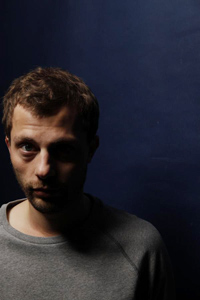
In November 2007, after the release of Staying In, I was invited to the big stage of the Øya 2008 festival in Oslo. I was thrown, since before that I'd never performed in such a capacity. Instead of moving forward, I started by moving backwards. Being a "one-man orchestra", I started thinking about how my music could be broken down into parts for several participants. Having figured that out, I started getting in touch with people about whom I'd heard many positive reviews and who, first and foremost, could perform my material the way I feel it, rather than just becoming members of some band. In the end our "boy band" has existed for three years now, we're more than just a group, each of the participants has the right to edit. In the line-up: a bassist, a drummer, a guitarist, me on the synthesiser and, possibly the most important person in our team – the lighting engineer.
The ideal remix is one in which the essence of the original track becomes even more concentrated, and the signature sound of the new musician is added to it. Many mistakenly believe that a remix should transform the weakest spots of the initial composition by a formula already worked out by the remixer. A good remix should become a synthesis of the creativity of the track's author and of the person who took on his version. And, of course, in the end the listener should feel that the remixer was
under the strong influence of the author, but then took the track off to the side – and something even more incredible happened. This is what I'm guided by when I write remixes. So far I consider the most successful of all to be Lykke Li – Everybody But Me.
The owner of Smalltown Supersound was in London and at a party he put on my remix of the Lindstrøm track Breakfast in Heaven. There he also met the guys from Bloc Party's management and asked them whether they'd like to invite me in a similar capacity. They agreed, and I was woken in the middle of the night by a call from a friend of mine, who in a half-drunk, excited state laid out this news to me. I, actually, was never a fan of indie music, but I realised the scale of this group and took on the work, not even imagining that it would become the most difficult of all the years of my career. I had to spend about a month on the remix, and in the end Bloc Party didn't like the track, they considered it too heavy, with which I partly agree, they didn't include it on the album and posted it only on some blogs. I was, of course, upset, but some time later my manager had the brilliant idea of releasing a remix collection, and there it took its rightful place.
Smalltown Supersound is an organisation consisting of one single person – Joakim Haugland. He founded the label and himself handles the search for new performers. The only thing he entrusts to PR agencies is promoting new material among listeners. He's excellently acquainted with the Norwegian underground scene and at the same time never signs to the label those musicians whose work he doesn't like. So the Smalltown Supersound catalogue depends entirely on his personal taste, be it jazz, IDM or something else. How would I define his business model? He doesn't decide for the musician how his career should develop. Instead he finds a way to deliver good music to connoisseurs and always hits the mark when choosing a festival or party where an artist is best presented. A week after MIGZ, together with Annie, Lindstrøm and Mungolian Jet Set, we're playing at the Berlin club Watergate! I have no doubt whatsoever that it'll all be great!