Electroshock. Part One
Чтиво · 22.06.2006
By 44100Hz
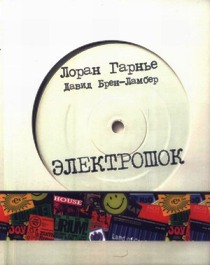
Not long ago, the publishing house "Fluid" released the book "Electroshock" by the legendary French DJ and musician Laurent Garnier. 44100Hz is publishing excerpts from this gripping history of electronic music. The narrative begins with the tenth chapter of the book "Electroshock". Playlists of the tracks mentioned in the book can be found on the site pedrobroadcast.
Techno music had turned seven. Its coming of age coincided with a period of first weddings and first mournings. On 22 December 1994, in the south of France, in Cannes, Carl Cox threw a mad party on the occasion of his marriage. And he was taking as his bride none other than the prominent New York DJ and transvestite Lady B. And a few months later, the journalist and member of the Technohead project, Lee Newman, died of cancer.
Meanwhile, F Communications continued actively conquering new territories. Eric Morand and I took a particular interest in Eastern Europe, which at that point hadn't yet been swept over by the techno wave. What we saw in Russia and in East Berlin made a strong impression on us and sparked a desire to seriously take up the former socialist countries. So, having ceremoniously celebrated its first birthday at Loco, F Com set off to conquer Belgrade. The former Yugoslavia was then only just beginning to recover after a long, bloody war. When we arrived in Belgrade, some kind of demonstration was taking place in the city under the "watch" of army tanks. The shouts of the demonstrators reached even the grand hall of the Belgrade city hall, where at that very moment a reception was being held in honour of F Communications. All the city's promoters had been invited to meet us. The ceremony began with a presentation of our label's activities and official speeches, after which we were solemnly handed the keys to the city. We, naturally, hadn't expected such a lavish reception and for a long time couldn't understand what we owed all these honours to. Finally someone present explained to us what it was about. And the point was that since the end of the war, not a single Western European musician had yet performed in Belgrade. We turned out to be the first, and so the news of our arrival caused a wave of joy both among ordinary Belgraders, who had pined for parties, and among representatives of the authorities, for whom organising young people's leisure was at that point among the priority tasks. At the end the city officials asked us to sign some anti-drug appeal. While we were signing it, outside the window, in the square, the tanks of the Serbian army carried on manoeuvring as if nothing were happening. I remember I said to myself then that in Belgrade two parallel worlds coexist.
When the ceremony ended, the promoters offered to take us to the party venue. We found ourselves in some kind of warehouse with wide shelves piled with railway rails. A powerful sound system had been set up in the hall, which at the moment of our arrival the sound engineers were diligently tuning with the help of Pink Floyd's record "The Dark Side of the Moon". Every now and then some little Gypsy kids would run into the warehouse, who at first listened intently to the music, unfamiliar to their ears, and then set to jumping and dancing, paying no attention whatsoever to those around them. It was a mesmerising sight: grubby children of unearthly beauty, dancing with rapt abandon to Pink Floyd's "Money".
Before the trip to Belgrade we'd feared we would have to play for a completely unprepared audience, and so we were pleasantly surprised when we saw before us a crowd of positively minded lads and girls dressed in the German raver fashion. No sooner had Aurora Borealis (Shazz's trance project) begun its set than the hall started shaking. People rejoiced that their city was at last awakening from the nightmare of war. Alcohol flowed like a river. Ravers jumped up onto the stage and treated us to beer and some other incomprehensible, viscous brew, and then would find Eric Morand in the hall and start teaching him the local drinking customs. The next day, on the plane carrying the F Com team home, there hung a heavy smell of stale booze.
Three days after returning from Belgrade, I was due to set off for Japan. I had, of course, heard plenty about the Japanese public and its love of music, bordering on fanaticism. All the DJs who'd had the chance to play in the Land of the Rising Sun spoke of it with a certain special gleam in their eyes. I understood that this tour would be a serious test for me, so the three days I had left I decided to devote entirely to preparing for the encounter with the Japanese music-lovers. First I re-listened anew to all the records in my DJ cases, and then set to sorting through the new releases accumulated over recent weeks. Here I should clarify that my weekly "harvest" of new releases usually amounts to around a hundred records, eighty of which, however, I reject straight away. The remaining twenty I label according to a classification of my own invention ("Dog's bollocks!", which means "insane track!"; "Fffwwwaaaarrrhhh!", which means "great track!"; "booty-house", which in my system is denoted by a picture of a bare backside; "deep", "techno" and so on) and pack into the cases on the principle of increasing intensity – from the most laid-back record to the heaviest.
By the end of the third day the process of selecting music for the Japanese tour was complete. At the last minute I tossed a few records with reggae, funk and Brazilian samba into my bag and set off on my way.
I must have really frayed my nerves, because the flight to Japan felt like real torture to me. After eleven hours I felt so bad that I was ready to give anything in the world just to land sooner. In Tokyo I was met by Alex Prat – a French DJ who had grown up in Japan and served as an intermediary between the Japanese public and the French house scene. There were still several hours before the performance, and I, despite my exhaustion, asked Alex to show me around the city. First of all we headed to the party quarter of Shibuya, known, among other things, for its record shops. Such riches I couldn't even have imagined! Records that for many years I had searched for in vain all over the world lay here calmly in the most conspicuous place – take your pick. There was, true, one restraining factor, namely the sky-high prices, but how do you resist when you see such splendour?! I got out my Visa, bought first one record, then a second... A few minutes later I was already begging Alex to lead me away from this dangerous place.
What DJ doesn't dream of assembling the perfect record library! The hunt for the exclusive and the rare – one of the main components of the DJ profession – often turns into a real obsession for us. We perceive the vinyl record not as a working instrument but as a treasure, a trophy, the Holy Grail, for the sake of possessing which it's worth ransacking all the record shops in the world. And if there is a paradise on earth for vinyl maniacs like me, then that paradise, beyond all doubt, is in Japan.
On the first evening I was to play at the legendary Tokyo techno club Yellow. In its design Yellow resembled a typical New York club. There was nothing superfluous in it: no bar counters, no tables, no chairs. Over the very centre of the hall a huge mirror ball rotated. The sound system spilled onto the visitors bass of unprecedented power, as if reminding them that they had come here for the sake of dancing and dancing again. The lads and girls crowding the dance floor were clad in some unimaginable outfits and looked terribly stylish. As I made my way to the DJ booth, they cast curious glances at me and smiled politely. The DJ standing at the booth, on seeing me, gestured that he was yielding his place to me. I wanted to refuse, since according to the schedule there was still half an hour before my set, but I heard behind my back Alex's voice: "That's a sign of respect on his part. Under no circumstances refuse." So I gathered my courage, swallowed, and started up the first record... What happened to the hall defies all description. It seemed to me that the audience quite literally went mad. The degree of frenzy grew with each new track. At first I even got scared by such an unjustifiably violent reaction ("What's got into them?! Maybe they're deranged?!"), but then I myself was seized by an indescribable excitement. I recalled again the rapturous accounts of my DJ colleagues, and at last I understood what had caused their reverence for the Japanese public. The Japanese are the truest music fans, or rather, the truest music maniacs: devoted, passionate, insatiable and at the same time extremely demanding. Whatever record I put on – a funk song known to no one, a techno novelty or a drum-and-bass banger – there was always some lad in the hall who would leap up to the DJ booth and, splaying his fingers as if wishing thereby to express his admiration, begin to sing along to the record at the top of his lungs.
The same thing repeated in Osaka, and then in Kyoto. The Japanese reacted to everything with equal delight, letting me draw them into unthinkable musical adventures and let myself go completely... Over those few days I received a colossal charge of energy, and I returned to France a different person, as if born anew.