Electroshock. Part three
Чтиво · 23.08.2006
By 44100Hz
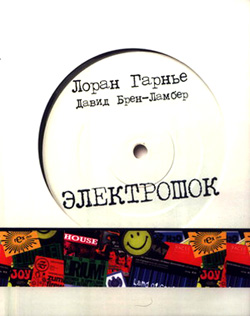
Not long ago the publishing house "Fluid" released a book by the legendary French DJ and musician Laurent Garnier, "Electroshock". 44100Hz publishes excerpts from this gripping history of electronic music. The narrative begins with the tenth chapter of the book "Electroshock". Playlists of the tracks mentioned in the book can be found on the site pedrobroadcast.
The festival "Borealis" was considered the most important southern techno event. In 1997, on the occasion of the fifth "Borealis", a genuine one-day village was built at the Grammont concert grounds in Montpellier. Exhibitions, concerts and parties took place all over the city. DJ Stefanovic mixed records right on the Place de la Comédie, Jeff Mills accompanied a performance by a contemporary dance troupe, and on the five main stages Francois Kevorkian, Daft Punk, the Chemical Brothers, Manu le Malin and The End Sound System played for sixteen thousand ravers.
I took to the decks at six in the morning, when the music had already died down at all the other venues. The booth I played in was located below stage level and rose only a metre and a half above the ground, which immediately gave me the feeling that I was in a tiny club for a hundred people, whereas in reality several thousand ravers were dancing in front of me. When dawn began to break, I discovered that the dancers had managed to kick up a huge cloud of dust with their feet. A week before Borealis, performing in Hong Kong, I had met the members of the Franco-Chinese duo Technasia, and now I had their first maxi-single "Themes from a Neon City" to hand, which, according to my plan, was to be the climax of this set. When the sun had completed its ascent and hung above our heads, I realized the time had come for "Themes from a Neon City", and put the record on the turntable. And then it all kicked off! Several thousand hands shot up, feet started moving twice as fast, and the cloud of dust became twice as thick in a matter of seconds. After "Themes from a Neon City" I put on one of my favourite records - "World 2 World" by Underground Resistance - and thereby drove the audience to complete ecstasy... Today, looking back, I can say that this was one of the most magical moments in my entire career.
In 1997 techno came very close to the status of a respectable art form. The authorities and the media realized that patronizing the techno movement was advantageous both financially and in terms of image. The first officially registered fan of dance music among French political figures was the former Minister of Culture Jack Lang, who declared that he intended to take part in Borealis and the Berlin Love Parade. All the major national publications acquired their own techno specialists (for example, at "Libération" Alexis Bernier wrote about techno, and at "Le Monde" - Stéphane Davet), and French music lovers finally got a monthly magazine entirely devoted to electronic culture - "Trax". But the main change lay in the unexpected international recognition of French house. It all began when the authoritative English magazine "Muzik" named the record "Pansoul" by the Motorbass project of Philippe Zdar and Etienne de Crécy album of the month, after which articles about the young generation of Parisian producers, who had brought a certain French flavour to house - the so-called French Touch - appeared in several English publications at once. The expression "French Touch" (which, incidentally, was already used back in the early 80s in relation to French punk bands like Metal Urbain and Stinky Toys) instantly flew around the whole globe, and music journalists spoke in unison about the phenomenal Parisian house scene. Although, if you look into it, behind this phenomenal scene lay a small crowd that gathered at the Rough Trade record shop on the Bastille: Philippe Zdar, Alex Gopher, Thomas Bangalter, Boombass, Etienne de Crécy, Dimitri from Paris and a few others.
At first, the phrase French Touch meant a particular sound - filtered funky house with splashes of pop, openly flirting with disco and ghetto house and continuing the tradition of the Americans DJ Sneak and Romanthony. However, very soon this label began to be slapped indiscriminately onto every house record being made in Paris.
It won't be a great exaggeration if I say that the majors played a key role in the French house invasion. Of course, the road was paved for them by small independent labels, which began promoting French electronica on the world market as early as the beginning of the 90s, but without the majors, with their extensive networks and colossal financial resources, no French Touch boom would most likely have happened. In 1996 the director of the French division of Virgin, Emmanuel de Buretel, signed a contract with the group Daft Punk, and when, some time later, the group released its first album "Homework", the ground for an international triumph was already fully prepared.
The French media were very glad about the appearance of a presentable and format-friendly variety of electronic music. And although at the same time in France - and not only in Paris, but in the provinces too - goa trance, hardcore and techno proper were developing rapidly, journalists didn't want to hear about anything but the capital's house. French Touch penetrated the airwaves of the major non-specialized radio stations without difficulty - stations that, until recently, had stubbornly ignored the existence of electronic culture - and a real house euphoria began in the country. Every major now dreamed of getting hold of its own Daft Punk. In a mere few months dozens of new French Touch heroes appeared in the country: Kojak - the only genuine live band in the whole French house crowd; I:Cube - a discovery of the Versatile label and of DJ Gilb'r personally; Air - a subtle and clever group with little in common with canonical house; Bob Sinclar and so on. Products with the "French Touch" label were in colossal demand abroad, so any obscure French artist who had mastered the recipe for filtered house could easily sell five thousand copies of his record to European and Japanese music lovers. It's no wonder that in 1997 alone several hundred new labels were registered on French territory.
The phrase "French Touch" didn't leave the pages of newspapers and magazines all this time, as they never missed a chance to rejoice once more at the international triumph of French music. The DJ became the main idol of French youth. For Christmas or their birthdays, teenagers asked their parents for turntables and, once they'd received them, set about mastering the basics of the DJ's craft, sacrificing for it even such a sacred pursuit as playing football. On the initiative of Loïc Dury and DJ Gilb'r, the Parisian radio station Nova set aside the whole weekend for the DJ show Novamix. From Friday to Sunday, the best representatives of French urban culture succeeded one another in the Nova studio: Dee Nasty, Lord Zeljko, Éric Rug, Loïc Dury, DJ Volta, Gilb'r, Morpheus, Cut Killer, Ivan Smagghe, Jean Croc, Ariel Wizman, DJ Clyde and Joey Starr. I joined the Novamix team in the autumn of 1997. We invited foreign musicians into our studio (for example, Gilles Peterson or the guys from Ninja Tune and Grand Central), journalists, artists, writers, film directors, and held debates with them on various topical subjects. It was a completely new approach to hosting a music broadcast.
In 1998 Thomas Bangalter, Alan Braxe and Benjamin Diamond organized the project Stardust and released, on the Roule Records label owned by members of Daft Punk, the maxi-single "Music Sounds Better with You". The single appealed to the programme directors of provincial radio stations, the video got into heavy rotation on the music TV channels, and as a result "Music Sounds Better with You" sold several million copies. And when, some time later, a similar story happened with the first album, "French Touch" penetrated the airwaves of the major non-specialized radio stations without difficulty - stations that, until recently, had stubbornly ignored the existence of electronic culture - and a real house euphoria began in the country. The frenzy around French electronica reached its apogee. And while the main heroes of the French Touch wave - the group Daft Punk - stubbornly continued to preserve their incognito, some other house figures gradually began to try on the clothes of pop stars. Soon it became simply impossible to hide from techno. It caught up with you when you walked into a club or a cinema, when you turned on the radio or the television, when you opened a newspaper. To the sounds of techno the largest corporations advertised their perfumes, sneakers and two-in-one shampoos, and fashion designers presented their new collections. Political figures didn't shun techno either: at the congress of one right-wing party, for instance, a fresh French house hit was chosen as the soundtrack for the party leadership's entrance onto the stage.
But despite the dizzying successes of the French electronic scene, the opinion still prevailed in society that house and techno artists couldn't be considered musicians, since supposedly the computer did all the work for them. No matter how much we explained that the computer is nothing more than a tool of the trade and that it's not the computer but a living human being who writes the melodies, people still kept clinging to long-ingrained stereotypes. The only thing that could make them change their opinion was the live concerts of techno musicians.