Electroshock. Part Two
Чтиво · 10.07.2006
By 44100Hz
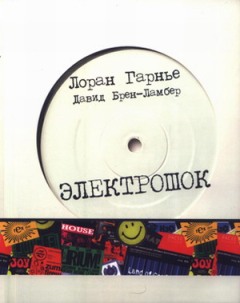
Not long ago the publishing house "Fluid" released the book "Electroshock" by the legendary French DJ and musician Laurent Garnier. 44100Hz is publishing excerpts from this gripping history of electronic music. The narrative begins with the tenth chapter of the book "Electroshock". Playlists of the tracks mentioned in the book can be found on the site pedrobroadcast.
In 1994 a new approach to putting together party programmes took hold among techno promoters, consisting of completely ignoring stylistic boundaries. For example, in Australia I was offered a slot alongside the king of commercial trance Judge Jules, and in that same Japan — alongside the drum'n'bass star LTJ Bukem. The mixing of genres that had come to reign in clubs and at raves breathed new life into techno and led to the emergence of unexpected projects — such as, for instance, the joint electro release by Westbam and Afrika Bambaataa, or the hardcore maxi-single recorded by Lenny Dee and yours truly.
Around the same time it occurred to several techno promoters to put together all-star DJ line-ups and send them on lengthy world tours. I ended up in the same team as Jeff Mills, Carl Cox, Richie Hawtin and Sven Väth. At first we were all delighted at the chance to play together, but soon we became seriously disheartened by the complete absence of any intrigue on these tours — the reaction of an audience that had come to hear "all the stars" of world techno was so predictable that performing in front of it was simply boring. It was then that my decision finally ripened to be done with raves and super-clubs and switch to venues frequented by a more demanding public, where the DJ is given the chance to play proper four- or five-hour sets. Around then I also started spending a lot of time in England again, where my mission consisted of educating the young generation of clubbers, who believed that all electronic music came down to trance and drum'n'bass.
The end of 1996 was marked for me by two events: a joyful one — the magazine "Muzik" named me the best international DJ of the year; and a sorrowful one — on 17 December the Chicago producer Armando, one of the most influential people in the world of house, died of leukaemia. For the second time since the death of Lee Newman, we all felt orphaned.
In that same 1996, dance music set a course towards convergence with other musical genres, above all with jazz, dub and rock. Techno and house producers at first stealthily eyed these genres, studied their language, explored their sound, and then began boldly crossing them with their own electronica.
Almost three years had passed since the release of "Shot in the Dark". I was soon to turn thirty. The spectrum of my musical tastes had lately expanded considerably: I had learned to understand jazz and had become interested in almost all contemporary styles and currents. When I felt that I was fully ready for a second album, I fitted out a small recording studio on the top floor of my new home (I had just moved to one of the southern suburbs of Paris) and set to work.
I wanted my new album to consist of as many colours and shades as possible. In other words, for it to contain dissimilar and even polar "moods" that would reflect different facets of my personality. As before, I was set on working on my own, but very soon it became clear to me that my technical illiteracy could quite simply ruin the album. Until then I had managed to get by without much of the knowledge and skills that, in principle, any techno producer ought to have. During the recording of "Shot in the Dark" I had worked practically by feel, finding by trial and error the sounds and melodies lodged in my head and, from time to time, accidentally stumbling upon some interesting sonorities. This time, however, I wanted to tell my listeners a wholly specific story, and for that I had to work precisely and professionally — in short, like a real producer.
Since I had no desire to plough through mountains of technical literature, I turned for help to my friend Stephane Dri, also known as Scan X. Stephane was a great connoisseur of musical technology, a tireless experimenter and, as it turned out, an excellent teacher. For a whole month, every morning he lectured me on the workings of the mixer, the sampler, the effects processor, the compressor and other devices. One morning he showed me a technique that lets you give a sound a certain roughness by means of compression. As soon as Stephane left, I decided to try out the knowledge I'd gained in practice. A certain minimalist dance piece had long been turning over in my head. I stepped up to my JD 800, played a bass line, looped it, added a kick and a hi-hat, compressed the whole thing and, to give my ears a little rest, went out for a walk. On returning home, I listened to the track again and decided that something was missing from it. So I dubbed it onto a DAT tape, fired up the MS20 and, pressing one of the synthesizer keys, began fiddling with the modulator knobs. This time the result satisfied me completely: I'd ended up with a super-driving track — the kind DJs usually drop when they want to blow up the dancefloor. I took the cassette case and wrote two words on it: "Crispy Bacon".
A week later Jeff Mills, passing through Paris, dropped by to visit me. I asked Jeff to listen to "Crispy Bacon" and tell me what he thought of it. Jeff listened in silence, with a smile on his face, and when the track ended he declared that he'd like to do a remix of it. The title, on the other hand, Jeff categorically disliked: "What's this rubbish — "Crispy bacon"? Where did you dig up such an idiotic name?!". I explained to him that when listening to the track an image comes into my head of slices of bacon frying in sizzling oil. "Ah, so that's it! — Jeff exclaimed. — In that case you should have called your track "Sizzling bacon", because "Crispy bacon" isn't frying bacon, it's already-cooked bacon". "Are you sure you're not confusing something?" I asked doubtfully. "Of course not. Your track should be called "Sizzling bacon"!" Jeff answered knowledgeably, and we both burst out laughing. My own blunder amused me so much that, on reflection, I decided not to listen to Jeff and to keep the original title — "Crispy Bacon".
And so I carried on working on my album. The compositions were born one after another — fairly quickly and without any particular agony — and very soon the album was completely finished. With the exception of the track "Flashback", dedicated to the memory of Armando, the definition "purely danceable techno" couldn't be applied to any of my new pieces. The track "For Max", written on the occasion of the birth of a son to one of my friends, was a typical downtempo; the dubby "Theme from Larry's Dub" featured the flautist Magik Malik; and on "Le Voyage de Simone", dedicated to Simone Garnier, a singer sang by the name of... Lauren Garnier, whom I was introduced to by the Radio Nova presenter Remy Kolpa Kopoul, and whom my fans had for many years been phoning and writing to by mistake.
As I said above, composing music came to me fairly easily, but where I had serious problems was with the sound. In 1996 many techno artists, and first and foremost Autechre and their colleagues at Warp, had reached enormous heights in the field of sound experimentation. Guided by the principle "do it yourself", I decided not to resort to the services of a professional sound engineer and to rely entirely on my own intuition. And since I had no sound-engineering skills whatsoever (for instance, I had a rather vague idea of what "frequency" or "the spectrum of a sound" was), the result turned out more than mediocre. And although I still love all the tracks on that album, the record as a whole seems to me today shapeless and badly mixed.
The first person (not counting Eric Morand) to hear my new album was my friend and kindred spirit, DJ Jack from Marseille. We were driving somewhere in the car, and I asked Jack whether he'd like to act as a reviewer. Jack agreed, I shoved the cassette into the car stereo and pressed the button. When the cassette had finished playing, I was handed the following review: "I didn't like all of it, but in my opinion this is already quite a mature work". And then it dawned on me. I finally understood what my album should be called: "30". As in thirty years — an age that coincided in my life with a period of change, doubt and searching. My marriage, my fears, my desire to assert myself as a musician — all of this found reflection in my second album. I understood perfectly well that "30" was imperfect, and nevertheless I decided to leave it as it was, in the hope that an attentive listener would sense and duly appreciate my sincerity and my desire to find points of contact between different musical genres.
Next came the question of the record's artwork. I wanted to avoid the visual clichés that had stuck to techno: all that digital aesthetic, fractal pictures, psychedelic colours and so on. I approached the artist Marc Anselmi and got from him exactly what I needed: a stark black-and-white cover with an image of my eyes covered in tiny scratches.
Now all that remained was to shoot videos for two singles from the album — "Crispy Bacon" and "Flashback" — and I entrusted this task to the musician and director Quentin Dupieux. Quentin approached my commission with the utmost seriousness and, instead of the usual music video, shot for me a very personal and witty short film called "Nightmare Sandwich".
"30" went on sale in December 1996. The first responses were not slow in coming. Listeners and journalists immediately split into two camps. From the first camp reached my ears: "presumptuous", "pretentious", "muddled"; from the second — "mature", "powerful", "bold".
By that time the attacks on techno from the authorities had practically ceased, and this led to an unprecedented surge of techno activity in the French provinces. In Grenoble the Futuria parties thundered; in Rennes yet another Transmusicales festival ended with a techno celebration at the city's exhibition centre; in Nantes, as part of the "Guy L'Eclair" festival, the first French techno-parade took place. Ravers also made their mark in Carcassonne — on the streets of the Old Town, and in Concarneau — at the fairy-tale Château de Keriolet, which threw open its gates to the participants of the international techno festival Astropolis. But perhaps the techno movement reached its greatest scale in the south of France (in Cannes, Nice, Aix-en-Provence and Montpellier), where DJ Jack from Marseille played first fiddle. True, the reputation of the southern club scene was badly spoiled by blackmail, fraud and being ripped off for money, which remained the favourite working methods of many local promoters. I remember, during my performance at the club La Nitro in Montpellier, I completely by chance came across a switched-on dictaphone hidden behind a heap of some junk. There could be no doubt: this was the work of the party's organisers, who intended to put out a cassette bootleg of my mix (in those years cassette piracy was flourishing across Europe). Without a second thought, I took the cassette out of the dictaphone and put it in my pocket. When I headed for the exit, the security guys blocked my path: "Until you hand over the cassette, we won't let you out". Judging by their tone, the lads weren't joking. I was saved by one of the friends of Manu the Sly, who was present at this scene. He took the cassette from me, threw it on the ground and, with the words "Take back your cassette!", stamped on it with all his might. The cassette shattered into little pieces...