Factory Dances
World Wide · 04.12.2007
By Маша Пудан
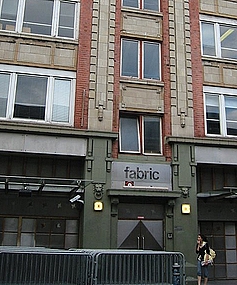
...And all was quiet on the desolate working-class street of grey London called Charterhouse, and its own modest everyday life went on amid the typical architecture of the old Victorian era, and the residents slept peacefully in their tranquil dwellings, until on the site of the former cold-storage warehouse of the Smithfield meat market it appeared - the most fashionable and grandiose club in the world, fabric!
It all began about nine years ago, when Keith Reilly and Cameron Leslie, in a district far from London's cultural centre, near industrial enterprises and grey, dilapidated residential buildings, set out to create something grandiose that would overturn London clubbers' entire notion of nightlife and techno culture as a whole. But at the time they still had no idea that Fabric would achieve worldwide fame. And in 2007, according to a poll by the British magazine DJ Mag, it would enter the ranks of the world's 50 best clubs and take the honourable first place on the pedestal.
The creators faced a difficult task. Reworking the interior and developing their own inimitable style took about a year. But already in October 1999 all the local fashionable print publications announced the opening of a new nightclub for lovers of electronic music.
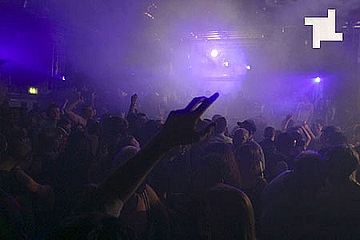
Jimpster at Fabric (1999)
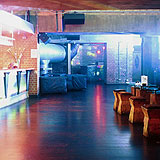
Fabric is a huge two-level space with a total area of 2,250 square metres, with a multitude of rooms and winding corridors filled with darkness and thick smoke. Those wishing to have a good time can number around 1,500 people - that's the club's optimal capacity. Inside there are three large dancefloors, each with an independent audio system and maximum soundproofing. But the main attraction of this establishment is considered to be the vibrating floor in Room 1. Before fabric there had been no dancefloor in Europe with a sound system featuring 400 bass transducers. It's called "bodysonic." These are such powerful low-frequency sound vibrations passing through the whole body that, being there, it's simply impossible not to dance and to stand still, because the musical frequencies don't match the rhythm of your heartbeat. There you either soak them up and let loose completely, or rest in the chill-out zone, where you enjoy pleasant conversation with your own kind. And for those who like to put away a couple of cocktails or simply want to quench their thirst, the club provides three large bars with a wide range of alcoholic and energizing drinks. Piquancy is added by a toilet with no division into boys and girls, and by attentive staff who can, if needed, even call a taxi. And since Europe passed a law banning smoking in pubs and clubs, Cameron Leslie promised to soon create a special smoking area outside with a mini garden, so as not to inconvenience her guests, who so sincerely love to smoke.
Over time the club grew ever more popular, and the queue at the entrance lengthened with each weekend. The most renowned and best DJs in the world come here to showcase their skill, improvising each time and driving the crowd to admiration and applause. At this pace, already in 2001 Fabric creates its own label and launches two DJ-mix series, Fabric and Fabriclive, which brought the club worldwide fame. It becomes the main hub of nightlife in England's capital. At the Friday parties called FabricLive the DJs play breaks, hip-hop and drum'n'bass, while on Saturdays the dancefloor fills with lovers of house, minimal and techno culture, with the inimitable sound created by the club's residents: James Lavelle, Craig Richards, Terry Francis, the Stanton Warriors.
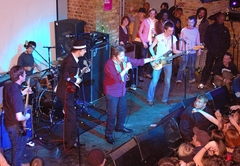
Sendex at Fabric (2005)
The label's first disc was released by the famous DJ Craig Richards in that same year, 2001. Fabric now has 37 released discs to its name, with an enticing, whimsical collection of tracks by the most fashionable and best musicians on the planet. And this figure keeps growing, drawing in more and more geniuses of electronic music. DJs such as Swayzak and The Amalgamation of Soundz, Michael Mayer and Nathan Fake, Fabio, Ellen Allien, Akufen, John Digweed and many others record here. You can view the full list of artists and their brief biographies, as well as listen to their collection of tracks, on the club's official website www.fabriclondon.com→
Six years after the first released compilation, Craig Richards launches a new project by the club's team - podcasts with their own unique sound, opening up to listeners new facets of musical diversity, touching on motifs of country, jazz, 1930s blues, old-school hip-hop and even spoken word performed by Cassius Clay, better known as the world boxing legend Muhammad Ali.
As is customary in all glamorous establishments, Fabric celebrates its birthday every year. But in scale and grandeur this celebration has no equal. In a single night it features such a number of first-rank DJs that even a multi-day music festival could envy this line-up. Last month a series of parties took place, timed to the club's eighth anniversary. These parties were divided by the genres the club chiefly favours. Thursday was devoted to indie music and live electronica. The event was called Indie-Electro Night Adventure, and performing were the bands Shit Disco, The Whip and Guns N Bombs, as well as DJ Sinden and the electronic project Skull Juice. On Friday the FabricLive party was held, featuring music in the drum'n'bass and breaks styles performed by Adam Freeland, Goldie, Plump DJs, Andy C, Tayo and Krafty Kuts, and Skream. On Saturday there was techno and leftfield disco with such stars as Ellen Allien, Cobblestone Jazz, the Scots Optimo, Black Devil Disco Club, Ivan Smagghe and Rub N Tug.
The factory theme is relevant not only in England, but also in Germany, France and, as is well known, in Russia. But they have little in common with the English club. They are all named this way solely because of their location. These clubs are former factories, workshops and warehouse premises. The organization of their space matches the features of the building's original architecture, while the interior and individual style of each is its own and does not overlap with any of its factory brethren. But is it worth arguing about the competitiveness of these clubs? We spoke with the art director of the club Fabrique in Moscow and asked whether the club's team knows about the existence of the club of the same name in London:
"We know there's a club in London with a similar name, but our club has little in common with it. Our Fabrique is even spelled differently. It's located in a former institute of design and technology, where the weaving workshops used to be, so we didn't go looking for a particularly original name, we just added a bit of French flavour. In musical format Fabric and Fabrique are indeed similar, but in terms of the number of popular DJs of various styles they bring in, we can't compete with them. At their parties they play techno, and minimal, and even drum'n'bass. It's a harder format than the one we offer our guests."
Lord Barron at Fabric (2007)
But there's no need to be upset about this. These days you don't have to live in London or dash off abroad to catch a performance by your favourite DJs. The club's residents tour continuously and gladly take part in all sorts of festivals and parties not only in Europe, but also in Russia. Our country is home to a multitude of ardent fans of the musical electro-industry, and they gladly await and welcome their idols, giving them all their energy, and in return receiving a mass of positive impressions and pleasant tiredness after a nighttime nonstop.