The Sonar Festival. Day by Day
World Wide · 14.09.2006
By Нина Кравиц
From 15 to 17 June, the main music festival of Europe took place in Barcelona. To be more precise, Sonar is a "festival of advanced music and multimedia art". This year we were lucky enough not only to attend Sonar but also to take part in it. We got so caught up in work – or maybe in relaxing – that we didn't manage to tell you about everything on time. So we offer you, albeit somewhat belatedly, a read of our overdue amateur report. Let our tale be one more occasion to remember what that runaway summer was like.
The Sonar festival has existed for 13 years already. It all began with a small get-together, and the whole organising committee consisted of a dozen crazy music-lovers, captivated by one common goal out of nothing but love for music. Now the festival has acquired the status of one of the largest music festivals in the world, with unthinkable budgets and a serious material base. The festival's main friend is considered to be Laurent Garnier, who played at the very first Sonar and now symbolises this important musical event.
A lyrical digression.
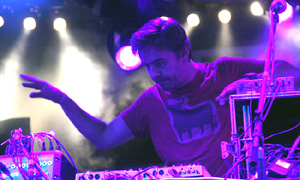
Speaking of Laurent Garnier, it's not hard to understand why exactly he became amigo del Sonar. To this day I tell my friends about how, on his last visit to Moscow, he played until eight instead of the scheduled 6 in front of a dance floor emptied down to 10 people, among whom was yours truly. We passed him notes with the names of tracks, and he would unexpectedly play the requests. We were decidedly deafened by the mid and high frequencies, which Laurent tirelessly cranked to the limit. Then Laurent took the microphone and announced the track I'd requested, "Desire" by the project 69, behind which hides Carl Craig. I'll never forget it. I'm almost certain that in that moment we both felt the same thing. There's nothing more beautiful than beloved music. The next day, as a sign of respect and boundless love, I gave him an old record on the Relief label, which Kostya Zig-Zag had once carelessly sold to me. He accepted it and said he didn't have that one. From that moment I loved him even more. A rare DJ these days still pedantically pores over the titles and savours the tattered sleeves. Laurent, with a forty-thousand collection behind him, remembers every detail. He's in love with what he does. He's the real thing. Even after 20 years. I dare to suppose that the people at the helm of Sonar are the real thing too. Over the many years of holding the festival, they never stopped keeping track of the most current musicians and DJs, while not chasing after trends and one-hit wonders. Preserving this vitally important balance, Sonar didn't turn into a fair but remained a Festival with a capital F, over time managing to form a tradition and now continuing it from year to year. By that very tradition, Laurent Garnier, as the first time, played beneath the open sky his unfashionable, no-longer-young, but endlessly deep music.
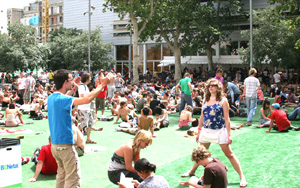
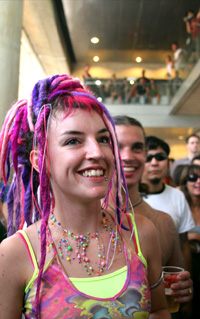
The whole festival programme ran in two shifts: daytime and nighttime. The daytime part – Sonar de Dia – took place at five main and several additional stages. All of them were located on the grounds of the centre of contemporary art (CCCB). The music-lover's, and in places even fanatic's, revelry began at noon and, it seemed, never ended. The weather over those three days was simply magnificent. Crowds of cheerful, young, half-dressed and terribly beautiful people, waving their programmes, moved from one concert to another. By midday the centre's courtyard was already impossible to squeeze through: it housed a big stage and the dance floor of the main daytime arena, SonarVillage. By three in the afternoon half of its space was occupied by festival-goers lying on the artificial grass and pleasantly half-drowsy from the summer heat. On the other half, meanwhile, some serious afternoon dancing had flared up. On the festival's first day the general musical tone here was set by hip-hop, dub and all manner of IDM. Today the promising Spaniard Fatkut, the Dutchman Aardvarck and another five artists unknown to me would perform at this stage. But that I would learn only from the programme. I'd flown in just a few hours earlier. From this heat and the relaxing hip-hop (and at Sonar even that can be relaxing), I become excessively slow. Fatkut plays out his last record. It's already almost five in the evening and I remember that at roughly this time, in the neighbouring Escenario Hall, the much-hyped Knife were due to perform. I never counted myself among the fans of their, generally speaking, decent but still – in my opinion – bland electropop. Everything's too neat: a boy and a girl. Guess which of them sings? Such a duo usually puts out one successful record, but that's quite enough for everyone to fall into hysteria.
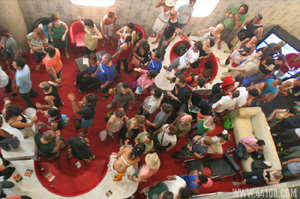
In the case of Knife such a record was "Deep Cuts", which sold out in their native Sweden in incredible print runs. For it they even received the Swedish version of the Grammy. Forty minutes later I felt ashamed of my snobbery. These two, dressed in little black jumpsuits, played their carefully prepared programme as if in one breath and turned out to be outrageously flawless professionals. Right after the concert I hurried to the RBMA lounge – a small stage inside the museum, where I myself was still to play on Saturday. It's very fun here: no "relaxing" dub. For 25 minutes now my colleague from the Red Bull Music Academy has been playing divine disco, periodically dipping into boogie and eighties hip-hop. I find a pink little sofa and relax. To my left is an escalator leading to the second floor, from where you can see very well everything
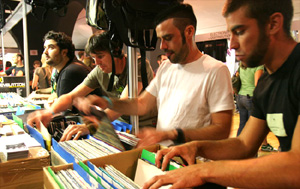
that's happening on the dance floor. Up here a record fair is taking place. Besides records, bright slipmats, T-shirts and other merchandise hang on the stands. There are far fewer records – as well as people – than I'd expected to see here. Peeking out of the boxes are records with the familiar logos of Minus, Get Physical, MBF and, what's especially pleasing, UR and even Radius. "This year it's all somehow feeble. Records are selling very poorly," my old acquaintance Mark Schneider, representing the distribution network Word and Sound, shares with me. "The sun, the music... ehh... everyone's relaxed too much," Mark grumbled discontentedly, finishing off his already-not-first cocktail. He's right. What records? On that thought I set off for the bar. When I returned, the RBMA lounge was already impossible to squeeze through. At a positively childlike seven in the evening the pseudo-lounge had turned into a real two-storey club with excellent sound and a stunning nighttime atmosphere. The nighttime Sonar is only tomorrow, and it's too early for a trip to a nightclub. For many, our friendly party was the only chance to stretch out the fun of the daytime Sonar and to dance to their heart's content. Closer to 10 it became clear that no one wanted to leave.
The crowd wouldn't thin out at all, but the organisers stood their ground: at 10 the electricity was to be cut off. Meanwhile, at the open-air SonarVillage stage the dancing was in full swing. There the last, but very special, song was playing out. When the beautiful Curtis Mayfield of the '70s
was finishing that very piece of lyrics before the famous funk break of all time and all peoples, a warm, pouring rain crashed down. Need I say what was happening on the dance floor when the break itself started up?
And so, in the rhythm of international, but equally soaked, young bodies shaking in dance ecstasy, my first day at Sonar ended. As I've already said, today there won't be a nighttime part. The local clubs took advantage of this circumstance and planned several serious parties, to which they'd invited all sorts of important guests. I dreamed of going to the party at the club Raum with the participation of the Detroit authorities Los Hermanos. To understand who these Hermanos are, it's enough to imagine that they are to techno what Tupac Shakur is to any self-respecting gangsta rapper. There was, of course, something else on in the city, but in my case there were no alternatives whatsoever, and there was only one option. Halfway there I realised I was slightly overtired and that no Detroit string cascades would touch my soul until I'd got some sleep. No clubs tonight. With a feeling of unfulfilled duty I nonetheless headed to the hotel.
The second day of Sonar turned out even sunnier and hotter. Having got to the CCCB, the first thing I did was head to Escenario Hall to listen to my colleague from Female Pressure, the young Spanish musician and singer Iris, who by my calculations had already been playing for at least 20 minutes. She stood on stage in a beautiful red dress and, lit from all sides, unhurriedly performed some unfamiliar song in the spirit of the Monica Enterprise label, on which she releases.
SonarVillage, meanwhile, had definitively turned into a city beach. The sun blazed as never before. Young festival-goers sunbathed everywhere. On stage the Spanish DJ D.A.R.Y.L., who relatively recently had been signed to the respected label Factor City, was playing out his unburdensome IDM. The set is finished – everyone's very pleased and no one disperses: in 15 minutes the Britons White Diet are due to appear on stage. Around me everyone's doing nothing but undressing and dousing each other with water. Meanwhile some group appears on stage. I get up with difficulty to have a better look and see that before me is no White Diet at all, but the real Scissor Sisters, who materialised on stage with the words "Guys, we just happened to find out that White Diet couldn't come and decided to sing something for you. You don't mind?". And we, of course, didn't mind. No one cared that the group had already lived through the peak of its popularity. In such heat it was simply too lazy to think about relevance. SS confidently performed one hit after another, periodically breaking off for fresh songs from the new album due out this autumn. Somewhere in the middle of the performance, I caught myself thinking that the Scissors are still just as good, and that the red-haired frontwoman had an unusually beautiful dress, judging by the impeccable cut, sewn no less than twenty years ago. And don't tell me that in music it's not the dress that matters. The dress demonically brought the whole dance floor to life, even the part where, five minutes earlier, pale-skinned Englishwomen had been lying shamelessly.
"Great dress!" could be heard from all sides in all the recognisable European languages. Not far from me the same dress was being examined by Francisco. Francesco De Bellis (Francisco) is one of the most interesting musicians around today. This Italian works in the currently topical genre of electro-disco. Together with my dearly beloved Marco Passarani and Mario Pierro, Francesco has a project, Pigna People, recognisable by its energetic tech-house tracks with elements borrowed from Chicago house and italo-disco. For the next two hours Francesco and I wandered the streets in search of a worthy dress in the '70s–'80s style for my performance tomorrow. We went round decidedly all the good vintage shops, but never found anything suitable. I was in despair: one of the contemporary musicians I most respect had just told me that tomorrow at 5 in the evening, right when I'm going to play two of his records in a row, he and the other Pigna People members have a soundcheck. A monstrous injustice. The subject of stage costumes regained relevance at nine in the evening, when Señor Coconut appeared on the SonarVillage stage. Uwe Schmidt and Argenis Brito looked stunning. They solemnly ascended the stage in bewitching dark suits. The "señores" were so perfect that at some point I wanted some kind of flaw, some kind of nasty thing like a lilac blazer with a rosette or a hairy chest in a flowery shirt, shaking the obligatory maracas. But, as luck would have it, there was none of that. Instead SC put on a spectacular show with a whole orchestra, masterfully played several new songs, as well as most of the hits. During one of them, I remembered that in the neighbouring hall, Escenario Hall, the Japanese collective Hifana was playing, and that the lover of Japanese electronics Lesha Shcherbina had strongly recommended I go there. Getting into the hall turned out to be not so simple. An incredible crush of people had gathered before the capacious stage, the huge central screen, and two side panels. Francesco and I immediately noticed a manifestation of some kind of astonishing patriotism.
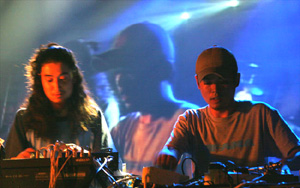
For 10 minutes now it seemed to us that almost every second person here was a citizen of Japan. The following 30 minutes we, mouths agape, watched one of the most dynamic and interesting live acts of the daytime Sonar. On stage the Japanese served up a strange mix of some electrified hip-hop, breakbeat and heaven knows what else, seasoning it with scratches, drum machines, episodic MC raps and shouts of "Hifana". But all of this is nothing compared to the incredibly beautiful video sequence, which was synchronised with the sound and left us no chances whatsoever. We were simply crushed by this Eastern performance. Phew! In short, the Japanese.
Soon the nighttime Sonar. It wouldn't hurt to grab a bite. Francesco and I head to some fish restaurant. The thing is, he can't live without fish. He says that, most likely, his first word in this world was the word "Fish". Yes, and also, probably, the word "Pulpo". That's what Italians call octopuses.
Getting to the venue of the nighttime Sonar was practically impossible. All the taxis were taken. There are no private drivers in Barcelona. It's already twelve o'clock, and we're still not there. We're terribly nervous: in 45 minutes our favourite group Chic performs – or rather, its contemporary version. Of the original line-up, only Nile Rodgers and Omar Hakim remain in the group. In the seventies Chic was one of the main disco groups. They symbolise a whole era. A whole generation of American girls and boys grew up on the songs "My Forbidden Lover" and "I Want Your Love". One of those

boys was once Jeff Mills too, who spun Chic in Detroit clubs. The composition "Le Freak" became the anthem of the club Studio 54. The song "Good Times" provoked the appearance of the first truly popular song in the hip-hop genre. I'm talking about the song "Rapper's Delight" by the legendary group Sugarhill Gang, which is a good-natured rap over a sampled piece from "Good Times". The first experiments with house-style music didn't do without samples from Chic either. In short, Chic is a very important group, and we can't find some taxi. When hope had already begun to abandon us, on the horizon appeared a lone car, by some miracle not taken, which by one in the morning delivered us to the venue of Sonar De Noche. The group of all time and all peoples was performing on the biggest arena, Sonar Club. Especially for them, the main stage had been equipped as a classic glittering disco stage with all those lights and multicoloured shimmerings. On stage – nine people. More alive than all the living, all in white, stands Nile Rodgers himself. Instead of the old female vocalists – two new black women. One is very good-looking, the other's appearance is clearly spoiled by red-coloured dreadlocks and the wrong dress. They sing not badly, but do it rather in an R&B manner. In the break between songs one of the vocalists gives a speech. "It's a great honour for me to be on stage with Nile Rodgers. I listened to Chic when I was ten. Can you imagine? And now we'll sing a few songs that meant a great deal to us then and mean a great deal to us now, because these songs are immortal." After that, in a megamix, came practically the main hits of the late '70s – early '80s: Sister Sledge "We Are Family" and "He's the Greatest Dancer", Diana Ross "Upside Down", Chic "Chic Cheer". All these masterpieces were sung by the new line-up for a reason: firstly, the far-sighted Sonar organisers, having sensed the extreme topicality of everything connected with the '70s, planned this concert to recreate a whole musical stratum, to visually illustrate the disco era, so to speak, from the primary source. And who better than Chic is ideally suited for this historical-musical excursion? Secondly, all the hits listed above were produced by those same Nile Rodgers and Bernard Edwards. Sister Sledge's most successful album was produced by them, and Diana Ross's main hit in her solo career, "Upside Down", was produced by Nile Rodgers.
We cried. And I cried also because I suddenly understood the whole absurdity of all these comebacks from the past. When a group, torn from the atmosphere of its time, considerably aged, and therefore no longer able to sustain the necessary energy, suddenly appears in a contemporary and absolutely alien space. Nile Rodgers tried to provide what was essentially a completely new group with the light, unique sound of the old Chic. But that turned out to be no simple task. The vocalists couldn't get into the necessary character and, having lost every hint of spontaneity and the certain childlikeness of the classic disco performance, set to hollering like Beyoncé Knowles. The concert reminded me of good, expensive, but completely feelingless karaoke on stage. Of course, such concerts have their pluses too: how else will the younger generation learn that 90 per cent of everything they listen to is just a contemporary copy, a forgery of the '60s, '70s or '80s? Or maybe no one needs to know? Be that as it may, I decided for myself that evening that concerts by legends from the past are no longer for me.
Right after the concert we ran to the SonarPub stage, where Laurent Garnier and Bugge Wesseltoft with Philippe Nadaud were plucking their doleful Detroit strings. About my tender feelings for Laurent I've already written in the lyrical digression. Everyone will probably agree with me that Laurent is the best DJ on the planet, but still, as a producer he's far more modest. And this time, on the nighttime stage, a crowd of many thousands was ready to tear their hair out, hoping that during Laurent's live set a beat would at last appear in the music. A semi-ambient cloud with aching Detroit cascades covered the dance floor for almost an hour. And still I'm not in solidarity with those who ran out of SonarPub shouting "Enough of this ambient! I want to dance." Yes, it wasn't a dance live set, but then you can dance in different ways. At Laurent's performance there was a beautiful atmosphere. Just imagine a huge open stage, the blue sky overhead and all these technoid, melancholic cascades. This is, perhaps, the only and most proper place to listen to the sad (and really a bit tedious) Cloud Making Machine. And then, over the course of the whole concert, Laurent, in measured doses but nevertheless, let loose a taut and dense bass. Such a trained beat was worth its weight in gold that night. Probably that's why in those rare moments when it did nonetheless arise in that formless sound space, an explosion of roaring and joyful cries occurred on the dance floor. Without hearing out Laurent and that very saxophonist from the song "The Man with the Red Face", I set off to check what was happening at Sonar Club. On stage, with the ever-present and by now thoroughly tiresome laptop, stands Jimmy Edgar (releases on the respected label Warp). He periodically says something into the microphone. The sound on the biggest stage of Sonar is simply monstrous. Lots of highs and a resonating bass that makes you feel ill after five minutes. Jimmy plays first-class rocking electro, which is only half audible because of these acoustic problems. For this reason I leave the stage, on the way meet Francesco, and half an hour later return again to Sonar Club to listen to Jeff Mills.
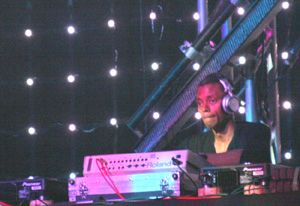
Mills, as usual, played classic Detroit techno from vinyl records and at furious speed. The tracks are barely distinguishable, and if at Edgar's performance you could feel the mood and enjoy some sort of sound, then with Mills's techno it was simply a disaster. But something else surprised me: despite the sound, the entire area of this huge hangar was packed to the brim. Am I really the only one whose ears are ringing? Having posed this question to Francesco, I understood that my ears were fine, and that if I wanted them to stay fine, I needed to leave Sonar Club right now. Passing towards the exit, I looked back once more to look at Mills. The spectacle was magnificent: he gazed into the hall from two huge monitors, and, a tiny dot on the lit, distant stage, towered above all this unthinkable throng of people. "A real king," I thought.
At the SonarLab stage the sound was decent, but there was no Tiga, promised at 03:15. I was a little upset, but, having wetted my throat and eaten a most delicious pancake with raspberry jam at the nearest bar, life again seemed a wonderful thing to me. It's already around four. While I'm here enjoying my pancake, everyone else is savouring Herbert with his new dark-skinned vocalist and orchestra in bathrobes at SonarLab and carrying on ruining their hearing at Sonar Club, where Mills is still playing. Next stop – Sonar Park. Today here it's all hip-hop, downbeat and broken. At one o'clock the main hip-hop samurai DJ Krush stood at the decks. At two he was replaced by One Self led by DJ Vadim, and now here comes DJ Shadow, disliked by many for his sharp and unexpected turn into hip-hop. The sound at this stage is excellent. Shadow stands at the decks and works his magic over near-funk little refrains. On stage three huge African-Ameri... oh, what the heck, three negroes of incredible size jump about the stage with microphones and energetically rap. All three are called The Hyphy Movement, and, individually, Keak Da Sneak, Turf Talk and Nump. All of them are American and look like old-school hip-hoppers from mid-'80s Brooklyn. Wonderful. Looking at their knee-length T-shirts, you can't help wondering how they managed not to fall over once, tangled up in all that rag.
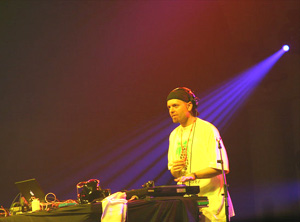
I finally understood why Shadow is paid big money. He's a great professional, and I don't care what all these snobs say about him. I fell in love with him once and for all for the trip-hop masterpiece "Midnight in a Perfect World" from the album "Endtroducing", sold in millions of copies all over the world, and for his live show, where he and his partner play funk from original 45s, seasoning it all with a beat from a drum machine and a couple of other clever devices. And now Shadow has delved into hip-hop (although, in essence, he never went far from it). Now everyone does nothing but say nasty things about him. The show was magnificent.
The second day and first night of Sonar are drawing to a close. Today, like yesterday, the city is full of parties, but I'll pass. Great deeds await us. Tomorrow already.
Today is Saturday, 17 June. Day number three. The programme lists a bunch of interesting artists, but I have absolutely nothing to tell. I skip the whole daytime programme, and I have a valid reason for it: at five in the evening I perform at the RBMA lounge and I'm terribly nervous. It's already two in the afternoon. Francesco and I are sitting at the Boqueria market eating freshly caught sea creatures. Well, the octopuses seem to have run out. Francesco heads off to the nighttime stage, where he has a soundcheck, and I get into a taxi and am late for my own performance. The RBMA lounge is jam-packed. The atmosphere – couldn't be better. Not a single glum face. Before me James What & Dan Berkson from the Poker Flat label are playing out the last minutes of their live set. They've got minimal. I take my place at the decks, plug in the microphone and start telling everyone about the number of planets in the universe to the music of Alexander Robotnick. Everyone's in shock. Even me. Then a dance beat starts up, everyone returns to the needed atmosphere. For about 20 minutes we all enjoy electric disco, when suddenly, on a Francisco record, the electricity cuts out. Everyone in the hall whistles and supports me every which way. At that moment the Moscow journalist and musician Nick Zavriev materialises before the stage and says something to me such
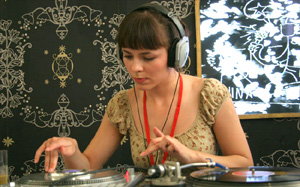
that after it I no longer feel like being nervous. Thank you. A bunch of familiar faces freak out in the crowd. I see Lesha Shcherbina with a camera and the smile familiar to all of us on his face. To the right looms a contented Mark Schneider with an already half-empty little glass. Big deal, some electricity. In 3 minutes the fault is fixed, and the party continues with redoubled force. The public perfectly receives all my experiments, especially the one where Armando's acid-house track meets the group Chic. The party is in full swing. For the finale I sing over the already classic "Wind Parade" by Donald Byrd. Everyone's happy. Mission accomplished. Until ten I stay in the lounge. The crowd, it seems, keeps growing and growing.
Having expended all their daytime strength, the whole Sonar landing party, in places already not entirely sober, disperses to the hotels, in order to be at the nighttime stage by midnight. Not risking a repeat of yesterday's experience with a taxi, Francesco and I join Marco Passarani and all together set off for the nighttime Sonar. On the approach to the exhibition complex, nearly half the city had gathered.
At
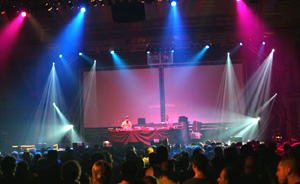
SonarClub уже минут пятнадцать рубит знакомый мне испанский техно-герой Аngel Molina. Играет великолепно. Ровно и без истерик, с минимумом хитов. Сразу за ним выступают британцы Goldfrapp. На сцене куча нарядного народу, но самая красивая, конечно, Элиссон Голфрэпп. Я всегда уважала Goldfrapp за это их безупречное чувство стиля. Дуэт очень удачно реанимировал самые хорошие традиции 70-80-х. Могу поспорить, что дома у Элиссон наверняка в рядок стоят пластинки какой-нибудь Грейс Джонс (ее обложкам нет равных). Можно с тревогой гадать над тем, каким будет новый альбом в музыкальном плане, но за оформление будьте спокойны - оно как всегда будет идеальным. Вот и сегодня на сцене все продумано до мельчайших деталей. В розовом платье стоит белокурая Элиссон, примерно в этой же цветовой гамме - ее бэк-вокалистки. Летящие волосы, красивый свет и легкая глэм-эстетика семидесятых в современном исполнении. Программа, в основном, состоит из песен с их последнего альбома. В живом исполнении с бас-гитаристом и клавишником все треки звучат как-то по-другому, оставляя впечатление чуть ли не самого яркого и динамичного шоу на Сонаре. SonarPub тем временем играет Isolee. После Goldfrapp его музыка звучит, как колыбельная - в меру минималистичная, местами техноидная, но без агрессии, мелодичная и по-прежнему очень красивая электроника c четким, не быстрым битом, которые многие называют то ли тек-хаусом, то ли электро-хаусом. Мы видим Isolee с экранов. Ему похоже не до нас: он весь занят своими ручками, кнопками и фейдерами.
В половину второго в SonarLab мои любимые Pigna People. Наблюдать эту, по выражению Ника Завриева, сборную Италии по электро-диско мне приходится в компании таких же сумасшедших фанатов, как и я. Все мы не скрываем эмоций и выкрикиваем разные глупости.
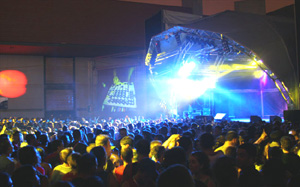
Лайв просто отличный. Итальянцы на одном дыхании сыграли почти весь альбом "Let’em Talk", добавив энергичных чикагских щелчков, техно-вибраций и партий на синтезаторе, которых нет на пластинке. А еще Франческо очень убедительно шептал что-то в микрофон. Объективно лучший танцевальный лайв Сонара.
Тем временем в SonarClub готовится к своему выходу самый главный поющий техно-монстр в юбке. Монстр, надо сказать, был очень мил: облаченный в синее обтягивающее платье, с туго затянутыми в дульку черными волосами и прямой челкой в лучших традициях немецкой порно-индустрии. Как вы догадались, речь идет о Мисс Киттин. Все полтора часа Мисс Киттин старалась не выпускать микрофон из своих толстеньких ручек. Ее мяукающий, с фирменным французским акцентом голосок в этот раз гудел громким эхо, отражаясь от стен огромного и, если честно, пугающего ангара.
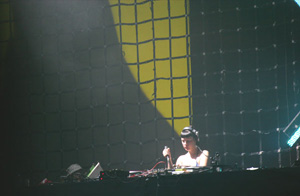
Она играла свой фирменный популяризированный вариант динамичного техно и электро. Мне, как всегда, нравилась ее манера мило фальшивить. В этот раз я окончательно для себя решила, что Мисс Киттин очень крутая. Ну, скажите мне, кто еще сможет за какие-то полтора часа искупать многотысячную массу поклонников в неподдельном блаженстве, имея в своем распоряжении вертушки и микрофон? Кто еще обладает достаточным обаянием, чтобы превратить отсутствие всяких голосовых данных и языковых навыков в популярный тренд? Кто, еще затянув лишние килограммы в латексное платьице, способен приковывать внимание тысяч людей, заставив их непрерывно глазеть в мониторы? И потом никому из юбочниц не удавалось еще так легко преподносить немассовую музыку массам, вживляя ее в общедоступные танцевальные формы вроде какого-нибудь Энтони Ротера.
В "Пабе" тем временем играет американец Audion. Отличное техно c тугим басом в духе лейбла Spectral. Обязательно куплю его пластинку. Атмосфера осталась примерно такой же, как и на лайве Isolee - расслабленная и ни чуть не агрессивная. А вот в SonarPark агрессии было хоть отбавляй. C первых минут у Дэйва Кларка что-то не заладилось с аппаратурой и он принялся прямо перед нами выяснять отношения со звуковиками, размахивая руками и грозясь оставить нас без веселья. Наконец, все разрешилось и Дэйв приступил к работе.
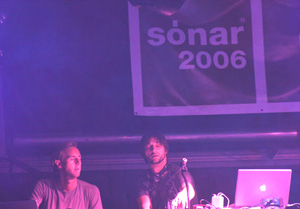
Он начал с какого-то антикларковского трека. Это был какой-то поп-рок, который через десять минут разошелся и, как это обычно бывает с машинами, выезжающими с проселочных дорог на большие шоссе, разогнался до своего привычного мясного техно с большим количеством грязных электро-сэмплов. В общем, в плане музыки все было без сюрпризов: Ladies and Gentlemen, mister Dave Clark! А вот видео-ряд был просто восхитительным. Сначала я подумала, что Кларк играет с этого новомодного проигрывателя, совмещающего музыку с видео - настолько происходящее на экране было синхронным. Но очень скоро стало ясно, что Vj проделывает все это чудо живьем. На экране завуалированный Дейв Кларк, сам того не зная, танцевал то со скелетами, то с голыми бабешками. Играл на гитаре и превращался в яйцо. Самое смешное, как потом выяснилось, сам Кларк понятия не имел, что происходит у него за спиной - VJ был предоставлен организаторами фестиваля. Финальные аккорды фестиваля традиционно исполняет дует Рикардо Виллалобоса и Ричи Хоутина, после этого сложно говрить о том, что минимал музыка для небольших площадок.
Вот так в крепких объятиях бескомпромиссного ритма рабочих окраин и картинок со скелетиками завершился мой третий день на Сонаре.
Сегодня воскресенье. Сонар закончился. Самое время расслабиться и поесть осьминогов. Поздним вечером на пляже в районе Барселонета проходят сразу несколько важных вечеринок. На одном пляже в ста метрах друг от друга party устраивают Get Physical, Minus и лейбл Factor City. На каком-то из них играет все та же Мисс Киттин. Везде плохой звук и огромная очередь к бару. Это обстоятельство никого не пугает.
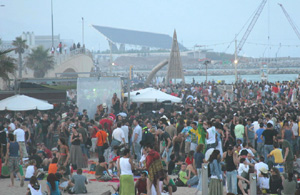
"This is the ideal condition for real fun, baby," says my new acquaintance. Yeah, right... The crowd is an incredible number of people, all in a wonderful mood and practically without clothes. In that moment a feeling of some silly, carefree happiness didn't leave me. That happens at friendly house parties. Kittin played a merry mix of electro and tech-house, periodically touching on disco with vocals, provoking boundless delight in the thoroughly tipsy or otherwise altered partygoers.
Oh, I nearly forgot. On the last day of Sonar I decided to buy some T-shirt with the festival logo. On the stand, bright caps, hoodies and slipmats were neatly hung out. When suddenly, on the counter, I saw some blinking object with a little red heart. "It's a solar-powered keyring. They say it works like this for ten years." On the keyring was written: "I love Sonar". And so, I think, I'll end my tale here. Let my keyring work all fifteen years.