Auto-translated by 44100Hz.
Read the Russian original →
The Story of Moscow's Club Scene. A View from the Side... of Security.
Интервью · 20.04.2003
By 44100Hz
Have you ever dreamed that the party would never end, and that you would be its permanent, front-line participant? To control the situation no matter what happens, to shape people's moods and desires. This is no wizard's calling; every kind of entertainment has its rules, and one of the main ones is that while you're relaxing you should feel safe. A holiday that became a job, a favourite occupation, a vocation. Club security – what is it? Only those who have been through a great deal can answer that question, enough to say that they are a professional at what they do.
44100
: Where did it all begin?
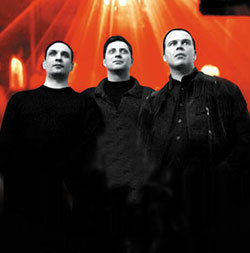
Ковбой
: I started working in '93, at the very beginning of the boom in Moscow's club business. The first club I worked at was the "Sport Bar". Back then it was a bit different. After that came "Ptuch".
44100
: Why do people want to work as club security? Where does that choice come from?
Олег
: Well, now I don't know why it happens, but back then it was the very beginning of the club movement and it sparked interest. There were the first attempts at throwing parties, at opening clubs. These were clubs that didn't bring in any money, a kind of underground where everything was fairly unprofessional. People gathered to have fun and then scattered. "Ptuch" stood out for its more professional approach to organising leisure. It was run by Sasha Golubev – Sasha Ptuch, as they called him as a kid. He'd spent a lot of time abroad, and drawing on that experience he tried to create something interesting. He approached everything quite competently, and to recruit security he didn't turn to any private security firms; instead he simply tried to hire people together with a man like Igor Gashik. They picked a team out of complete strangers, ran some ads on the radio and held a sort of casting and hiring process. By standard criteria they took on a number of people with a solid build, an intelligent face, sense in their eyes, and the ability to express their thoughts clearly, in plain human language. They formed a fairly large team, about twenty-five people working in two shifts. Later only one shift remained, and it just worked flat out all the time. Within that group several people stood out who always worked the door, because that's the toughest post. Back then everything was very far from simple: there were gangsters, there were people with guns, everyone was throwing their weight around. In short, you had to find a way to wriggle out of things, to talk to people. Not everyone had exactly those qualities.
44100
: How exactly did you come to the decision to work in a nightclub?
Олег
: The funniest thing is that I was never a partygoer, just went out at night with friends now and then. I had offers to go to one place, another, a third. "Ptuch" was already ready to take me, but there were other options too. In the end I reasoned that working in a club would suit me personally better. I was drawn by the chance to be constantly around people and by that permanent state of celebration. In a club you meet all sorts of people, the atmosphere is always changing – there's a certain romance to it.
Ковбой
: It's just that at some point you start to understand that this is exactly your thing, that you love it. As for me, I loved rock'n'roll and motorcycles. Working at the "Sport Bar", I couldn't stand electronic music at all. I came to the "Sport Bar" by chance. Some acquaintances of mine had a kiosk next to the Sport Bar, and at the time I had just finished the Higher School of Bodyguards. I thought, let me pop in, have a look, snoop around. It turned out I was practically a spitting image of the general director on the American side. He liked that, and a couple of times our resemblance came in handy for him. There was also a security manager there, a black guy – a huge fellow with a scar, from whom I learned a great deal.
At some point this music, these people, got to me, and my tastes changed completely. Now I very rarely listen to my beloved "Metallica", only to feel a bit nostalgic. And I went through, you could say, house, trance, techno.
At some point this music, these people, got to me, and my tastes changed completely. Now I very rarely listen to my beloved "Metallica", only to feel a bit nostalgic. And I went through, you could say, house, trance, techno.
44100
: But you evidently didn't change your image. They call you Cowboy, you wear long hair, cowboy boots, leather jackets – so the outward look stayed the same, but inside you're a completely different person?
Ковбой
: Rather, on top of just the cowboy, there appeared the psychedelic cowboy and the cosmic cowboy. In general, it's not so much that I changed as that I became more many-sided. Cowboy is my second name; my real one is known to few. As my friends say, Cowboy is a brand.
44100
: So how did things unfold for you?
Ковбой
: After the "Sport Bar" I bolted to "Ptuch", where Igor Gashik was working – the very one who'd worked with me at the "Sport Bar". He was the one who offered me a spot.
44100
: Gashik was evidently quite respected at the time?
Ковбой
: He was a talented pupil... And while I was, once again, disappearing off the promoters' radar, he was offered work at "Ptuch".
44100
: But weren't there other clubs besides "Ptuch"? What about "Aerodance" and Timur Mamedov?
Ковбой
: With Mamedov, by the way, I got acquainted in a very funny way. I was standing at the entrance to the "Ptuch" office premises, letting no one in, naturally. Mamedov shows up, all decked out as usual. And he runs into a flat refusal from me. He says: "But I'm allowed everywhere!" I tell him – no, today, in here, you can't. He says: "I'm Timur Mamedov." I say: "I know, but you can't come in." Well, he was taken aback, ran off somewhere, and in the end he got in anyway, but after that I got an offer to work at "Aerodance".
44100
: So your paths diverged?
Олег
: At that moment I was working at "Ptuch", and Cowboy was working at "Aerodance". Besides that, I also worked mornings at a wonderful establishment called "Relax". The company El Cosmo Group came to us asking for help. The situation there was awful: the club packed with people, but only five tickets sold. And we had to somehow fix it. People came to "Relax" right after "Aerodance", and there we would greet them. We fought with them at "Ptuch" and didn't let them in; they'd go to "Aerodance" to have their fun, come to "Relax" in the morning – and there again were the same faces.
Ковбой
: By the way, I can't help recalling the "Titanic", which for me was a dumping ground for "rejects". Nothing personal against the "Titanic", but to those characters who didn't pass the "face" check at "Aerodance", I always said: "Guys, there's a fabulous club called "Titanic" nearby, where they'll be delighted to have you." And off they went there, glad to.
44100
: So you're indirectly to blame for shaping the "Titanic" crowd? Were "Ptuch" and "Aerodance" underground clubs?
Олег
: But they were complete opposites of each other, and they were the leaders precisely as clubs, not as boozers. The "Titanic" opened a bit later and became more pompous, so to speak. By the way, "Ptuch" and "Aerodance" were never competitors; they rather complemented each other.
44100
: Many of those who go to clubs now and take an interest in electronic music picture all the "legendary" clubs each in their own way. "Ptuch" as the birth of closed, intimate parties "for our own kind". "Aerodance" as the place where the trance movement emerged. But in both the first and the second case, everything was pretty thoroughly soaked in drugs. What exactly was "Ptuch" like, and what was "Aerodance"?
Олег
: Yes, in fact there was a strong influx of various substances back then. Creative, cultured young people came to "Ptuch". They didn't want to let gangsters in.
Ковбой
: What always amazed me about "Ptuch" was its approach to party design. At one of them the whole space was completely covered in foil: the floor, the ceiling, the bar, the pipes, the walls – all in foil! Little flowers made of foil stuck out of the floor. For me, at the time, that was new and unusual. At "Aerodance" there was none of that. There it was a frenzy, a rave of its own kind, and a stunning atmosphere!
Олег
: At "Ptuch" they pushed more progressive, more intellectual music, whereas at "Aerodance" the music was aimed exclusively at making people have fun; in that sense the place was more commercial. In general, all of this was some kind of new way of life for us. We were people used to ordinary city life, and suddenly we ended up in an atmosphere that was completely at odds with our idea of life. I, for instance, didn't even know people lived like that. Of course, people leave the club and start living a normal life again, but for me it never stops.
Ковбой
: I disagree; at that time both "Ptuch" and "Aerodance" spun progressive music, only in different directions. And about the way of life. When I saw people in the streets in various unusual outfits – and back then there were shops like "Extravaganza", "Cosmo" – I understood these were "our own". I remember the first time I saw a person in bright clothes in the metro, I thought: "So, this fashion is coming down into the metro, which means it's becoming all-embracing."
Олег
: Which is what we've ended up with today.
44100
: How did events develop after that?
Олег
: After "Relax" we worked a bit at the "Funny House" parties at "Master", where we probably even carried out administrative functions. There were five of us, on top of the local security, which consisted entirely of cops from the district precinct. And they often came to work armed. But to talk to people and organise the door properly, it was us they invited.
Then "Treasure Island" opened, where there was an absolutely stunning and unforgettable crowd. Of course, at the time "Island" was somewhat in the shadows, since the "Titanic" lit up the sky after the closing of "Ptuch" and "Aerodance", and eclipsed a great many clubs.
At "Island", at first, a very mixed public gathered, distinctly criminal in nature, but for some reason there were practically never any fights. Everything was cultured and decent, people could talk quite freely – again, the drug use played its part. Everyone understood that if you were rude to someone, you'd get an instant reply, and one you wouldn't soon forget, so people spoke to each other in normal human language. Very beautiful people gathered, stunning women, a good crowd came over from the "Titanic", and the same DJs who played at the "Titanic" played here too.
Then "Treasure Island" opened, where there was an absolutely stunning and unforgettable crowd. Of course, at the time "Island" was somewhat in the shadows, since the "Titanic" lit up the sky after the closing of "Ptuch" and "Aerodance", and eclipsed a great many clubs.
At "Island", at first, a very mixed public gathered, distinctly criminal in nature, but for some reason there were practically never any fights. Everything was cultured and decent, people could talk quite freely – again, the drug use played its part. Everyone understood that if you were rude to someone, you'd get an instant reply, and one you wouldn't soon forget, so people spoke to each other in normal human language. Very beautiful people gathered, stunning women, a good crowd came over from the "Titanic", and the same DJs who played at the "Titanic" played here too.
44100
: "Relax" and "Island", as I understand it, were oriented towards the morning?
Ковбой
: Yes, those were the first after-party clubs.
Олег
: Well, "Island" opened at 11 p.m. and worked fully all night, but, true, there were moments when we worked holidays for 3–4 days straight without a break and the club was always packed.
44100
: Who was let into the clubs, and who wasn't? How was that regulated? In my mind, at the time there were quite a lot of gangsters who wanted to party in these clubs – how did you handle that?
Ковбой
: If a person wants to get in where they're not allowed and doesn't respond to any persuasion, then you have to take measures. At one point the people connected with "Aerodance" told me in no uncertain terms: "Cowboy, stop breaking people's ribs, jaws and noses, we're tired of going out to sort out the fallout."
But when a person is reasonable and you start talking to them, they understand you're playing them, but playing them skilfully. And with the words "Well, you got me!" they leave in a good mood, understanding why it happened.
But when a person is reasonable and you start talking to them, they understand you're playing them, but playing them skilfully. And with the words "Well, you got me!" they leave in a good mood, understanding why it happened.
44100
: So you could do anything you wanted within your duties?
Ковбой
: I could do anything I wanted, and the police always backed it up. Nowadays it very often happens that you do your job and then it turns out you were in the wrong. But back then the cops actually helped keep order. With some of the "Aerodance" cops I still have very warm relations to this day.
Олег
: But seriously, about how you turn people away. The work is built so that people are simply talked out of it. And talked out thoroughly. 95% of all situations are resolved with words. At "Aerodance" there was just a more criminal crowd, and there, of course, without the use of physical force it was simply impossible, but generally everything is resolved differently. Often you don't even need to talk them out of anything, since any sane person understands everything fairly quickly when you look them straight in the eye and explain some elementary things.
Ковбой
: With my own eyes I saw, so to speak, the rebirth of the gangster type. At first gangsters would come decked out in "gymnast Jesuses" (gold chains), dressed "gangster-style", they'd dance and dance, and by the next party they'd already come changed. It was quite amusing to see all the same faces, but now clad in stylish clothes, some kind of raver outfits. And gradually it came to the point where, when someone new showed up in his "working", tough-guy "getup", his mates would start ribbing him for his "inappropriate appearance".
Олег
: And at "Aerodance" there was a shop that sold all sorts of cool things. And they'd buy them right there.
44100
: Why did "Ptuch" and "Aerodance" close?
Олег
: At "Ptuch", people simply stopped coming. On the whole, there just wasn't a large enough number of people involved in all this who could, taking turns, stay in a permanent frenzy. There were, say, a thousand regulars, but over a couple of years they got tired, wanted something new, and the club emptied out. And we kept working at Island, then worked with Mamedov at the "Orbits".
44100
: By the way, what happened at the first "Orbit"? They said the "masked squad" (riot police) came and got up to all sorts of horrors?
Ковбой
: I can't tell you what happened at the "Orbit", since I spent the whole time on the door. But it was very cool, because it was probably the first festival of its kind, drawing an unprecedented number of people. At the 1st "Orbit" there were definitely no masked squads; there were cops with dogs to control the wild crowd. The cops themselves were in shock. People just tore off the iron porch with its canopy.
Олег
: At the second "Orbit", at the Weightlifting Palace on Cherkizovskaya, there was a bomb (scare).
44100
: Since then bombs became fashionable and no "Orbit" was ever seen again without a bomb.
Олег
: At the Soviet Army Theatre, under the aegis of Bogdan Titomir, there was the "Revolution" – though again it was all organised by Timur Mamedov, and we managed to work there too.
44100
: By the way, what's the difference between working big events and working in a club? Presumably it's not so easy to control a crowd of thousands?
Олег
: A big event needs a large team. But our guys were all good, not just robots you place somewhere and they rigidly follow instructions. The approach was, and is, very creative. Each person, at their post, handles almost the full spectrum of tasks. Naturally we went out in advance to all these events, inspected the space, worked out where, what and how everything would be. How best to organise the entrance and exit, what safety measures to take.
44100
: At the present moment, are there mechanisms that would allow you to take people off the street for this kind of work, or must a person be somehow trained and meet certain requirements?
Олег
: For me, first and foremost, what matters is what's in a person's head. When I was selecting people for "Propaganda", I became convinced that out of fifty people you get maybe just one good one.
Ковбой
: A person who comes to apply for the security service and answers the question "Why did you choose this work?" with "Because I had nowhere else to go..." isn't a great fit.
Олег
: I try to take people for whom the work of a security guard is not attractive at all. Usually I work with people who are capable and willing to better themselves, who were pushed into this work by some critical moment in their lives. As a rule, these are people with a higher education and the ability to express their thoughts in plain human language. Naturally, with a solid build. Although there were cases when guys of very small stature worked for us, but so intellectually developed that they could crush practically anyone with talk. It's very important not to let a situation escalate into a fight, but to resolve it peacefully.
44100
: Do you already have some established team?
Олег
: Everything was constantly changing. There were certain groups. People came and went. Some left to start their own thing, some went off to study, some were invited to other clubs.
Ковбой
: As a rule, you're always very glad for a person who worked with you and then became someone. The way a master is glad for his pupils.
44100
: Let's return again to club-goers. These days there are more people in clubs, they've become more varied, and you can't always tell by appearance who's standing in front of you.
Ковбой
: Nowadays there's a category of people that didn't exist before. These are the children of businessmen, bankers, politicians. Among them you find normal, level-headed people who understand why and where they've come and how they should behave. But you also find those who fire everyone in their daddy's name. True, you can always threaten such characters with a call to their parents and a tale of what exactly their child gets up to while they're out earning money.
Олег
: Before, we had a criminal Moscow – it's no secret to anyone, practically Chicago. Shootouts happened on every corner, and you had to talk to people in their own language. But thank God, people's values have changed, they've become more developed. The middle class has climbed – the intelligentsia, educated people, people who understand something in this life and value something besides money. True, in Moscow now a new disease is developing – the star disease. Everyone's a star now, though in that case you can always find some approach. In most cases people understand everything.
44100
: How does the face-control concept for a club take shape?
Олег
: When I work, first of all I ask the club owner to explain to me what he wants to see in his club. Who he wants to see. Depending on his wishes, I can then draw some conclusions. I'm not going to decide these questions for the club owner on my own. Someone always dealt with face control in clubs. At first it was the directors, then the senior managers; now a separate group of people has emerged – the face-control staff.
Ковбой
: Who for some reason started suffering from the star disease and using the job to work out their ambitions, their grudges. He decides who to let in, who not to let in. I very often came across this: a person stands at the door and says something like: "Remember, back in '41 you offended me? Well, here's for that! I won't let you into the club." What personal relations can there possibly be?!
Олег
: Here it's very important to detach yourself from all of this. A professional approach matters, since the main task you carry out is to uphold the club's interests, not some personal ones of your own. The ultimate goal for the club is its development.
44100
: Is there any point in keeping both security and face control in a club separately? After all, security can handle those questions?
Олег
: Club security, and any security in general, is not treated with much respect. True, there's also some fault in the people who were engaged in this business. No one here ever did it professionally. We could say, say, that we are the surviving monsters who know how to do it right, and in a way that benefits the club. Usually, when a club is created, people approach the question fairly simply. Need security? Well, let's hire a bunch of muscle-heads who can toss people out of the club and crack everyone over the head. Of course, these people can't handle tasks more complex than the simple application of force. With us it's the other way around; as I've already said, the work begins precisely with intellectual approaches to solving problems.
Ковбой
: For us, what matters isn't tossing a person out of the club, but that he leaves on his own, understanding what he was right about and what he wasn't. And doing so with no negative emotions towards the club, the security or anyone personally. What's more, so that he could come back later and relax normally and spend his money in the very same club – provided, of course, the club needs him.
44100
: With face control, by the way, it very often happens that a person comes and they turn him away without explaining much of anything. I think the person is left with a fairly bad opinion of the place.
Олег
: Different clubs – different tasks. Nowadays some clubs already understand that there are different strata of society, and if they mix in one place, the likelihood of conflict between them rises. Whereas where people of more or less the same circle and the same income gather, the atmosphere will be more relaxed. Because everyone will feel "in their element".
44100
: With such a professional approach to the matter, don't you have the desire to take it in some new direction? Say, to found your own school of club security or an agency with a specifically club-and-entertainment specialisation?
Олег
: The desire is certainly there, and the means too, I think it will all come to that one way or another. Cowboy and I have long been thinking about working together, since I have great experience and my own team that can work well, and Cowboy has serious experience. Apart from us, there's probably no one else with this kind of experience and knowledge, however immodest that may sound.
44100
: So isn't it time to bring up a new generation? Who will come to replace you? Aren't you worried that without professionals in the field of security, clubs and parties will start to wither?
Олег
: When you get used to a certain place, work with a club, toil for its good, you understand that if the situation changes for the worse, it'll be unpleasant. You always want to leave behind a properly functioning system, people who can continue what you were doing. Even if we're gone, time will give birth to someone new.
44100
: If we're talking about a professional organisation, does that mean any person can approach you with a request to solve the problems of his club, say? But in that case you'd have to abandon the place where you currently work and take on the commission?
Олег
: Well, why so? There are trained people who can conduct the work worthily and properly. They just need to be supervised, guided in the right direction. I believe that Cowboy's reputation, my reputation, and our authority on this matter guarantee a certain quality.
Ковбой
: Tested by time.
44100
: The client can't always fully answer the question of what he needs. Point by point, what good can you do for the client?
Олег
: We can set up security – that is, recruit the staff, provide a leader, train and prepare the team "turnkey", so to speak.
Ковбой
: Consulting-type services are possible. Analysis of the existing situation, advice on choosing this or that stance towards the club staff (bartenders, waiters, cloakroom attendants). As well as recommendations on designing the club from the point of view of convenient flow at the entrance and exit, the placement of the cloakroom. You can get more detailed information by getting in touch with us.
44100
: Tell us about your experience providing security for a big, multi-day open-air called "KaZantip"?
Ковбой
: That's a separate story. I heard about "KaZantip" quite a long time ago, when it was only just developing as a music festival. Back then it was still at the abandoned reactor. Feeling myself to be the coolest security guy around, I was waiting for the offer that, as I believed, was sure to come. So that I'd go there and set up the security service. But it just kept not coming. And then my dream came true: I got an invitation from the president of "KaZantip", which made me indescribably happy, and I have to say that "KaZantip" blew me away. I'd say it was not just multi-day, but multi-thousand. You carry an enormous responsibility for the fate of every citizen of the republic. The work was hard, but very interesting. I slept about 4 hours, sometimes without leaving the shore. But then I had the best sleeping spot, above the stage. At a height of 5 metres.
I had to work with the local security, explaining, re-teaching, that it's not just Muscovites who've barged in, but normal people, many of whom made a big contribution to the development of electronic music culture in Russia. In short, it was fun. The warmest memories.
I had to work with the local security, explaining, re-teaching, that it's not just Muscovites who've barged in, but normal people, many of whom made a big contribution to the development of electronic music culture in Russia. In short, it was fun. The warmest memories.