The Crisis of Electronica. Part II
Чтиво · 30.11.2006
By 44100Hz
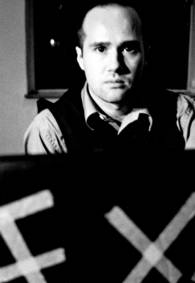
A continuation, in which Andrei Gorokhov decided to talk with Felix Randomiz
"To act as an expert on this circle of questions, I asked the Cologne musician Felix Randomiz (F.X.Randomiz). I began from afar.
A.G.: Do the makers of electronic music consider themselves creative people? Electronic music is doomed to repeat the same statement, the same form, which is, generally speaking, unacceptable for an artist. An artist strives to constantly change his art, so that each of his opuses possesses its own character and is unlike the rest.
Felix Randomiz: Yes, this is a problem that appeared in the '90s. That's precisely why the makers of music avoid calling themselves musicians, let alone artists — they're producers, manufacturers. They produce a certain product. A new product, say, a television, should possess all the merits of the previous model plus a few minor improvements. It certainly shouldn't be anything unique or inimitable. Yes, there's a big problem in this.
But it isn't perceived as a problem at all. It's a matter of a rigid stance, of a slogan: 'We're not personalities, we express nothing, we have no position, we only produce, for us only the result is valuable — pure sound.'
And I don't quite share the pathos of this assertion. If pure music is what matters, then it's unclear why different people should be making it. Different people should have different points of view, and this affects the music — namely, different music appears.
As for constant self-repetition... I think that's rather a normal state of affairs. An artist is inside his own world, operates within his own boundaries... far from everyone can or wants to break out... everyone, as a rule, does what they can, and if it sells, then what more could you want?
Some, however, strive to outgrow themselves and to start making things that previously didn't even seem possible to them.
A.G.: Can it be said that producers of electronic music are doomed to self-repetition, given that it's obvious commercial calculation is by no means the reason for this treading of water? How much freedom does a music producer have today? How great is his room for manoeuvre?
F.R.: Every program has not-very-visible boundaries within which you're forced to operate.
Say you move the slider responsible for the filter level, and you think you're changing one parameter. You get used to that sound, it seems to you that you understand what's happening — the high frequencies are being cut off.
But in fact, by moving one slider, you change a dozen parameters hidden from you... what you perceive as a single filter may turn out to be a complex construction, and you have no idea how it's all actually built or why the result sounds this way and not otherwise. If you don't account for this, then you don't even see the boundaries within which you're moving. And since you don't see them, you can't step over them.
That is, you really are dictated to in practically everything, you do nothing yourself — the programmers of the programs you use have taken care of everything. Crudely put, if your music suddenly starts jingling nicely, it does so not because you set the filter level well, but because the makers of that filter imperceptibly wove a resonance algorithm into the chain — that is, the filter starts self-exciting at certain frequencies... and you don't even hear that the resulting effect isn't your doing. Anyone who uses this program will get exactly the same result.
Every program has its own characteristic sound, its own sonic colouring — this applies both to little plug-in programs and to huge software environments like Metasynth or Max/Msp.
Every computer program, whatever advanced possibilities it may offer, has its own sonic character, and everything it does is, in fact, a variation of this basic sound. Say, here's the program Metasynth, which offers to let you transform any drawings into sounds... seemingly unlimited possibilities? No, recognising the Metasynth sound is not hard at all.
A.G.: How unique are your ears? Are all musicians capable, say, of immediately making out in a noise track whether it was made on Max/Msp or on Reaktor? About myself I can say straight away that I don't hear this.
F.R.: If a musician works intensively with some program, then he's able to recognise its characteristic sound. I once gave a lecture about music programs and demonstrated various effects... in particular the Pluggo package (it's effectively Max/Msp). I showed how, out of a completely unremarkable sound, you get something far more distinctive. After the lecture Frank (Dommert, head of the Sonig label) came up to me and said: 'It all sounded like Fennesz — I finally understood how he makes his things.'
Indeed, that's exactly why I gave the lecture — for the sake of demystification, that is, the destruction of the legend. To the musicians themselves, though, this sort of enlightening of the public would most likely seem dishonest — they clearly want to preserve the veil of mystery.
Pianists and guitarists, in fact, have long been in this situation — everything about the sounds of a guitar is known. And yet guitar music is still made that nobody understands the making of. An aura of mystery can still be created.
I hate the word 'virtuosity', but the matter, in the end, comes down to how a musician plays his instrument — be it a guitar or a computer program.
With electronic music the problem is that even if a thousand parameters affect the generation of the sound, once those thousand parameters are set, the resulting sound will always be the same. Whereas when you strike a guitar string — each strike leads to a new sound. You really can't play a computer program like a musical instrument.
A.G.: But you can — as your name hints to us — randomise the process, that is, use random-number generators.
F.R.: Yes, of course. But as we all know, there are no random processes in a computer — it's all simulation.
But it seems to me that the point isn't the generation of random numbers at all. The point is the approach, the techniques of working. Analogue and acoustic instruments let you work — that is, play — plastically, to change the sound smoothly. A guitarist can bend the sound, stretch it, draw it out... that's something completely different from programming a random-number generator that modulates a low-frequency oscillator (LFO), which in turn modulates the frequency of an oscillator.
A.G.: I'll repeat my question: Can it be said that the development of programs has led to musicians today having more freedom, more room for manoeuvre?
F.R.: Oh, it's hard to say. It's commonly thought that more freedom has appeared simply because there are now more possibilities — purely from a technical point of view. What you could realise a couple of years ago only with great technical effort, today you get automatically.
A.G.: For example?
F.R.: Well, say, granular synthesis, the fast Fourier transform (FFT)... all these algorithms came to be used for chopping up and reshuffling breaks in drum'n'bass. You couldn't get that so easily before. As for the Fourier transform, a couple of years ago you had to program everything for a long time and then wait half an hour for the computer to finish the calculation... now it all happens in real time: you press a button and get the result at once.
And this has led to users treating the problems that arise far more thoughtlessly. You can arrive so quickly at results that resemble nothing at all! You turn the knob further and get something completely new, and meanwhile you didn't take in what you had before, you analysed nothing, you didn't think, didn't compare... you just turned the knob further. You didn't like the situation you had before — you didn't ask yourself, but why, exactly? What's bad about it? What, on the contrary, is good? No, you just twisted the knob further to see what's there. Not great either? OK, turn another knob, press a couple of buttons — again a completely new situation. That is, you jump between the different variants so fast that you simply have neither the time nor the inclination to listen closely and understand something.
A.G.: Can this state of affairs be compared to pressing buttons on a television remote control?
F.R.: Yes, exactly, it's like zapping: here it's sluggish and uninteresting, I jump to a new channel — there's nothing interesting there either? I'll switch again... And it all ends with you doing nothing but running through the possibilities. And you have no desire to explore any of the situations that come up in front of you more deeply. After all, there's always the suspicion that, by changing the position of the control, you'll immediately get a far more interesting-sounding result.
A.G.: OK, but do you have the possibility of really going deep? If you use the algorithms of the forward and inverse Fourier transform, then you're forced to stay on the surface — you'll never understand the difficult mathematics hidden inside your sound-resynthesis program.
F.R.: Yes, I'm aware of that. I suppose I'm urging people not to run through different effects, but to concentrate on one or two and devote a lot of time to them, get comfortable with them, get used to them, learn to control them a little, learn to apply them purposefully and, above all, in the course of working, achieve a change in the way you look at things... say, you yourself start to notice things you didn't notice before, you start to like other things.
That means you're on the right path, that you're going deep rather than jumping about on the surface.
It's important to learn to obtain things that surprise you. By jumping from situation to situation you won't get this — each time I land in an incomprehensible situation, alien and uninteresting to me, and it doesn't surprise me.
A.G.: Has your attitude to the work changed, the procedure of your work in this new situation?
F.R.: And how! I've become completely helpless!
A.G.: In what sense?
F.R.: In the sense that I'm swamped by a flood of technical means, special devices and new possibilities... and the main work consists of selection, of selecting what I don't want, what I don't like at all. When the new Reaktor came out, I killed a month just combing through the user's library.
Yes, that's the whole thing — the work has become a search: and what's this? And what's this? And what's this for? Before, when the possibilities were limited and surveyable, you got on with your actual music. Now you wander through endless labyrinths, searching for where something interesting lies.
After all, nobody wants to miss the good that unquestionably exists in the new programs! And as a result, you spend 90% of your time rummaging in a rubbish heap... yes, you're looking for a needle in a haystack. It's exactly like hopping from TV channel to TV channel — you want to catch the most striking moments of all the shows, you're afraid of missing something interesting, and the next day you can't remember what you actually saw.
A.G.: Did you used to work differently?
F.R.: Of course. Before, I worked far more intuitively... more freely... I played more.
How Felix Randomiz played and what else he talked about with Andrei Gorokhov, you'll find out in the next part of 'The Crisis of Electronica'...