Who, to Whom, and for What
Танцпол · 13.03.2008
By Иван Дубков
This year the events whose purpose is to recognize the merits of people connected with nightlife, electronic music and the club scene have reached a new level. These are no longer just local happenings organized by dance-music fans, but serious, large-scale events, interest in which is so global that even a person infinitely far from club culture surely knows something about them.
Back at the end of October, when the results of the DJ Mag vote were announced, clashes of opinion began: some spoke of falsified results, others were amazed at such strange outcomes, still others celebrated the victory of their favourite artists. Then it got bigger: the Grammy ceremony took place, whose laureates were also ambiguous figures. The WMC is coming, and with it, in Miami, the International Dance Music Awards ceremony will take place – the most authoritative award in the field of dance music in the world.
The Russian analogues aren't lagging behind either. Here too we have three main players: the Night Life Awards (NLA), the dj.ru site vote, and the Russian Dance Music Awards (RDMA). All of them are held not for the first time, and all of them raise certain questions among fans of dance culture too. We became curious about how all this actually happens, what the organizers of these celebrations think, and what the DJs, musicians, club representatives and well-known journalists can say about it.
Top 10 of 2007:
1. Armin Van Buuren
2. Tiesto
3. John Digweed
4. Paul Van Dyk
5. Sasha
6. Above & Beyond
7. Carl Cox
8. Ferry Corsten
9. Infected Mushroom
10. David Guetta
The full list here→.
Besides the main vote for the best DJ, the site also features other rankings, for example, the hundred best clubs in the world.
The DJ Mag Top 100 vote has been held on the internet portal of this British magazine since 1997. Every year at the end of October the biggest musicians and DJs await the announcement of the results, which are revealed at the most eminent clubs in England at a grand party. The number of voters is growing rapidly every year. In 2006, 217 thousand people voted, and in 2007 – already 345 thousand. 220 countries took part in the vote (there are 245 in all on the globe). The majority of votes came from the USA, followed by Great Britain, and in third place by number of votes – China. After it Germany, then Russia (!), Brazil, the Netherlands, Mexico, Turkey and France. To date the DJ Mag ranking is the most global survey of its kind.
An incredible number of candidates took part in the latest vote – 89,393 DJs were named on the ballots, on which voters listed their five favourites. The counting proceeded as follows: DJ number 1 gets five points, number 2 – four, and so on. The organizers of the vote discovered 637 different spellings of the name of the DJ Armin Van Buuren, and also ran into the problem of deciphering some other names, like PvD (Paul van Dyk). Despite this, according to the organizers, all the votes were correctly understood and taken into account.
DJ Mag Top 100 2007 statistics: 15 new names, 12 returns, 4 static positions unchanged from last year, 45 upward moves in the chart.
The victory of trance music surprised no one. Over the past years the main favourites of the ranking have been the biggest representatives of this genre – Paul van Dyk, Tiesto and Armin Van Buuren. So the latter moving up one line compared to last year turned out to be quite expected. And this concerns not only first place. Judge for yourselves: in the top ten there are six trance disc jockeys.

Despite the fact that trance DJs dominate the list, this year representatives of other styles noticeably gained ground too. So, for example, the DJs Sander Van Doorn, Gareth Emery, Blank & Jones, Ronski Speed, Matt Hardwick and Agnelli & Nelson rose much higher, while many trance artists lost their positions badly or dropped out of the list entirely. Another feature of the results of this particular vote is the return of techno. Richie Hawtin rose 14 places and now occupies line number 19. Sven Vath advanced 17 positions and thus ended up among the thirty strongest. The Slovenian techno DJ and producer Umek added 53 places and now sits next to Sven. Mauro Picotto – plus 37 places. Anderson Noise, the only DJ from Brazil last year, also climbed 25 rungs of the chart. Returning to the list are Hawtin's associates and colleagues: Ricardo Villalobos – No. 49, Marco Bailey, Jeff Mills, Magda, Laurent Garnier and Adam Beyer. And that's far from a complete list: Luciano, Booka Shade and Sebastian Leger are only those who made the hundred, while in the full list, comprising 250 places, are Ellen Allien, Miss Kittin, Gui Boratto and many others.
The DJ Mag vote this year became record-breaking not only in the number of participating countries and votes cast, but also in the attempts to falsify the results. The vote's curator, James Robertson, decided to investigate several cases.
The Chinese DJ Tiesmi bought his votes. He explained to James Robertson that 100 thousand votes cost him 4000 yuan (about 260 dollars). He paid a programmer to create a program allowing him to bypass the site's security system. His deception was detected almost immediately, since within a couple of hours of the start of voting he was already in first place. Yutise – the second DJ who aroused the same suspicions as DJ Tiesmi. He explained to the organizers that he wasn't padding his own votes; rather, it was his crazy fans, who are impossible to control. It's strange that artists like Paul van Dyk and Tiesto don't have such problems.
Winners of the previous, 22nd IDMA ceremony:
Best progressive house/trance track: Dance 4 Life (Tiesto feat. Maxi Jazz)
Best breaks/electro track: Put Your Hands Up For Detroit (Fedde le Grande)
Best European DJ: Paul van Dyk
Best American DJ: Gabriel & Dresden
Best International DJ: Tiesto
Best radio station: BBC Radio 1
Best radio mix show: Armin van Buuren - A State Of Trance
Best CD compilation: A State Of Trance - Armin van Buuren
Best DJ Mix CD: Tiesto - In Search Of Sunrise Volume 5
Best producer: Timbaland
Breakthrough of the year (artist): Fedde le Grande
Best international dance label: Ministry Of Sound
Best event: Winter Music Conference.
On 14 March the voting for this year's awards ended, and its results will soon be made public.
IDMA has nothing to do with the Indian Drug Manufacturers Association. The International Dance Music Award (IDMA) has existed since 1985 and is held as part of the Winter Music Conference in Miami. Despite the conference being a winter one, it takes place at the end of March. The idea for the conference belonged to Louis Possenti and Bill Kelly, and back in '85 they achieved fairly modest success: at that time only 90 delegates attended the conference. However, by the 20th anniversary ceremony their number exceeded 4500.
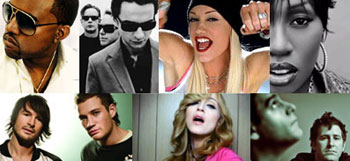
The IDMA award itself is not the main thing here. The conference is a full-fledged festival whose tasks are to introduce all comers to new trends in electronic music, hold press conferences and master classes, present multimedia novelties, sign contracts, and so on. And the IDMA award ceremony is just one of the conference's events. The main event of the Winter Music Conference is, rather, the Ultra Music Festival – the largest open-air rave with an audience of 50,000 people and megastars like Paul Van Dyk, Richie Hawtin and Carl Cox. Over the course of the festival, sets and live performances by over 2000 artists sound within its framework. Being the oldest festival of its kind, the WMC has acquired an incredible number of followers both in Europe (Amsterdam Dance Event, Popkomm, N.A.M.E. Festival) and in the States (the Decibel festival, held in Seattle). The Miami conference is the largest event of this kind in the world, so it's no surprise that it's precisely within its framework that the most significant annual ceremony for awarding achievements in the field of dance music is held.
It's worth noting that the concept of Dance is seen by the IDMA organizers extremely broadly. Among the winners of last year's ceremony were Justin Timberlake, Shakira, Madonna and other representatives of polished pop. Representatives of progressive trance took their place too – the same Godzillas of super-mass raves, Tiesto and Van Buuren, as well as the darlings of the MTV channel's target audience – Benni Benassi, Fedde Le Grande with his Put Your Hands Up For Detroit, and other sculptors of commercial electro-house.
These awards are given not for finding new ways of playing, not for experiments or innovation. They are precisely an index of the artists' popularity, of their recognizability on the street, the result of the good work of their agents and PR managers. To what extent such awards can change anything on the electronic scene is, of course, a debatable question, but have no doubt: you'll be hearing the nominees and winners of this event from your radios, seeing them on your TV screens, and recognizing them in advertising all year long.
After the artists, promoters, producers, record labels and dance events are awarded. By the way, in 2007 the winner in this category was... the Winter Music Conference itself: if you don't praise yourself...
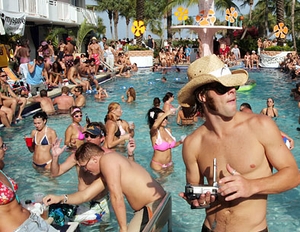
Since the award is meant to embrace the whole world of dance music, it's no surprise that the list of nominations includes such purely professional categories as Best vinyl cartridge, Best sound system, and Best software. It's strange that there still isn't a Best beer for a DJ award. In all there are 49 categories in the IDMA.
The strong side of the Miami Winter Music Conference lies not in handing out statuettes and hanging labels, but in the atmosphere of a bubbling stream of new information connected with electronic music. Just imagine: for five days the whole city plunges into conferences, seminars, meetings, master classes and parties featuring the most popular DJs and musicians on the planet. Presentations by label managers, discussions of the problems of electronic music, development paths, the search for sponsors and the presentation of works – all of this can become a starting point for a beginning DJ, and for someone else – an opportunity to discover a new, previously unexplored sound and to meet interesting people. And all of this on the warm shore of the Atlantic Ocean, in a real Mecca for party-goers – Miami.
The music award of the American Recording Academy has existed since 1958. The Grammy takes place in the first days of February every year. Today it is one of the most prestigious awards in this sphere and covers practically all popular music, naturally with the American listener in mind. A worthy equivalent is the Oscar for achievements in cinema. The Grammy is awarded annually in 108 categories across 30 musical genres, as a result of a vote among the members of the Recording Academy. Successful and recognized artists and sound engineers can also influence the final results of the vote.
It seems that it was precisely from this award that, back in '85, the IDMA category emerged, as a more specialized and precise one. However, some of their positions coincide; for example, both consider Justin Timberlake one of the favourites of the contemporary dance scene. The Grammy organizers have always tried to keep track of the development of dance music. So, for example, in 1980 the category "Best Disco Performer" appeared, though it lasted only a year.
Now the main categories connected with electronic (read: dance) music are as follows:
Best Remixed Recording, Non-Classical: the winner was the track Benny Benassi - Bring The Noise (Public Enemy Remix)
Best Dance Recording: the best of 2007 was recognized as the song Justin Timberlake - LoveStoned/I Think She Knows
Best Electronic/Dance Album: the winner was the album The Chemical Brothers - We Are The Night
On the whole the award reflects the situation on the mainstream music market. Its task is to designate the most popular and best-selling products. This year, as at the IDMA, the presiding jury caught which way the wind was blowing and included among the nominees the electro-rockers J.U.S.T.I.C.E. (three nominations, including best video), the indie-rockers LCD Soundsystem and the techno producer Carl Craig. True, all of them remained merely ornaments of that list.
The benefit of this event seems extremely dubious, especially for the Russian listener: seven nominations in gospel, just as many in country, there's also polka and other jokes with long beards. With such a set, the award is, rather, a museum of miraculously preserved exhibits than a serious academic history.
Looking for a positive side to this event is a thankless task: on the one hand, it would seem that the times when electronic dance music was considered a marginal and transient phenomenon have long passed, and the fact that such categories exist no longer seems like something new. On the other hand, according to the Grammy organizers, this layer of music is so insignificant that a couple of nominations are quite enough for it, to cement the merits of, say, Madonna.
And finally, some amusing moments in the history of this award:
1978: Breakthrough of the year: Elvis Costello loses to A Taste of Honey
1980: Album of the year: Frank Sinatra, Billy Joel, Barbra Streisand, Pink Floyd lost to Christopher Cross
1988: Best hip-hop group: Public Enemy's "Fight the Power" lost to Young MC's "Bust a Move"
1988: Best metal group: Metallica turned out to be less metal than Jethro Tull.
1991: Best hip-hop group: Public Enemy lost to The Fresh Prince.
1992: Best rock song: Nirvana's "Smells Like Teen Spirit" yielded to Eric Clapton's "Layla."
2000: Album of the year / Best performance of the year / Best vocal album: Radiohead didn't outdo Steely Dan.
Nominations and winners:
Music project of the year in the category of club dance music: SwankyTunes
Night club of the year: "Krysha Mira"
Site of the year in the category of dance culture: Nightparty
Club event of the year: Fortdance 2007
DJ of the year: DJ Spirit
Promoter / promo group of the year: Underground Sound Of Moscow
Best Russian DJ of the year: Bobina
Radio program of the year in the category of dance music: "Personal Chart" (Megapolis Fm)
Record company of the year in the category of club dance music: "Pravitelstvo Zvuka"
Print publication of the year in the category of dance music: "Ne Spat!"
Award for contribution to the development of Russian dance music: Oleg Odjo
Club brand of the year: Fortdance
As the organizers declare: this is the first professional award whose task is to recognize the achievements of the individuals involved in the club industry. This year the RDMA is being held for the second time. It took place on 25 January 2008 at the club Gazgolder Gallery.
Over the course of several months, representatives of specialized companies and professional organizations in the sphere of show business, the recording industry, PR and the media take part in a survey. In parallel with this, an independent all-Russian vote goes on across the Internet. On the basis of the results obtained, the winners are determined.
The award, for a second time, gave rise to a considerable number of questions. How were the professionals' questionnaires reconciled with the results of the online vote, and in general – who are these professionals? Among the event's partners are the radio station "Megapolis", World Club Music, the site nightparty – and all of them win in some categories. How did it come about that the ceremony's laureates are practically the same people as on the lists of another similar award, the Night Life Awards? It's also not very clear how it happened that the people sitting on the jury went up to collect awards. Why did practically no one dance in the hall? Or maybe it's not so bad, and my clouded gaze didn't quite adequately make out certain nuances?
The fact that Mike Spirit sat on the jury at the press conference and then went up twice to collect awards during the ceremony is simply a coincidence. This person is very deeply involved in the club industry; all of 2007 he actively performed and toured, so it's no surprise that he became a winner. As for the label he represents, "Pravitelstvo Zvuka", that victory surprised no one, since this company really did a lot for the club movement of Russia in 2007.
I won't claim that the ceremony itself went exactly as we wanted. There were some problems with the sound, the lighting, the hosts. The venue we chose didn't quite meet our needs, and on top of that too many people came, the club simply couldn't hold that many. But from the comments of people who attended our ceremony for the second time, we can conclude that we organized everything much better than last year.
We don't compare ourselves to the Night Life Awards at all; if that award is more social and pop-oriented and appeals mainly to the Moscow and Petersburg beau monde, then ours is meant to become a reference point precisely for the club crowd. Although we too had guests such as Sergey Zverev, Ksenia Borodina and Pavel Volya, we are oriented precisely toward the club format.
As for the talk of rigging the results, promoting one's own artists, promoters and so on. We don't do such things, our sponsors don't dictate to us who should win, and the founders don't put their charges on the pedestal. And despite some flaws, we consider the ceremony that took place fully successful and will try to make the next one even better!"
The top ten of 2007:
1. Feel
2. Romeo
3. Riga
4. Ivan Rudyk
5. Volodya Fonar
6. Dmitry Almazov (Bobina)
7. Kefir
8. Gvozd
9. Dmitry Filatov
10. Viper
The vote has been held over the past five years. The results are tallied toward the end of the year, in the twenties of December. In the 2007 vote just under 50,000 people from across Russia took part. All internet users could cast their vote.
Despite the site administration's assurances of strict control over the reception and processing of votes, objective counting and the prevention of vote-padding and other improper actions, the results of the vote caused a huge resonance on the internet, and with it – surprise, indignation, outrage and bewilderment, and, it has to be said, quite justifiably so. This reaction was caused by the abundance of new names and the pushing back of the old-timers, as well as by the phenomenal success of the Petersburg DJs and the appearance in the top (predominantly in the first places) of absolutely all the artists of "Radio Record".
The comments on this vote were marked by a polarity of views. Perhaps the only thing that wasn't in them was indifference. Some tried to mock it, and some tried to note all the merits of this event.
A month after the announcement of the results, a big piece appeared on DJ.RU, in which the site's team tried to put an end to this polemic: "First of all, for the last time the resource's administration states that 99.5% of the padding of our vote was removed. What's more – most of the new names in the top did not resort to technical padding, but well-known and respected artists were caught padding. Why they did this is unclear. We hope that those who read this text will draw the appropriate conclusions and won't make us blush next time".
One involuntarily asks the question: why, if there were facts of vote-padding, did the site administration not inform its users about it, having decided that only they should blush. The fact that this information didn't receive wide publicity looks rather strange.
The text went on to state: "Second, from the results of this top it became clear that we underestimated the significance of social networks and the possibilities of self-promotion within these networks. This concerns the fact that DJs could post banners on sites like vkontakte.ru, odnoklassniki.ru and so on. In essence, people were urged to vote for their friends, and they followed the link and voted without going into the details much. Third, we will not, gentlemen, take part in your hysteria, in rearranging places and so on. If many users didn't show their activity, next time we'll make it so that people find out about the vote before they get a mailout in the style of "follow this link and enter my name in the first line". We'll also tighten the voting system with additional confirmations of uniqueness, possibly by introducing new services and the like. All this will make people think and make their choice more consciously".
The DJs of the Top's first ten also weighed in with comments in the article.
Read here→.
The award has been given in Moscow since 1998, in Petersburg – since 2001. The NLA is held annually in the last days of February. Its heroes are society figures, cutting-edge pop, club owners, the biggest promoters, art directors, DJs and other regular guests of the ski slopes of Courchevel. The award is broadcast on MTV, and the list of individuals involved in it doesn't let you forget that for a second: Timati, Serega, "Diskoteka Avaria", Ksenia Sobchak... Sometimes the organizers indulge the public with more interesting guests, like the group "Krovostok" or Jay Jay Johanson. The certificates are awarded in seven categories: Discovery of the year, Music club of the year, Club character of the year, Best bar of the year, DJ of the year, Club of the year (Grand Prix), For contribution to the development of club culture.
However, this list can expand. Last year, for example, the category Best club serial appeared, and for lack of competitors the multi-part "Klub" won.
The award was established by the showman Andrey Fomin and the promoter Mikhail Druyan, who, besides the NLA, are occupied with other projects connected with show business. Their faces can be seen in the magazines Hello, OK and "Sem Dney".
The ceremony takes place in the best traditions of the big Western awards: limousines with stars, red carpets, witty hosts and the like.
To accuse the organizers of incompetence and a lack of taste, to reason about the usefulness and necessity of such an award, makes no sense at all. In order to understand what goals this story pursues, we turned to its founder, curator and permanent host Andrey Fomin.
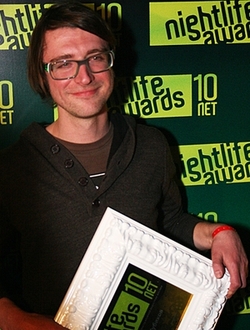
We're often accused of incompetence, bias and other sins. Understand, every award has its format! For example, the Venice Film Festival is one format: serious European films; the Berlin Festival is another: social films. So our award can't give awards without a format either. Our format is oriented toward nightlife as a whole. If we're talking about clubs, then these are global clubs, premium-class clubs. If DJs – then these are top-level artists. We were scolded for a long time for awarding first place last year to DJ Smash, but for us it's obvious that there is simply no DJ more popular than Smash right now. For us the best artist is the one who stepped from music culture into mass culture. The one whom people recognize on the street, whose tracks are in rotation on Muz-TV, whose songs people sing.
We don't consider the culture connected with the underground. Tomorrow a bunch of other awards may appear that will take up this question, and we'll only be glad of it. But we've never tried to take up the megaphone of underground sound. We may be somewhat conservative in some ways, but we award the obvious market leaders.
Last year we had no doubt that the best music club in Moscow was Ikra. And this year it will most likely become B1 Maximum, which over 2007 brought in a simply unimaginable number of artists of all sorts of genres who had previously performed exclusively in stadiums and in huge sports complexes like the "Olympiysky" or the Kremlin. And now they perform in a nightclub. From our point of view that's simply revolutionary.
We award brands, we award everything that Petersburg and Moscow are talking about, what's on everyone's lips and develops the industry. About each of our laureates I can say why it was precisely he who won. Take, for example, the best club of last year's ceremony was recognized as "Dyagilev". It's the most recognizable club brand of the capital of last year. If you conducted a survey in Paris or London, they would surely tell you about it precisely, and not about some other Moscow club.
What is club life for us? It's the clubs Ikra, "Dyagilev", Opera, "Solyanka" taken together. At "Dyagilev" very rich people spent their time, at "Ikra" – music lovers and fans of various genres, at "Opera" – students and their girlfriends, at "Solyanka" – the advanced party-goers... We strive to cover the whole spectrum of manifestations of club life, to reflect it in its entirety. Our award is not just a commercial story with "Most" and "Dyagilev", but a cross-section of nightlife in its most varied aspects.
As for the ceremony itself. Yes, we invite artists whose names, perhaps, are not directly connected with nightlife. Take, for example, Boris Moiseev, who took part in the previous event. You can say all you want about how pop he is. We, however, see him not as a hero of the "Soyuz 88" compilation, but as a character capable of entertaining the public. I can clearly picture Moiseev on the stage of Studio 54. We don't claim that Sergey Lazarev or Alena Sviridova are club artists, but we don't want to turn our ceremony into a house party at which only a DJ plays. Besides, our goal is the popularization of the industry as a whole, and the award appeals to the largest possible audience, which will find it more interesting to see well-known artists in a new role than unknown DJs at their most ordinary occupation".
Results of the award in 2008
Moscow:
Best music club: B1 Maximum
Club character of the year: Sergey Zverev
Best bar of the year: Denis Simachev Bar
DJ of the year: Anton Kubikov
Award for contribution to the development of club music: the club "Propaganda"
Best club project: Bar XXXX
Best club promoter: Andrey Nezabudkin
Best DJ of the year: DJ Romeo
Award for contribution to the development of the St. Petersburg club industry: Dmitry Milanov
Best specialized club: Seven Rooms
Grand Prix Best party of the year: White party