M_nus: 10 Years
World Wide · 24.01.2008
By Юля Чай и Илья Mako

In the spirit of the label M_nus, an article about it should look like its own absence. In 2008 one of the most influential minimal techno labels, M_nus, celebrates its tenth anniversary. Born at a key moment in the development of techno music and having spawned much within it, M_nus, in the year of its jubilee, is not staging a grand tour but declaring 10 weeks of silence. During this time not a single new release will come out, not a single one of its artists' performances will take place (except for possible, highly classified test-runs of new material). While the artists, on "vacation", accumulate strength for a new push, listeners can calmly recall the key moments of the label's development and pay tribute to its creator – who diligently hides his eyes under a slanting futuristic fringe – by re-listening to the releases put out by his like-minded comrades over the passing decade.
Perhaps, if Richie's father hadn't been offered a job at the General Motors plant, the music world today would look a little different. But in the '70s the Hawtin family left the town of Banbury, Oxfordshire, England, and took little Richie away from the land of The Beatles and tea-drinking into the industrial romance of the automobile capital of Canada – Windsor, Ontario. This city's close proximity to the industrial jungles of America, sprawling across the river, had a decisive influence on the boy's formation. His gaze was fixed on the centre of world techno culture – the city of Detroit. At 15 Richie ran away from home to cross the border and get to a real techno party. The teenager Richie Hawtin, captivated by breakdance and electro, was stunned by the radically majestic machine music being propagated at the time by the Detroit pioneers Juan Atkins, Derrick May and Kevin Saunderson.
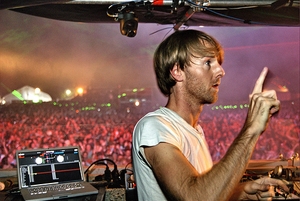
At 17 Richie himself took up the DJ booth of the underground club The Shelter, where he mixed house, techno and industrial like Nitzer Ebb and Front 202. Inspired by The Wizard (a radio DJ of the late '80s, now better known as Jeff Mills), Richie made his own show on the Detroit station 96.3 FM.
In 1989 Richie and John Acquaviva, who had an excellent studio in London, launched their own label Plus Eight Records, to put out their own tracks and promote new artists, while at the same time making their first attempts at throwing parties in Detroit. But fame didn't come at once; the demanding Detroit techno scene didn't welcome the fired-up Canadian renegades with open arms.
"There wasn't a person who would come and tell them, 'Wake up! Those guys (May, Atkins, Saunderson) have left, now they're across the ocean!'" recalls Richie. The city still lived by the names of its pioneers and wasn't ready to worship new idols.
Meanwhile Richie and John slowly but surely built up the label's roster of artists, creating uncompromisingly fast, loud, driving "white" techno. The first release was their own record under the name States of Mind, then followed Kenny Larkin, Dan Bell, Speedy J and many others. Under the pseudonym False, Matthew Dear was released on the Plus 8 label. Richie himself appears here in two guises – as LFO vs. F.U.S.E. (a project that united the opposite sides of hard-techno and house – a blend that even after all these years seems relevant) and, of course, Plastikman.
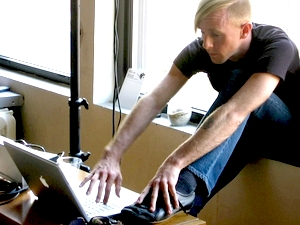
Inspired by traditional Detroit techno, they provoke its second wave. The brainchild of Richie and John shapes a new North American techno sound; even European artists releasing on Plus 8, willy-nilly, begin to fall in with its stylistics. Today the label's first releases and those of its sub-label Probe are classics of the techno scene and the history of the early-'90s rave.
In 1993 a new wave of Richie's parties begins in Detroit, destined to become legendary. Mad dancing in strange dark hangars, transformed for additional disorientation with walls made of sheets of black plastic.
Inspired by this, Hawtin created his virtual alter ego – Plastikman. It's a black-and-red gremlin, whose tattoo can be found on Richie's forearm. He doesn't want to make a collection of tracks; he wants to create an album that will absorb the concentrated energy of these parties and throw out something new, resulting in a series of mega-successful releases. The most interesting thing here happens between the sounds and the beats. In the boundlessly distant echo of the bass, multiplying in geometric progression, reflecting off itself.
Also deserving of separate mention are Richie's joint albums with one of the founding fathers of minimalism of the old formation (alongside Steve Reich, Terry Riley, Brian Eno), Pete Namlook. These are boundless sonic passages, soaring in the stratosphere. Having created even one such album, you can lay claim to a place in history.
So Richie lives through the euphoric storm of the rave revolution, becomes internationally recognised, releases on the British labels Warp and NovaMute, tours the world with numerous live shows in support of the albums and generally leads a disorderly way of life. "Good techno musicians love to let loose, but they're capable of rising above it," Richie remarks.
Increasingly conceiving of techno not only as club music but as one of the forms of contemporary art, Richie comes closer and closer to defining his own concept of musical creativity. And this concept is realised in 1998 in the first records of the record label M_nus.
Since 1998 the Canadian label M_nus has been, for like-minded musicians from America, Canada and Europe, a solid platform for constructing large-scale sonic edifices through the use of a minimum of means. The debut records on M_nus were the EPs of Hawtin's projects Plastikman and Concept. These releases quickly brought the label respect in music circles. Young producers burned with the desire to join the rapidly forming musical family.

The label's motto – Minimize to Maximize (in 2005 a compilation of the same name came out on M_nus) – very precisely reflects the working principle of the label's artists: development through simplification. Ridding oneself of ornamentation in favour of a dense, straightforward, low-frequency sound; the classic 4/4, the "boom-click" and the Roland TB-303 bass synthesiser turned into an axiom.
Having gathered into its cohort a number of talented and often already recognised producers (Matthew Dear, Heartthrob, Berg Nixon, Troy Pierce, Marc Houle and Richie's own protégée, the Polish beauty Magda with the dimpled cheeks), the label attains its true scope. Around this same time, instead of his usual bald head, Richie grows out a slanting fringe and stops wearing glasses, swapping them for contact lenses. Each artist, possessing his or her own recognisable style and firm confidence in the bright future of high-technology music, occupies a special place within the label.

The music of Matthew Jonson, who draws inspiration from avant-garde jazz, and of former hip-hop producer and urban DJ Loco Dice flies and stretches through space, thanks to looped synthesiser lines and shifts. Different in mood, these artists are alike in that within the M_nus label they sound the most expressive, remaining true to the label's basic principles. For M_nus they record extremely competently constructed, groovy records that are unusually convenient for mixing.
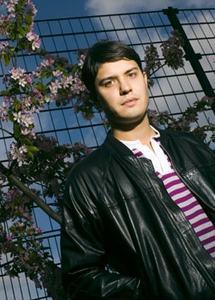
The Michigan native Jesse Siminski, known as Heartthrob, became part of the M_nus family thanks to his acquaintance with the Run Stop Restore trio. Having first performed a public set in 2003, he quickly established himself as a talented producer, a maker of loud "spectacular" dance music.
Besides that, finding their haven within the walls of M_nus were the Spaniard Ignacio Bericochea, the Argentine Mauricio Barembuem (Barem), and the Cologne project Niederflur, who named their tracks after metro stations, having previously been engaged in organising parties with many of the label's participants, and later begun to produce their own tracks; the American Kevin McHugh (aka Ambivalent), the charming ladies Ilana Ospina (aka Algoritmo) and Jennifer Witcher (aka DJ Minx), and, of course, Matthew Dear, releasing under the pseudonym False. All these renowned representatives of the label and the newly signed talents can be spotted at M_nus Night parties all over the world. Unlike the madness and freak-shows reigning at the tours of the friendly label Cocoon, M_nus tours are for the most part a celebration of technology and specially prepared video art, against the backdrop of which the artists, twiddling the knobs on the Allen & Heath console, look most striking.
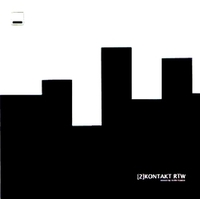
The pedantry in detail with which Richie approaches running the label's affairs is reflected in the visual design too. And although in the design of the records, apart from the logo, the release title and the artist's name, there's practically nothing, and the records come out in identical sleeves resembling more a surgical card index, the use of contrasting colours makes them striking and recognisable. The signature cubic design belongs to the hand of Richie's brother, Matthew Hawtin, endlessly playing with the edges and colour solutions of the square – a geometric figure occupying a special place in contemporary art. Video for the live performances and M_nus music clips are created by the artist Ali Demirel, who deftly manages to integrate into Hawtin's clips allusions to Tarkovsky's films. All of this is presented as a single stream of art, an audiovisual experience, called to convey to the public an idea, a concept, a feeling.
M_nus has long established itself as an advocate of using new, progressive technologies in recording, releasing and distributing its records. Just as Apple founder Steve Jobs never forgets to mention his main partner Intel in his presentations, so Richie in his interviews doesn't stay silent about his relationships with Ableton and Allen & Heath, and all the label's artists long ago, and gladly, switched to Final Scratch. In this way the label makes a substantial contribution to the process happening today, in which the boundaries between source materials are being erased, and it no longer matters what an artist works with – records or digital copies in the form of files. Among the label's other innovations are the active use of podcasts, the creation of ambiguous ringtones and of the Beatport resource for selling music in mp3 and wav format. In 2007 the label road-tested the technology of releasing records on flash cards with the compilation EXPANSION-contraction. All of this contributes to the maximum concentration of attention on the label, which makes it all the more surprising that at such a moment Richie announces a long-term break of 10 weeks. Perhaps there is a certain share of theatricality in this gesture, as if it were all stitched together with marketing threads, but let's trust the Berlin office and Hawtin's intuition. After all, not everyone manages to raise an underground label to such a peak of popularity and to keep the fire burning in its participants and listeners with a promising aspiration towards the future.
Richie's father, Mick Hawtin, still works at General Motors to this day, and his mother, Brenda, is in real estate.
