Opera – A New Club on an Old Formula
Танцпол · 23.07.2006
By Филипп Миронов
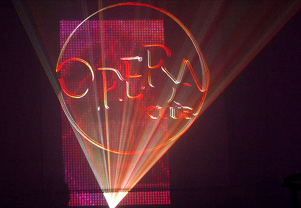
On July 21 a new high-class club opened — Opera. The organizers postponed the opening several times, thereby stoking the public's interest in the new project even further. The creators of Shambala, Leto-Zima-Osen and Dyagilev built the club on the site of Zima, and after the closure of Skazka — one would rather not draw parallels, but a certain connection can be felt. The Opera project, planned to last no more than two years, drew an incredible crowd of gilded youth, journalists and art-scene figures to its opening. There's really nothing to be surprised at here: rumors of the new club's opening had been circulating in society since the start of summer, and construction finished literally on Friday evening, a couple of hours before the opening. One of Opera's co-founders, Denis Noykin, told us about the new project, his involvement in it and his plans for the future.
"I've been with Alexey Gorobiy for a long time, since Shambala. I worked at Most, and when it went bust I crossed the road and ended up at Shambala. I started as a bartender, gradually grew into bar manager, director, general manager. I went through all of Alexey's projects and at this point I act as a partner."
"I think a significant part of the success of Gorobiy's clubs is his personal magic. But beyond that there's a formula honed over the years, which, of course, anyone could apply. For people to come on Friday and Saturday, gasp, drop their jaws and remember what they saw for the rest of their lives, work goes on around the clock all week long. Naturally, no one is going to reveal the secrets of our success."
"In general, Alexey has an idea of a certain monopolization of the club business in Moscow, because it's genuinely feasible to run venues of different formats that don't overlap in their audiences and to manage them without trouble."
"The project is planned for two years, which is why we work very carefully and at length on the design of the space. There were many nuances to do with the upholstery fabrics, the treatment of the walls, the bar. We didn't use a blueprint; we built, as they say, 'off the cuff'. Our working principle, when we prepare projects in two months, is that we get together, hold a brainstorm, and then set about bringing the ideas we've come up with to life as quickly as possible. This time the process was more complex. First of all, a large multi-level stage appeared. And we're counting on the club bringing in large-scale shows in addition to DJs and dancers. And the emphasis is on that more than on the music. Opera is more lavish than Skazka, but there's no sense in pushing the prices any higher than they were there."
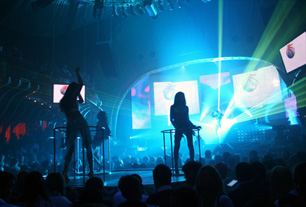
"The club began not with a name but with the chance to return to this space, which had been abandoned two years ago. We moved into a ruin — bare walls and rubbish. From the moment Zima closed, no one had done anything here. The building was slated for demolition, despite being considered an architectural monument. Nobody was particularly bothered about the name, because everyone was absorbed in the construction. It was born long ago, but in a rush, and no one took it seriously. We kept searching for alternatives, but none of the other options appealed to us. A rather pompous name that suits this architecture. By the way, we have no preference about which syllable to stress in the word 'Opera'. I know people around Moscow are already joking: opera, cops — half of Moscow laughs, half of Moscow likes the name."
"Above the bar hangs a chandelier shaped like a jellyfish and a sun. The whole club is arranged as if it were one enormous lighting fixture that can play in any way. The entire chandelier is threaded with fiber optics and will change colors. Most of the lighting equipment was brought in from China. The principle of minimal cost and maximum benefit remains, although the project's overall budget turned out to be very, very far from small. But less than Dyagilev."
"We're not giving up on dancing, even though we're making a small dancefloor. Every booth is equipped with its own little dancefloor where you can dance to your heart's content. It's a sort of mini VIP dancefloor."
"We have a certain surprise: we've taken on two promo groups — Quatro Amigos, who ran our Thursdays at Skazka, and we've brought in DJ Jeff's D'Lux Promo Group, which works at Infiniti — and now Jeff has 80% left that club. The radical innovation is that these groups position themselves within r&b, but here they'll present a kind of symbiosis of house and r&b. DJs from Dyagilev and Skazka will play here too."
"The restaurant will be downstairs; our collaboration with a renowned restaurateur, whose name I still can't reveal, has been preserved. It will open three or four months after the club opens. The two establishments have separate entrances, and no one has thought about the restaurant's name yet."
"At the opening the days are split between the two promo groups: Friday is Quatro Amigos, Saturday is D'Lux. The two days will be equally lavish, but different in their shows and content. The idea of bringing in a foreign DJ isn't so much irrelevant as not serious enough for an opening. Because that DJ could spoil the overall atmosphere. Besides, I reckon Opera's opening has been talked about for a long time, plenty of people are waiting for it and will come without any foreign bait."
"Pushing back the opening has nothing to do with the market situation: we don't adjust to anyone, we're not waiting for First to open, we have our own construction. There are no fears about the hot summer either: the club has a very serious air-conditioning system. Besides, back at Skazka we were afraid the summer months would be a flop — the space was small and stuffy, after all — yet from June there was, on the contrary, a surge in the club's popularity."
"There will be a dedicated parking area and valets, but there's no free space for it in Moscow, so getting there by car will be difficult."
(This text was used in preparing the piece for Time Out Moscow magazine)