Berlin... the night from Thursday to Friday, a house party for forty people on the roof of an apartment block. It's around one o'clock. Out of nowhere two policemen appear (both with pierced ears) and politely, almost dancing on the spot, ask the flat's hosts to turn the music down so as not to disturb the neighbours. They'll come back here a second time, and a third...
Berlin stretches 45 km from east to west and 38 km from north to south. Some 3.4 million people live within its 892 square kilometres, making Berlin the most densely populated and largest city in Germany, and the second largest in the European Union after London.
Berlin's viewing platforms:
The Reichstag Dome
— the parliament building of Germany's current government, and at the same time one of Berlin's main landmarks. After the bombings of 1945, the government was forced to move to Bonn; however, since 1999 the Reichstag, having undergone a serious restoration, once again became the seat of parliament. At the base of the glass dome there is a cosy restaurant offering a wonderful view over the whole city.
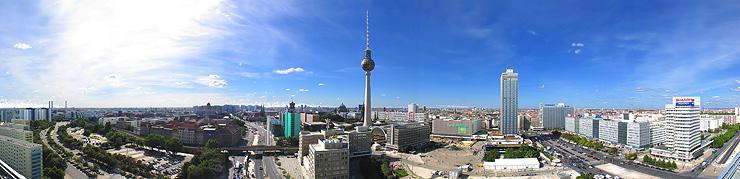
The TV Tower near Alexanderplatz
(or, as Berliners themselves call it for short, 'Alex'). The square got its name after the visit to the city of the Russian tsar Alexander I in the spring of 1805, and today it is the centre of East Berlin. The television tower beside the square is the tallest structure in the city (368 m). At a height of 203 m there is a viewing platform, and above it — a revolving restaurant that makes a full circle in half an hour.
Funkturm
— a radio mast on the grounds of the Berlin trade-fair complex, which Berliners jokingly call the 'Beanpole' (Langer Lulatsch). The tower's height including the antenna is 146.78 m; the observation decks are at levels of 48.1 m, 51.6 m, 121.5 m and 124 m. It was from here, in October 1923, that Germany's first radio station made its first broadcast.
The second day of non-stop club-hopping; having finally, at two in the afternoon, made the firm decision to head home to rest, you set off for the metro, but realise your strength has left you, instantly drop off to sleep on the very first bench in a green park on the way to the U-Bahn, and doze sweetly until evening comes, waking to the trilling of birds and an ill-timed check-up call from loved ones...
Berlin's parks:
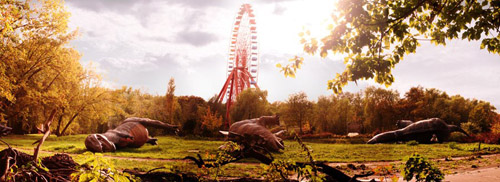
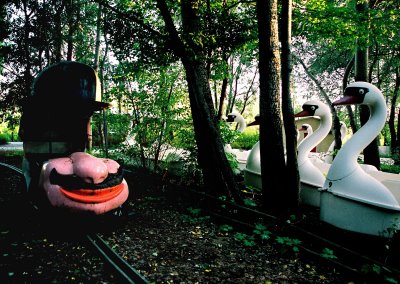
Berlin — is a green city. More than a third of its territory is taken up by forests, parks, meadows, lawns and fields. Tree-planting has a long tradition in Berlin. The famous promenade 'Unter den Linden' ('Under the Lime Trees'), leading from the Lustgarten to the Brandenburg Gate, recently turned 360 years old. The Großer Tiergarten (literally 'animal garden') - the oldest and largest landscaped park (its area is 210 hectares), located in the centre of Berlin, - serves as the city's 'lungs'. The first municipal park - Volkspark Friedrichshain - was laid out in 1846, and in 1913 the 'Fairy Tale' fountain (Märchenbrunnen) was installed there, with colonnades, cascades and figures from the Brothers Grimm's tales. Volkspark Humboldthain, created in 1869/1870, served as a place of outdoor recreation for the predominantly poor population of the Wedding district. In 1888 Viktoriapark was laid out by the Kreuzberg hill. In this park, arranged around a national memorial, there is an artificial gorge and a waterfall 24 m high. The south-eastern part of the city had already, in the 18th century, become a recreation spot popular among Berliners. Here lie Treptower Park and the closed, half-abandoned Plänterwald (Plänterwald), which you can legally enter only by booking an individual tour in the company of a local guard, to wander among the huge sculptures of toppled ancient animals and the Ferris wheel. This place stopped operating as a public amusement park back in the days of the Deutsche Mark. Now horror films and music videos are shot in it, and people simply come to "trip out" in the fitting atmosphere…
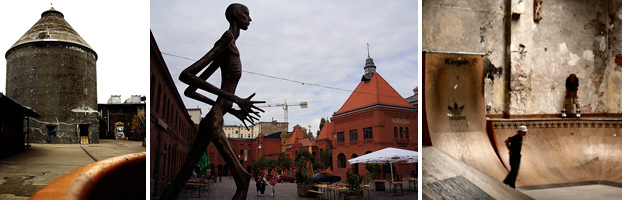
You walk into yet another art centre near Neukölln, where there used to be a brewery, stroll through the gallery, peer through an open door into a studio, ask the artist's permission to look at his as-yet-unfinished works... While you look, you listen to a tale of a 70-hour party for some incredible number of friends that this grey-haired Herr, a can of beer in hand, organised a couple of years ago... 'And have you been up on the roof here?' We go up to the roof. 10 by 10 metres of utterly unbounded space, and in the middle - ... a leather sofa. 'Here I greet the sunsets, the whole of Berlin in the palm of my hand'...
Art galleries and cultural centres:
Tacheles
— the oldest and largest of Berlin's existing squats, located in the city centre in a former department store building. During the Second World War the building was badly damaged. In 1990 a group of artists squatted the partly demolished building. Today artists from all over the world still live, work and exhibit here. Parties and after-parties are held, bars operate, and films and videos are shown on the wall of the building opposite. However, ever since Tacheles was marked out as one of the stops on the tourist route in guidebooks, the real rebels have left the squat on Oranienburger Strasse, and for several years running now the authorities have been threatening to demolish the building.
C/O Photography Gallery
— in 2000 it took over the building of an old post office, and is one of Berlin's largest art institutions. What's notable about the gallery is the contrast between art objects by famous artists like Pierre et Gilles, the columns, the patterned floor and the shabby walls deliberately left un-renovated.
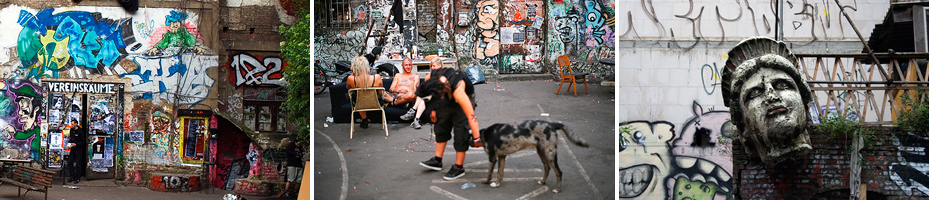
Køpi
— another squat, located in the Kreuzberg district. It was here that some of Tacheles's former inhabitants moved. A fully tagged building, inhabited by non-conformists of every stripe - friendly ones, though. Outside the building are garlands, sofas and armchairs pulled from rubbish tips, tents for those who didn't fit inside, a two-metre head torn off the Statue of Liberty hanging on the wall... The far-right door in the building leads to a small bar run by a group of punks. A fitting place to "digest" what you've seen - though there are plenty of art objects here too - and to order the cheapest beer around. At Køpi they also show films, put on performances, exhibitions and concerts.
East Side Gallery
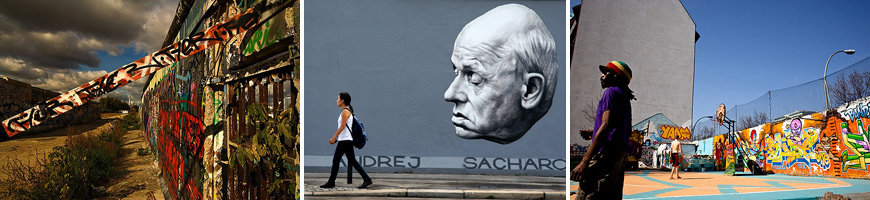
— the largest open-air gallery in the world. In reality it's 1,300 metres of that very Berlin Wall along Mühlenstrasse, painted by artists from all over the world as a symbol of freedom.
YAAM
(Young and African Arts Market) — a territory of street culture (graffiti, basketball, volleyball) and reggae. People come here to play beach volleyball and basketball, sit in an African or Asian café, take in various artists' exhibitions, buy ethnic trinkets and listen to music. The place has existed for fifteen years now and is always open in sunny weather.
Gallery district on Kochstrasse, Markgrafenstraße, Zimmerstrasse and Lindenstrasse
— the hub of Berlin's most fashionable art galleries. Among them: Arndt und Partner, Barbara Weiss, carlier gebauer, Galerie Volker Diehl.
Kulturbrauerei
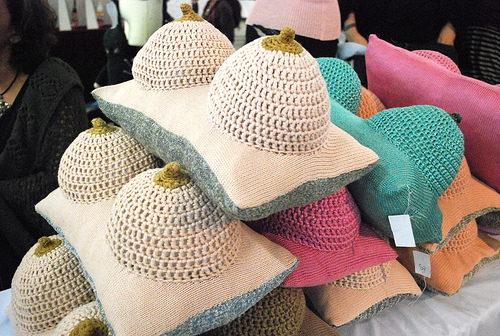
— a cultural centre on the grounds of a former brewery built in 1889. Galleries, nightclubs, bars, a cinema, a theatre, a concert hall, a dance school, publishing houses... On the same grounds, every two weeks, the White Market fair is held - where young designers' items are put on sale.
KW Institute for Contemporary Art
— the reincarnation of a former margarine factory. A spacious, freshly renovated exhibition space with a pleasant inner courtyard, the main venue of the Berlin Biennale.
Cassiopeia
— yet another cultural spot in a former transport depot, with a packed programme of live concerts, festivals and exhibitions (http://www.raw-tempel.de/), an area for skaters, cyclists and even fans of wall-climbing.
CUE
— a mobile, open platform for jam sessions of musicians, artists and actors, which happens once a month, on the first Friday, at different points around the city.
Hamburger Bahnhof
— a museum of contemporary art whose name means 'Hamburg Station'. As you might guess, up to a certain time - namely, until 1996 — a railway station stood here. Now, in the spacious whitewashed halls, works by established and emerging artists from all over the world are hung and displayed. On Thursday afternoons the museum offers free entry to everyone.
The New National Gallery
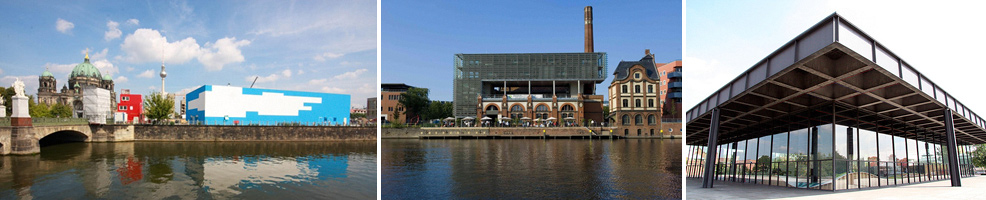
(Neue Nationalgalerie) — an exhibition space built in 1968 by the Bauhaus-school architect Mies van der Rohe. The upper floor of the cubic building is entirely glass, and exhibitions of more contemporary works are held here. On the basement and lower-ground floors — showrooms housing collections of classical modernism.
Radialsystem
— one of the new art venues, which sprang up on the site of a former pumping station. Interestingly, it was founded by the same person who stands behind the story of the Tacheles squat — the curator Jochen Sandig, well known in art circles. The combination of red brick and glass walls makes Radialsystem an attractive exhibition space where, besides attending cultural events, you can pleasantly pass the time in a cosy café on the terrace with a view of the river.
Temporare Kunsthalle
— an alternative to classical museums, a temporary exhibition hall set up on Museum Island, in the triangle of: the Egyptian Museum, an MBA school and the TV tower — until 2010. Inside — expositions by contemporary artists; entry is free.
You buy a couple of vinyl rarities on Gneisenaustrasse, decide to wander around the neighbourhood, stray into an ordinary courtyard, and there... a children's playground. And you stay on it until you've had a go on all these psychedelic contraptions, designed most definitely not just for children but for their parents too. A dish with a pole bent into a sine wave, a rope-swing many metres long, metal slides...
Shopping:
Space Hall/Space Honda
— two large shops separated by a café, where German DJ friends recommend buying music. Here you'll find both vinyl and CD new releases in the styles of techno, house, break beats, drum'n bass, rock-pop, hip-hop and reggae, as well as vintage. At the shop entrance there's even a small section of youth clothing, fitting onto a single rail, and various accessories from bags to keyrings.
Flea market at Boxhagener Platz
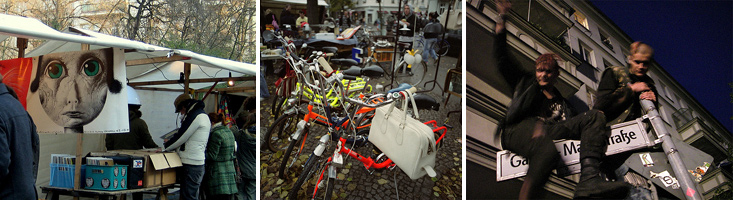
— open only on Sundays from 10 in the morning to 6 in the evening. The usual assortment for such places, heaps of vinyl, performances by artists and street musicians, plenty of cafés and a pleasant park right there. On Saturday mornings a food market also operates on Boxi-Platz.
Mauerpark
— Berlin's second well-known flea market. Open on Sundays from early morning until evening (07:00 — 17:00), even in the winter season. People come here for second-hand furniture, shoes, clothes, musical instruments and bicycles…
Dress Faktor
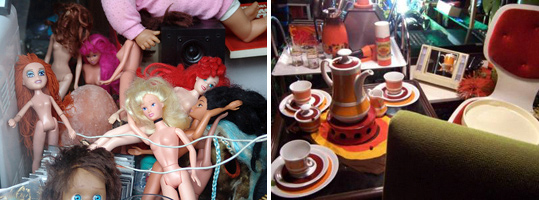
— if you're curious about how people looked and lived in the FRG, then this is definitely the place for you. Bright, eclectic clothing and footwear of the 1960s-80s. Dress Faktor is part of the Veb Orange group, along with two other shops located 200 — 300 m apart from one another. These are VEB Danz Schuh (Danziger Str. 2) — where you can find shoes and coats, and also VEB Orange (Oderberger Str. 29) — which handles the sale of accessories, posters and furniture.
Colors
— a second-hand shop at Bergmannstrasse 102, consisting of two sections. In the first you can buy clothes by weight. Finding something truly worthwhile isn't so easy; on Tuesdays, until 15:00, there's a happy hour when a kilogram of selected vintage costs 10 euros. In the second room are rails with a more interesting - and therefore more expensive - assortment.
Garage
— another second-hand shop in a spacious basement space. Some of the clothing here is sold at a fixed price, some — by weight. On Wednesdays from 10:00 to 13:00 there's a happy hour when a kilogram of clothes can be bought not for 14 (as at normal times), but for 10 euros!
Made in Berlin
— a fashionable second-hand shop in Mitte — the central part of the city. On the shop's two floors — a decent selection of textiles, accessories, footwear and hats. Every Tuesday from 12:00 — 15:00 customers get a 20% discount.
Superstore
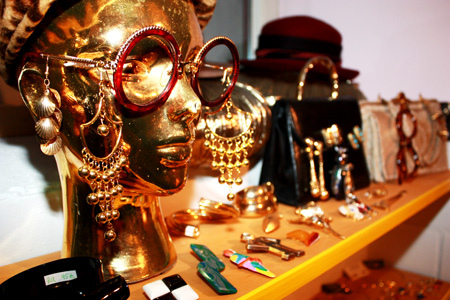
at Almstadtstrasse 43 — in this shop, where the clothes are sorted by colour, you certainly won't be buying dresses by the kilogram. Because it's a genuine vintage boutique where, for example, you can find retro Christian Dior sunglasses. The owners of the Superstore — a trio of friends from Reykjavík, New York and Valencia — regularly tour European stock outlets in pursuit of rare items by famous designers.
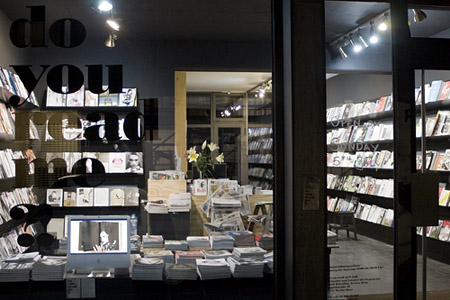
Do you read me?!
— a shop at Auguststrasse 28, where magazines from all over the world are sold. The publications' subjects include fashion, photography, art, architecture, interiors, design and culture.
Let it bleed!
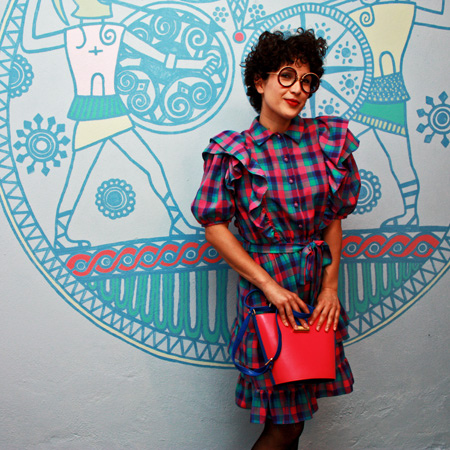
— a shop run by a couple of designers from the USA and Spain. Divided into women's and men's showrooms. All the clothing and accessories — from punk-style tops and glam-rock dresses to printed bags and jewellery — are released in limited editions. A dress from Let it bleed!, for example, will cost around 150 euros.
Starstyling
— a designer shop by Katja Schlegel and Kai Seifreid at Mulackstrasse 4. Bold, original clothing made mostly from cotton, for young men and women with a good sense of humour and self-irony — that's how the designers themselves defined their target audience.
Berlinomat
— «100% Berlin design» — the slogan of this shop, which stocks up to 400 items by young Berlin designers. A good selection of goods from clothing to cheerful posters at perfectly reasonable prices. And if you don't have time for traipsing round the shops, Berlinomat lets you browse its range and buy it on the website.
Clothes shops, cafés and bars on Sonntagstrasse
— tourists rarely stray here, preferring to do all the same things on the neighbouring and more popular Simon-Dach-Strasse. So here you can feel like a real local, dropping into inexpensive boutiques, grabbing a pizza or kebab between purchases on the Lenbachplatz lawn, or rounding off your walk in one of the many inexpensive bars here (Geronimo, Uebereck, Coffe Karma, Sunday, Tonart, Sieben, Lykia).
Trend Mafia
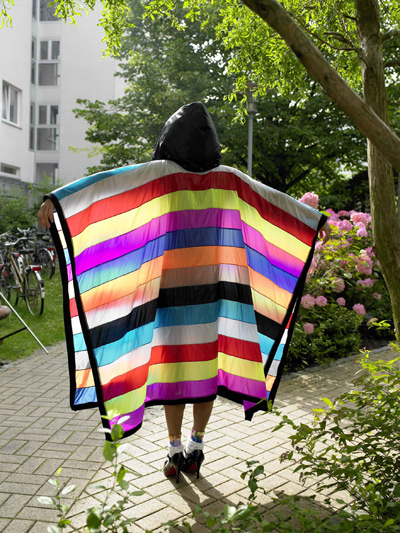
— a market on Moritz Platz, where every first Saturday of the month designers and artists put their work up for sale. An alternative option for shopping and a pleasant time in the company of creative people.
Turkish market in Kreuzberg
— Berlin is home to a large Turkish diaspora, mostly precisely in the Kreuzberg district. If you find yourself here at the market on one of the days from Tuesday to Friday (11:00 — 18:30), you could easily mistake the German capital for Istanbul: national delicacies, sweets, fruit, vegetables, bread, even items of clothing and footwear — and all at comparatively low prices. In the market's last two working hours it's especially cheap here, because the sellers offload their goods at a big discount.
Monday... sometime after lunch... driving past Berghain/Panorama Bar, you decide to pop in and collect the camera you left at the club back on Friday. You press the 'Secretariat' button on the door, and from somewhere up above, out of a window, someone shouts to you in German: 'Once more!' You climb the stairs. On the top floor you're met lazily but curiously by a big black dog, and out from behind it comes the secretary too - a shaven-headed guy covered in tattoos and, naturally, with an earring. After a climb up the stairs that's no easy thing for a Monday, he offers you a glass of water. He brings out a box of left-behind phones, passports, music players and cameras. Which one is yours?
After the fall of the Berlin Wall in 1989, which divided the city into a capitalist west and a communist east, restitution was carried out in East Berlin. Buildings whose owners had managed to vanish over the 45 years of the demarcation line's existence turned out to belong to no one. A time of merry anarchy began, when illegal clubs and bars started opening up in the emptied spaces almost every day.
Clubs:
Berghain/Panorama bar
— in the guidebooks it's marked «techno, gay», which matches the tags. The reincarnation of the legendary techno club Ostgut, where until 2003, in a «dark room», fetishists staged their orgies.
Maria
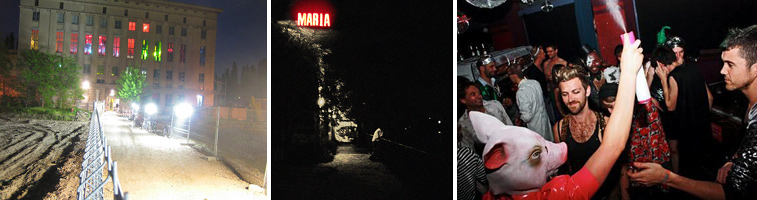
— an unobtrusive sign of five letters glowing red greets you at the entrance to an old industrial building where you can hear superb electro and techno. Bar prices comparatively low by Berlin standards, a relaxed door policy, live performances on Fridays and Saturdays.
Ichiban Karaoke Bar
— a modest little bar tucked away on the ground floor of an apartment building on Warschauer Strasse. Its full-wall windows are draped with silvery New Year tinsel, and inside are several booths with televisions suspended from the ceiling and leather sofas around the perimeter, as well as a separate stage. A little corner of New York in Berlin, opened by the American Monster Ronson (Ron Rineck), who moved to Germany ten years ago.
Tresor
— one of Berlin's first techno clubs, founded in 1991 on the site of a former Wertheim supermarket. It was later closed and quite recently found a new location in the building of an old power station.
Dice
— a new club predicted to become a second Berghain/Panorama bar. Also located in the building of a former power station in the historic centre of the city, equipped with a Funktion One sound system.
Watergate
— as is most often the case in Berlin, a building unremarkable from the outside. The wait at the club entrance can stretch to several hours, but, as a rule, having passed the strict door policy and finally caught a performance by the long-awaited artists who play here regularly, few afterwards recall with regret the time spent in the queue.
Salon zur wilden Renate
— some time ago the party organisers at this club did everything they could to keep talk of it out of the media. That way they tried to protect themselves from the influx of tourists and imposed their own rules of selection. Today getting into the club has become much easier - to receive an invitation to a party, registering in advance on the club's myspace is no longer required. Even so, those wanting to get in to «Wild Renate» always outnumber what the two dancefloors in the abandoned apartment building - papered with baroque wallpaper - and the many small chill-out rooms with sofas and beds can hold. Kitsch, electronica and no neighbours at all!
Weekend
— a club in the centre of Berlin, occupying three levels of an office building on Alexanderplatz. Known for its after-parties on Sundays on the roof of the high-rise, today it's considered by many «locals» to be a club for «rich kids».
Funkpark/Rechenzentrum
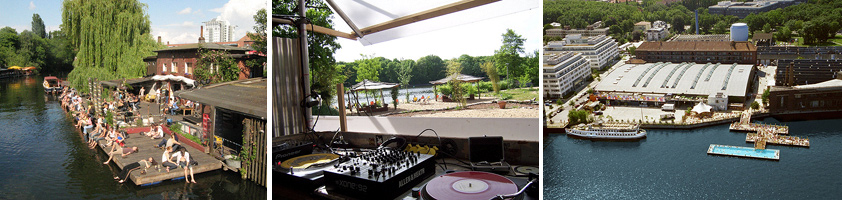
— a riverside area for open-airs in the summer season, with an indoor club next to it for the rest of the year. From Friday to Sunday evening it operates practically non-stop.
Kitkat
— «Parties for civilised people!» — reads the notice on the club's website. Sexually preoccupied freaks in provocative costumes, an S&M interior, electro-techno-progressive and themed nights. For example, «Peep Show», «Bloody Friday», «Horny Boys versus Horny Girls»…
Club der Visionaere
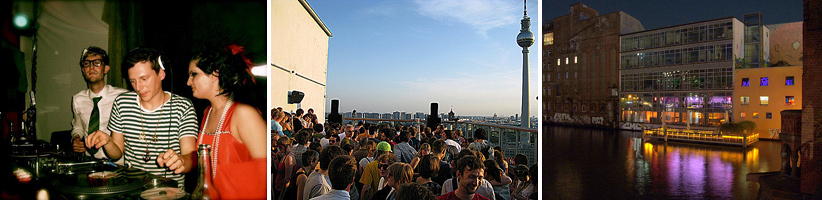
— an almost round-the-clock spot for an active night out on the bank of the Spree. Several bars, a tiny dancefloor by the DJ booth, packed full during the night-time DJ sessions, and a «moored» wooden raft from which you can dangle your feet in the water and cool off.
The Arena cultural complex
— located a few minutes' walk from Club der Visionaere. There used to be a bus depot here. Today — concert and exhibition halls, a theatre, a club on a ship at anchor (Hoppetosse), and the main attraction — a summer café with an open-air pool, Badeschiff.
Sketches like these about the modern German capital could be gathered in great number... They can be summed up like this: Berlin is a pleasant, relaxed, multinational city where people love music, take care of their appearance, don't condemn same-sex unions or non-conformist youth, and are used to a sensible ratio of price to quality.
There's no sea here, the architecture doesn't dazzle with its opulence, the main national dish can be considered the sausage, the climate is almost no different from ours, that is, not tropical... What for and why thousands of young people flock here all year round, some of whom settle in Berlin for a long time, you can finally understand by taking a real, not a virtual, walk along its streets. And you'll be gladly helped in that, for example, by the modern-Berlin tour agency Go Art Berlin!