The Drummer's Fate [draft]
Чтиво · 26.04.2006
By Филипп Миронов
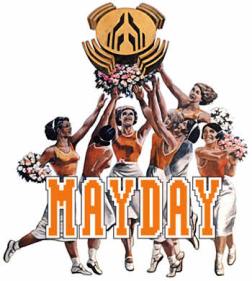
Georgy Guryanov – artist, drummer of the band "Kino" and organizer of the first rave parties – spoke about his friend Westbam ahead of the Moscow pre-party of the Mayday festival. This is the full version of Guryanov's speech, partially used in preparing the material for TimeOut magazine. We have arranged it as separate quotes.
"Do you want my personal story? Since childhood I loved British culture, studied English and was friends with English students studying in Leningrad. It was the beginning of '86, and one charming Englishwoman gave me a cassette, "Jack Tracks." I'm not even talking about Kraftwerk or all of "new romantic" – OMD, Duran Duran, Dead Or Alive. Do you remember "Spin Me Around"? All the sources of my passion for electronic music are here. Viktor Tsoi was also very keen on dance music: rhythm, for him, was everything. I can say with complete confidence that he was a man of electronic culture, who has nothing in common with the ghouls, the rock'n'rollers, the bearded ones and other freaks. To this day they keep trying to defend their right to Viktor, but Vitya was with me."
"So, I never saw that girl again. Anyway, from 1986 on I knew what modern dance music was, or whatever they called it. Let me boast a bit. In the late '80s, when John Peel came to Petersburg – I listened to him right up to his very last programme, may he rest in peace – I don't even remember how I ended up at a meeting with him, where Artemy Troitsky, Alik Kan and some other music figures were present. They were asking what the most interesting, progressive and modern music was. He says – house, and they didn't know what that was. Only I turned out to be in the know – it was funny."
"As a child I listened to disco, back when everyone was getting off on Deep Purple. I always loved music more than anything else. My parents bought me a radio, with which I picked up the "BBC World Service" and Radio Luxembourg. There was one more alternative source of information – my sister, who married a sailor who brought me chewing gum and records from abroad. Well, what else did a Soviet teenager need back then?"
"God forbid I forget something. No Haas existed yet back then. Where was he in those days? In Krivoy Rog or wherever he's from?"
"So, 1987. "Pop Mechanika" in full lineup, together with the band "Kino," goes to Riga. Back then we were close friends with Kurekhin and played absolutely everything. There were about 7 or 8 of us, plus a few showmen. Garkusha, I think, wasn't there. Of the crazies, only Bugaev and Timur Novikov took part. We were going to a festival of avant-garde music, and in parallel a big exhibition of contemporary art was taking place in the city. That's when the first direct intersection of art and modern music on the territory of the former USSR occurred. And there I saw Westbam for the first time. As a guest at the exhibition, he gives a masterclass – showing and explaining what "record art" is. He demonstrates it by mixing, on two Technics turntables, the Kraftwerk song "Boing Boom Tschak" with Santa Esmeralda. He comments on all his actions in an extremely scholarly manner, because Westbam is a very clever man – he practically has two higher educations and comes from a very cultured family. His mother is a fairly famous artist, whom I greatly respect as a painter. The mixing process made us laugh. It seemed like an awfully unserious business to us, and I remember how Viktor laughed. Westbam was mixing diametrically different performers."
"I was, to put it mildly, impressed. That cassette, the tour in Riga – I adored acid house. By the late '80s I already dreamed of and lived only for it."
"The mixing technique itself was already actively used back then by Kurekhin in "Pop Mechanika," but Sergei was guided by a completely different ideology, belonged to a different school, a different era. Chekasin, Kurekhin – they were jazzmen, improvisers."
"We got to know Maximilian, became friends and performed improvised, all together: "Kino," "Pop Mechanika" and Westbam. Westbam's uncle, his adoptive father William Rodgar, created an electronic empire of techno music in Berlin. Of course, he couldn't have done it without the genius of Maximilian Lenz. The company Low Spirit is generally a semi-family enterprise. Dr. Motte – the inspirer and organizer of the Berlin Loveparade – is from a different family."
"Everyone thought Westbam meant a mispronounced phrase, "western autobahn" or "western ass," but that's not so. The pseudonym is, of course, two-part. It means "Westphalia Bambaataa" – Westphalia is a region in West Germany where he was born, and Bambaataa is a tribute of his respect to Afrika Bambaataa."
"First friends from Berlin came to visit me, then I went to them and visited all the clubs. This was still before the fall of the Wall."
"Let me tell you how Westbam first came to us in Leningrad together with DJ Rok. We had a home club, we had the means and a huge desire. Timur Novikov and I spared no expense to entertain ourselves and our friends. And the Berlin DJs sacrificed their fees into the piggy bank of universal joy. By then Tsoi had already died, so it was 1991. The Planetarium, the "New Composers," Fontanka 145 – back then everyone worked together. I was the sponsor – from beginning to end. I paid for printing the tickets and for providing some elementary comfort. All the guys lived frugally – in my girlfriend's flat. We spent our money for our own pleasure. For us it was like charity. I was so naïve, so full of love for humanity, I was ready for anything, and I was content. The party was, as they say, super! The next day we held an after-party on Fontanka, 145."
"Some characters were already not welcomed back then – for example, we didn't let Kurekhin into our youth parties. And Novikov was one of the first to fire things up. He was terribly sensitive, on the one hand, to everything refined, and on the other, to everything modern, but – here's the trouble – Timur didn't understand music at all. Although the first raves were more of a social than a musical phenomenon."
"In the early '90s, in Muscovites' imagination a rave looked like this: a huge table with little snacks, all sorts of herring "in a fur coat," vodka and other rubbish. The Baltic DJ Janis plays some records, but it was all silly and hardly adequate. It took many years for Moscow to arrive at what it is now. Now I admire it, but back then it seemed utterly pathetic."
"After the party at the Planetarium, Westbam turned into an absolute star in Petersburg, unlike in Moscow. Correspondents from Moscow's "Afisha" told me they considered Westbam a complete hack and didn't understand why he was supposedly a genius."
"I have a huge collection of records, yet I never tried to mix them in public. I was, in general, born a DJ, and only because there was no such profession in the USSR did I turn into a drummer."
"Minimalism, irony, an appeal or missionary quality – these are the categories that unite my painting with what Westbam does. There's no compromise here, and we both propagate these ideas – he in music, I in painting."
"The last time Westbam and I saw each other was a year ago: he brought me a kitchen from Germany. Good German furniture, which I installed in my run-down flat-cum-studio. My friends love me and take care of me. And I also want to complain: recently your hero – Bogdan Titomir – swiped my favourite record "Oldschool, Baby," which Max sent me. I'm very worried about it. Ask him to give it back."
"I have a lot of his vinyl, and in the collections of Maximilian, and Marusha, and William there are many of my paintings. By the way, William Rodgar left Low Spirit and opened a gallery. Max's brother Fabian – DJ Dick – also grew bored with clubs and took up art."
"Over the past 15 years Westbam hasn't changed one bit. He's an utter monolith, but not the least bit a maniac. A typical German. Loves blondes. Very level-headed, witty, charismatic, consciously carrying his ideology. He's above everything happening around him. When he stands behind the turntables, he looks like a demon, like a devil, but at the same time terribly charming and seductive."
"Two years ago I designed the graphic accompaniment for Mayday. I took Rodchenko as the basis, but instead of the dictator Kirov I depicted the festival's emblem. Constructivism at its twilight – that's the aesthetic of Mayday."
"At first, clubs and electronic music were art, passion and love, and now it has turned into a business that I have nothing to do with. I demand nothing from history, I only admire the fact that it happened. Although once I even had a fleeting feeling that everything had been stolen from me."
(c)Logo author – Georgy Guryanov
7 May 2006 – Moscow – Members of MayDay
Gaudi Arena
DJ: Chris Liebing, Phono, Westbam, Zoo, Fonar
Live: Lexy & K-Paul
from 22:00
Entry: 500 r, VIP – 1500
8 May 2006 – Saint Petersburg – MayDay
Yubileyny Sports Complex
DJ: Bobina, Chris Liebing, Eric Sneo, Kai Tracid, Krafty Kuts, Lady Waks, Marco Remus, Oliver Koletzki, Paul Van Dyk, Quest, Taucher, Umek, Van Nosikov, Westbam, Voron Mikha, Fonar
Live: Anthony Rother, Lexy & K-Paul, Members of Mayday
19:00 – 08:00
Entry: from 700 r