Think Geek!
Авторская колонка · 18.03.2009
By Анна Лекс
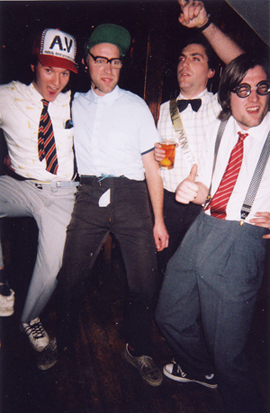
Long fringes that are so hard to see out from under. Enormous glasses in thick frames. Trousers ending five centimetres above the ankle. Sandals with socks. Pencils and pens sticking neatly out of the breast pockets of a short-sleeved shirt. An interest (sometimes even an obsession) in computers, plants, musical instruments, comics, trains, analogue synthesisers, special effects, video games... In short, nothing to do with romance and love stories.
All these traits single out a particular group of people, referred to as nothing other than computer freaks, nerds, misfits, sysadmins, bores and every other type of feeble social outcast. At the same time, the above describes a completely new breed of fanatics and geeks, namely: ultra-fashionable dandies wandering through London's Shoreditch, or hipsters loafing along the streets of Williamsburg, spilling out of a Kreuzberg bar, savouring their iPhones, lacing up their Nike Air Napalm Death XVIII sneakers and adjusting their fluoro-yellow Ray-Ban Wayfarers in the hot glow of the coastal sun. And whereas nerds and hipsters once occupied entirely opposite social strata, today they are members of one and the same group.
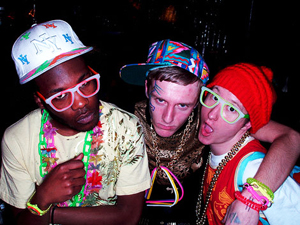
Look around you: computer technology, fashion, music, politics and especially pop culture are teeming with extremely strange characters — awkward, sexless, unattractive boys and girls whom people usually give a wide berth at school discos. During a conversation they stand very close, sometimes with their flies undone, ready to hold forth for hours, foaming at the mouth, about the new iPhone, about a vintage spectacle frame found on Taiwanese eBay, about a tiny strange speck spotted on Google Maps, or about the computer graphics in World of Warcraft. Sometimes they smell odd, and they often give the impression of children raised by extremely strict parents. Nevertheless, these people have today, in many respects, become the movers of the planet.
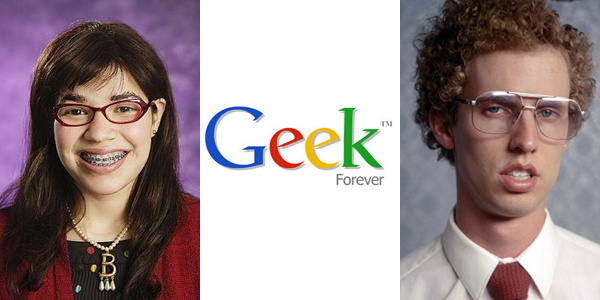
The most peerless names on the associative list of nerds, whether real figures or fictional, are Bill Gates, Steve Jobs, the creators of Google Sergey Mikhailovich Brin and Larry Page, Flight of the Conchords, Spike Jonze, Marc Jacobs, Richie Hawtin, Napoleon Dynamite, Ugly Betty, Morrissey, Chloë Sevigny and their ilk. And however funny these names may sound, it's worth noting that the most expensive brand in the world — Google — is named after an algorithm! Draw your own conclusions...
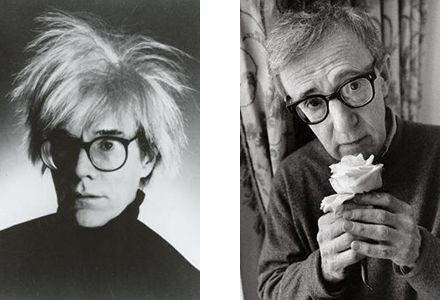
People used to joke that the nerds would inherit the earth. And indeed, over the last thirty-odd years, having passed through hard and gruelling trials, they really have done just that. Shut away in their little rooms, mired in self-analysis, misunderstood and ignored, unfashionable, unwanted and altogether too strange, they were always social outsiders. Over time the picture changed, and the emergence of the ultra-fashionable geek is now attributed to two important phenomena: firstly, Andy Warhol, who glorified everything fake, childish and plastic, a forerunner of the nineties with their silly obsessions like the doll-figure heroes of Star Wars; and secondly, Woody Allen's comedies of the early 70s, in which he spoke openly about his sexual neuroses. Note that before Woody Allen appeared in cinema, comedy directors preferred to poke fun at others, but Woody turned the picture on its side and transformed his own failures into Oscars.
Several years later, punk rock became a new arena for oddballs, whose brightest representatives were Joey Ramone (Ramones) and Johnny Rotten (Sex Pistols). By some magic they turned their oddness into a personal style and a trend. And although at first glance it seemed Joey and Johnny were trying to defeat capitalist society, quite a different process was taking place in the hearts of their fans — a feeling of awkwardness and shame was turning into a feeling of pride and dignity. In one interview Rotten recounted: "It's hard to believe, but at school I was always a quiet, shy little church mouse...".
Pop music — the first platform for self-cultivation — proved just as fertile a soil for outcasts of every kind. First and foremost worthy of mention is Ian Curtis, the star of Joy Division — an epileptic who wore things from charity auctions and expressed himself in a distorted fascist vocabulary. On stage, however, the audience embraced the sullen young singer as a cool guy worthy of imitation. He became famous, he became an icon...
One could count more than a hundred such examples, but the brightest and, arguably, most significant figure in the nerds' conquest of the world was Morrissey (The Smiths) — the patron saint of all the humiliated and insulted nerds of the world, stubbornly refusing to accept the universally accepted norms of pop culture. He was the standard-bearer of many things that surprise no one today, but in far-off 1983 were decidedly unacceptable: vegetarianism instead of rock'n'roll excess, well-readness instead of empty chatter and bravado, occasionally bisexuality instead of crude machismo, plus a serious passion for romantic poetry. What's more, nothing symbolised "nerdism" quite like his thick-framed reading glasses. Today they can be seen on almost every face, from Graham Coxon, Ugly Betty, Jarvis Cocker, the first David of Chromeo, to Jay-Z, Bill Gates, Harry Potter, Lily Allen and Lourdes Ciccone, the flourishing fashionista and daughter of Madonna. It was Morrissey who turned the most dreadful symbol of personal unattractiveness into a fashionable trend!
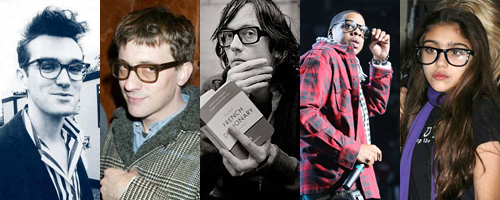
The frontman of The Smiths also possessed other typical signs of "nerdiness": he suffered from obsessive neuroses, paid too much attention to detail, was detached from social interaction (not for nothing did he keep a vow of celibacy for many years), and devoted all his free time to his eccentric childhood enthusiasms (recall at least the iconography of boxing, the Moors Murders case and his passion for 50s rock'n'roll). These quirks found a place in his adult life too. What's more, they became the foundation of the imaginary creative cosmos in which he lived and which he believed in.
In the end, thanks to the innovators Joey Ramone, Johnny Rotten, Ian Curtis and Morrissey, the values of nerds and geeks were pushed out of their dimly lit bedrooms onto the central arena of the mass media, and their religious, social and political convictions flooded the worlds of fashion, video games, television and cinema...
Today one can speak of a durable legacy of the nineties in two areas — in what we consume and in what we wear. From fixating over the choice of coffee at Starbucks to agonising over the choice of stitching on new jeans, today the one thing occupying the minds of many of us is a constant focus on details and a stubborn disregard for rational consumer choice. Super-rare and exorbitantly expensive denim, custom-made vintage trainers, a look meticulously assembled with reference to past eras (be it soulboy, skinhead or two-tone), and, of course, ready-made outfit-looks from Zara and H&M — all of this is, no more and no less, the deep and rich legacy of the nerds of the past.
By the end of the 90s, PC-nerdism had reached such proportions that even the peasant technophobe furthest removed from the digital revolution began a secret dialogue with his inner user. The computer penetrated every possible place of human habitation, be it the home, the car, the bedroom or even trouser pockets. Amid the mass rollout of broadband internet and mobile communications, computer technology helped us reach new heights in labour productivity (getting all the work done), in communications (talking to people), in self-expression and in methods of collaboration (creating playlists, avatars and MySpace pages). Looking back, it's easy to notice how an ordinary white pocket-sized music gadget turned into the point of contact between a fashionable lifestyle and boring computer technology. The iPod, born in 2004, instantly became the most iconic and coveted object in the whole world (until, of course, the iPhone came into being).
It should be noted that the link between the glamorous world of music and the anti-sexual sphere of technology was established more than 30 years ago thanks to the band Kraftwerk, whose members did their utmost to disguise themselves as robots. Obvious nerds, lovers of the cold-blooded music that is techno, Kraftwerk used computers to record songs about such fascinating things as motorways, cycling and radiation! And this was long before the appearance of Daft Punk and the birth of the animated fantasy of Gorillaz in Damon Albarn's head. Kraftwerk were never rock'n'roll cool, yet today they are universally and unanimously ranked alongside Elvis, the Beatles and Public Enemy.
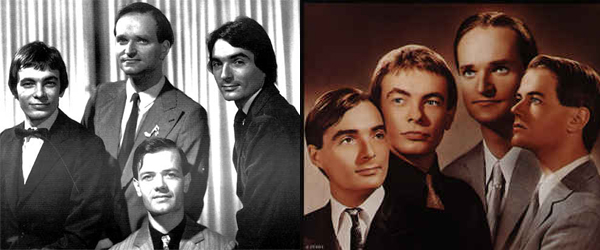
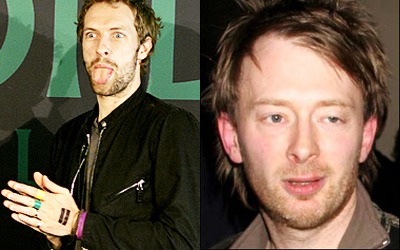
The early 2000s... and the music scene once again became studded with strange characters out of school libraries. But this time, amid the extreme fragmentation of styles and cults, nerds became the rule rather than the exception. The extreme "highbrowness" of Indie music, with its pretension to sacrifice and broken hearts, rather deftly replaced pop music and became the standard daytime soundtrack. One need only glance at the two biggest figures of the new era's scene — Chris Martin (Coldplay) and Thom Yorke (Radiohead) — to understand how the influence of the swots has rubbed off on us. The status of the modern superstar underwent a serious revision, and a new generation of far-from-Brad-Pitts, with warped souls and twisted fantasies, made contact with their rather broad audience. And it became quite obvious that the nerds rule the world.
Let's suppose that the real architects creating modern "nerd" society have no idea about Japanese denim or about what's recorded on the B-side of The Smiths' seven-inch Hand In Glove. And this is undoubtedly compensated for by their brainpower. Moreover, the new oligarchs of Silicon Valley, such as Steve Chen and Chad Hurley (YouTube), Tom Anderson and Chris DeWolfe (MySpace), Mark Zuckerberg (Facebook), Sergey Brin and Larry Page (Google), set the trends for how we dress, communicate, interact, express ourselves and dwell in the modern world of technology.
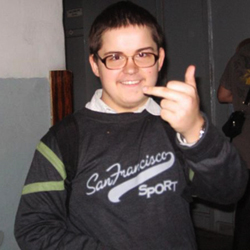
Perhaps they started out merely as IT experts, but over time they became powerful social entrepreneurs, bearing responsibility for the shape and content of our future. And if you have any doubts on this score, tot up how much time you spend in front of the computer commenting on photos on MySpace or playing around with apps on Facebook.
Computer swots may never have been distinguished by style and beauty, but they are capable of realising their dreams with astonishing dexterity. Fans of popular TV shows like Ugly Betty or Flight of the Conchords know that there's no entertainment in the world more fun than watching the awkward but endearing triumph of the warm-hearted nerds over the cold and indifferent show-offs... And the reason for this state of modern culture is very simple: deep, deep inside each of us lives our own little nerd.
Below we've gathered six young fanatics with great potential and an unmistakable nerdy past...
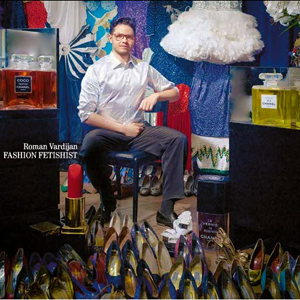
There are people obsessed and crazed with clothes, and then there are people like Roman Vardijan, who clothe their obsession in an extremely elegant and stylish understanding of modern fashion. A student of the "Clothing Production Technology" department, Roman spends all his weekends at Berlin's flea markets in search of items and accessories. He shares his one-room flat with hundreds of pairs of shoes, giant lipsticks and a pair of gleaming taps in the bathroom. And on top of everything else, he manages to turn his amateur pursuit into a profitable profession, putting all the treasures he's obtained up for sale at Nightboutique...
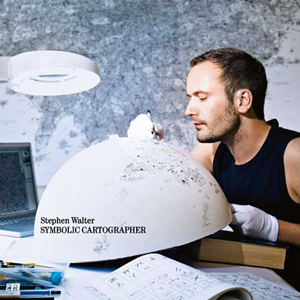
Stephen Walter's The Island is a huge map of London with incredibly minuscule details, on which the author laboured for more than two years and which are quite hard to make out without a magnifying glass. Geographically accurate, with every existing road and river, the map is a parody of historical documents and is furnished with useful information. According to the latest reports, the artist is in Berlin, where he will probably remain for some time yet, working on a map of the German capital.
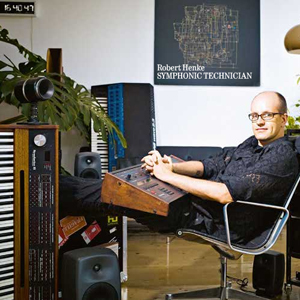
Better known in music circles as Monolake, Henke studied sound engineering and computer science. Today he is one of the indisputable authorities in electronic music, which he became in large part thanks to his invention — one of the most commercially successful music editors, Ableton Live. Enchanted by technology as a means of artistic expression, Henke maintains that technical progress springs from inspiration, just as art is born of technological development.

Very soon a book on nuclear weapons by the historian and writer Sven Hannes will come out, but he struck us as remarkable for an entirely different reason. Sven has one very unusual hobby — he's interested in classical architecture, and to date he has built more than 30 different castles out of Jenga blocks. His constructions, which took several years to create, are ultimately deconstructions, brought as close as possible to natural decay and ageing. Castles are like a drug addiction for Sven: while working on them he forgets about time, food and sleep. Even so, he sometimes manages to go out with his girlfriend, who, incidentally, recently commissioned a castle from him to decorate her living room.
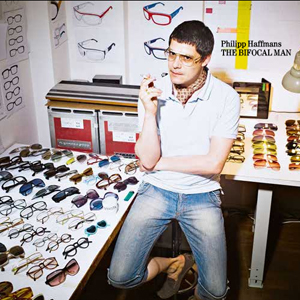
A passionate collector and designer of glasses, Philipp has been creating his works of art for more than 10 years now. In the field of eyewear design, where a millimetre can sometimes prove decisive, Philipp has reached great heights. Together with his partner Harald they devised a flat metal frame without a single screw. What's more, their glasses enjoy great popularity thanks to their ultra-light weight and modern design.
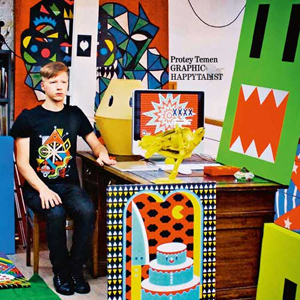
Our compatriot Protey is mature beyond his years: at 20 he was already the art director of the company Zunge Design. Four years later he settled into the intimate world of children's drawings and graphics. The bright, simple images of his work are so precise and well-judged that they make one doubt his such young age. Today Protey continues to create fashionable graphics, basing his ideas on Dobrotism (or, in the English version, Happytalism) and drawing inspiration from specific sources: the symbiosis of tasks and feelings, the world of advertising, life-hacking and popular questions of self-improvement.
And finally, a few themed videos:
Based on material by Lars Borges and Kevin Braddock