In search of hedonism
Авторская колонка · 19.01.2009
By Анна Лекс
The word "hedonism" leaves a strange aftertaste: despite its sweet etymology (hedone in Ancient Greek means "pleasure"), the bitterness of our morality throws everything into question. Of course, hedonists are for the most part refined and well-educated people, but at the same time they are frivolous and even amoral.

In all ages people ate, drank and had sex, and, of course, took pleasure in it, but the abstract idea of pleasure appeared only in Ancient Greece in 435–355 BC thanks to the philosopher Aristippus, a contemporary and friend of Socrates. Aristippus was the founder of hedonism and argued in every way for the necessity of directly attaining pleasure. The key to a happy life, in Aristippus's view, lay in attaining maximum physical enjoyment while avoiding pain. And if there were no conflicts in the world between pleasure and benefit, or between a chance pleasure and an ultimately pleasant result, if pleasures entailed no unpleasantness, then Aristippus's hedonism would be a genuine form of hedonism. But we live in a completely different world.
Another philosopher who spoke of the direct attainment of pleasure as the chief value was Epicurus (342–271 BC). His theory was built on the distinction between two types of pleasure: "cinetical", as sensual and quickly attainable (sex or food), and "catasthematical", as the pleasures of friendship, love and knowledge, which are more stable and able to protect us from suffering. Understanding the goal of life in exactly the same way as Aristippus, Epicurus understood differently the means that lead to this goal: he believed that life, in order to be pleasant, must be just, orderly and moderate, and must reckon with the needs not only of oneself but of other people too. Epicurus's theory was less radical and rested more on spiritual pleasures, and also seemed more realistic...

It's interesting to ask what Epicurus's hedonism has become today. People have taken to entertaining themselves with gluttony, lust and useless bustle. The motto of the modern person — "I want it and I want it right now" — can hardly be reconciled with Epicurus's ethical ideas. And if we define hedonism as the direct attainment of pleasure, our generation is incapable of being hedonistic. The point is that, before we enjoy something, we try to explain to ourselves whether our enjoyment is moral or amoral, healthy or ruinous, advantageous or utterly unprofitable. Even Epicurus's hedonism is not today a hedonism of the direct attainment of a goal. With all its divisions into "spiritual" and "bodily", the original philosophical idea disappears. As ironic as it may sound, true hedonism died with the appearance of its concept.
If we consider modern examples of hedonism, the nightlife lifestyle comes to the fore. But is pleasure really fundamental in this milieu? Or are we rather ruled by social self-realisation, successful relationships with the opposite sex, or do we simply want to be part of the scene? I'm not even mentioning expensive cars, stylish clothes and spacious lofts. No, for the most part these things bring us no true pleasure but only help us assert ourselves, serving our ambitions and our desire to appear in a favourable light.
Let's turn to today's young people with the question of how they see the hedonism of the present day.

For me, pleasure is time spent with friends. And it doesn't matter at all where we end up, the main thing is that we're together! It's hard for me to name anything concrete that defines hedonism... you know, I really love hanging out in New York. The first time I ended up there was in 2003, and to date I can count more than 40 flights to New York. Maybe that counts as hedonism?

I enjoy life by travelling, keeping myself in good spirits. I'm always open to new things. It seems to me that if people followed these values, they would live a fully hedonic life.

My definition of hedonism is partying until you black out in small cosy clubs with good music, litres of alcohol and hot guys all around!

My definition of hedonism is pleasure for pleasure's sake!

Time spent with the best friends, the very best moments in life — that's my hedonism.

A conservatively raised generation becomes hedonic, and the following generations become more conservative. We're merely part of a single cycle.

For me, modern hedonism is when people live as they want, following their own rules and goals.

Have you ever been to Berlin's Bar 25 on a Sunday evening?! That's where real hedonism is. I don't know another city where people who head out to a club on Friday only get home on Sunday evening!

I know many people who spend a whole weekend in clubs in a terrible haze and then, coming home, smear their faces with creams costing 200–300 euros. It seems to me that's real hedonism.
So, recalling the wise Epicurus's saying "everything should be in moderation", in the 21st century we would undoubtedly add "including moderation itself". Decadence, debauchery or dissoluteness — whatever name suits your taste — has, as a definition of pleasure, a long and changeable history. Nevertheless, modern pleasure-hunters have a greater number of options than their predecessors. Besides the obvious escape into another reality, or, more simply, pleasure on the edge, we have many attractive sensual delights at our disposal... such as lounging in a luxurious spa, relaxing in a stylish hi-tech hotel, carousing in chic bars, being a true gourmet and connoisseur of wines — in the end, these are all the favourite hedonistic games of the modern elite...
Paul Sullivan, journalist, traveller and author of part of the well-known A Hedonist Guide To... guidebooks, told us about his favourite places, where crazy parties and luxurious pleasures are always and everywhere available in equal measure... about places where you forget all the prohibitions that existed before...
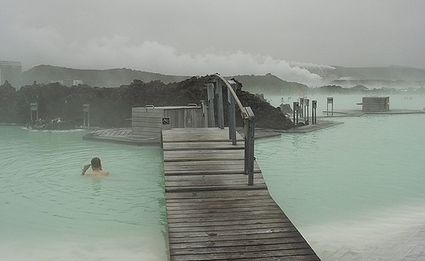
By day this stylish Icelandic fishing city is an ideal place for rest and relaxation. However, with the onset of night the city transforms into one big club-bar with endless dancing and drinking. Focusing your attention on downtown, or more precisely on places such as Sirkus, Kaffibarinn (partly owned by the rock musician Damon Albarn), Grand Rokk, you'll always find DJs playing in narrow European bars, live performances by quirky electro-rockers and, perhaps, Vikings (both men and women) dancing on the tables. Luckily, Reykjavik is famed for one of the world's best hangover cures — the masterful Blue Lagoon. So the advantages are plain to see.
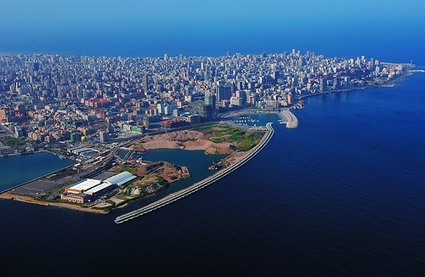
From a playground for millionaires, a gathering of glamorous jet-setters in the 60s, to the devastating consequences of war, hostages and car bombs... Beirut has lived through several turbulent decades in its history. Fifteen years of civil war led the people to complete escapism and indulgence; on the other hand, out of the need for pleasures the city developed a refined cuisine and nightlife. The bars Centrale, Sky Bar, Baby M and Bar Med dazzle with their designer interiors and modern sound systems. Club Social, Lila Braun and Torino Express are places where the sound tears you apart. Oh yes... and there's the legendary BO18 — an underground nightclub with a retractable roof, located in a former refugee camp.
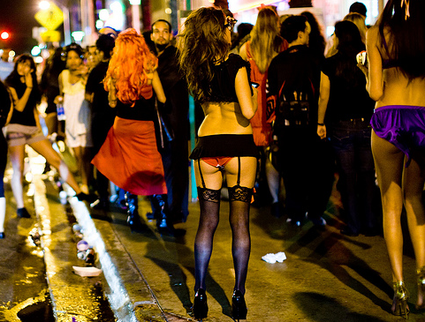
If before you there are cool nightclubs, beautiful people, fast cars, magnificent beaches, huge boats and pompous personages — you're in Miami. The official club capital of the USA, sheer eclecticism, a healing romance with South Beach, and moreover the only place on earth where you can calmly sip a mojito surrounded by models and Hollywood film stars (provided, of course, that you manage to get past the velvet ropes). Clubs like Nocturnal, Area 51, Metropolis, Twilo, Studio A, Space and Pawn Shop guarantee a constant flow of club fun. Ever since the girls of Miami became extremely demanding, men have to put in some effort to have any chance of success at all. It's recommended to stay only in top hotels, dress as cool as possible and behave, naturally, like the most important person since Jesus Christ.
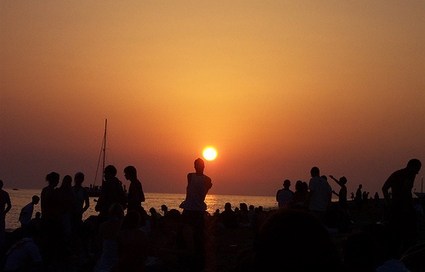
The old-school club island still sets the trends like no other. Throughout the long summer season, world-famous clubs and all manner of bar-restaurants prove that the good times will never end. The best DJs hold permanent residencies on the island, presenting only the latest musical novelties on first-class sound equipment. At times the atmosphere in the top clubs — Space, Amnesia, Pacha and DC10 — can truly be called unsurpassed. Besides, new places (Penelope's and Love) hold great promise for the future. Even such a hard time as the morning after the club can be called unforgettable on Ibiza... the perpetually warm, snow-white beaches and sun-kisses do their work!
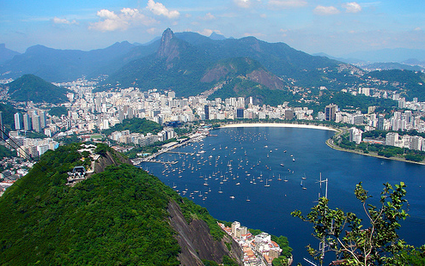
Rio — home of samba, bossa nova and posers strolling along the beaches — this place has always had a reputation for endless, boisterous fun. The carnivals alone are worth it! The most sexual and outrageous behaviour in the whole world is the norm here. Along the broad beaches of Ipanema and Copacabana are hundreds of bars and discos, not to mention the famous Samba schools, which provide non-stop fun 365 days a year. Lapa, Ipanema, Copacabana and Leblon... all these places are undoubtedly worth visiting. And if, before arriving in Rio, you didn't know what a real caipirinha is, then on leaving the city you'll have no doubts left whatsoever.
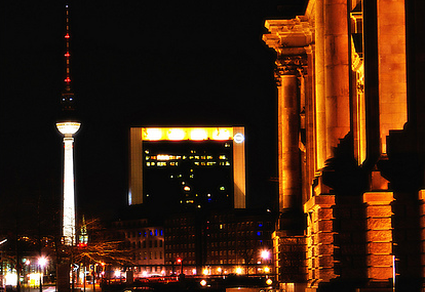
From the heady days of cabaret in the 1920s to the techno explosion of the 1990s, Berlin has always been marked by a fairly indifferent attitude to everything. Though even today a certain irritability can clearly be traced in the city's mood, most vividly expressed in its raw underground electronic scene. Berghain/Panorama Bar (aka Ostgut), Weekend, Lovelite and Watergate, thanks to their quality sound, alluring simplicity and hardcore crowds, are world-recognised club spots. Together with the triumphant return of the Love Parade in 2006 and the restoration of the legendary club Tresor, Berlin is guaranteed the status of Europe's club capital for a long time to come.
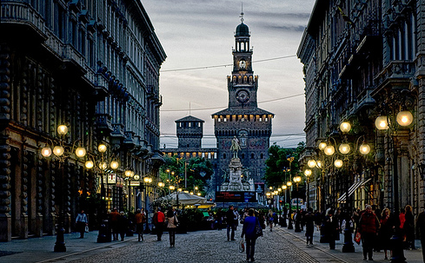
Florence and Rome are culturally rich cities with majestic architecture, but despite this, Milan attracts a far greater number of tourists every year. Why? Because Milan is far posher and cooler. This is where the famous fashion houses Giorgio Armani, Prada, Versace and Dolce & Gabbana were born, and this is exactly where you want to indulge yourself non-stop. Milan's fashionistas and pleasure-seekers devour everything in their path every year, be it the abundant glamorous boutiques or the elegant bars, restaurants and nightspots. Clearly, the locals and visitors of Milan love to party, and they do it with taste. The main thing — don't forget that fashion in Milan is paramount, and by reading the latest issues of Vogue before you fly out, you'll insure yourself against failure.
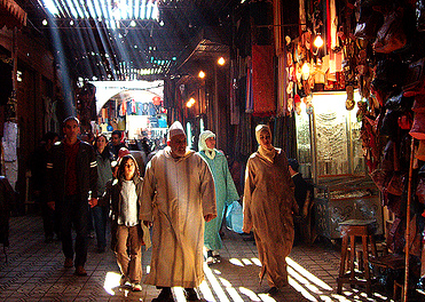
During the joyful 60s the “pink garden-city” acquired its bohemian charm thanks to regular visits by such figures as Yves Saint Laurent, The Beatles, The Stones and Jean-Paul Gaultier. And although today Marrakesh takes pride in its network of nightclubs and bars (including the first African Pacha), it's better to focus your attention on the hotels and private mansions, such as the designer riads in the Medina or the most chic villas in Palmeraie. Afterwards, don't forget to visit the incomparable atmospheric restaurants and the exotic labyrinths of the bazaars. Oh, and set aside a little cash for an unforgettable hammam at the decadent spa of the Palais Rhoul hotel.
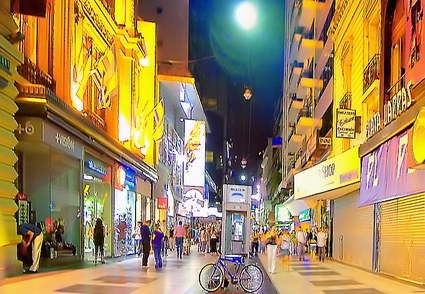
Buenos Aires is home to as many psychiatrists as Los Angeles has plastic surgeons, as well as a huge population of porteños (residents of the port), who traditionally dance before heading off to work. Bars, nightclubs, strip clubs, after-parties and endless shopping malls are the most popular places in the city (thanks to democratic prices). It's hard to catch the city in a sleeping state, regardless of the season or the time of day — life here is constantly in full swing. Although some beer establishments open at 6 in the evening, serious clubbing begins only after 2 in the morning and most often ends in the late morning. Walking into any bar in Buenos Aires, you're unlikely to see drunken brawls, but rather a celebration of style, sex and, perhaps, the love of your life...
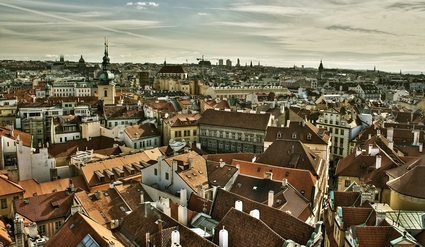
With its narrow medieval streets, architectural riches and modern design, Prague is one of the most majestic and mysterious cities in Europe. At the same time, the city offers sybarites a multitude of hedonic temptations, such as cheap beer and adult entertainment. Prostitution has always occupied a special grey zone here, which means — there are no permits, just as there are no prohibitions. Subsequently this practice was sanctioned, and the best places look clean, stylish and professional, like five-star hotels. The prestigious gentlemen's club K5 not long ago outdid its business counterpart — the club Big Sister: by merely paying a modest entry fee and signing a contract allowing the club to broadcast your escapades online, you get one hour with a girl of your choice completely free! A stunning offer for exhibitionists.
Based on materials by Paul Sullivan and Luca Barbato