Vinyl or Digital?
Техника · 08.12.2008
By Максим - The Lizard - Милютенко
This question has been discussed for a long time, and especially among professional musicians, and, of late, among disc jockeys too. Fully aware of how many spears have already been broken over this subject, I nonetheless decided to shed light on the question in my column.
Even before digital technologies became suitable for DJ work, the argument about the advantages of digital equipment compared to analogue was already in full swing. My peers remember the first compact disc released in an industrial print run and produced by a full digital cycle (DDD) - the album Brothers In Arms by the group Dire Straits (1985). How delighted we were! Nothing hisses, hums or drifts, and on (almost) all systems it sounds, ahem... nice and clean.
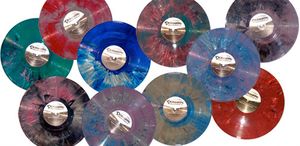
But human hearing is a trainable instrument, and already within a few years the first cries of disappointment rang out. The ones indignant were the "people with golden ears", namely - the sound engineers of classical music and the jazzmen. These guys always related most fastidiously to sound quality, and, being unable even to back up their opinion theoretically (science at that time considered the errors of digital equipment insignificant and imperceptible to human hearing), stubbornly clung to analogue - expensive and bulky.
Nevertheless, "digital" continued its triumphant march. It turned out that in our culture convenience defeats quality. First presented in the autumn of 2001, the iPod not only worked a revolution in mobile music playback but also optimised the storage and organisation of recordings.
For a long time this process did not touch the DJ craft. Despite the fact that some subcultures used DATs and CDs, all the "serious" club life of the early 21st century was firmly associated with Technics SL1200 turntables. The "professional" CD turntables that had appeared by that point evoked scepticism among professional disc jockeys.
One of those who enthusiastically began to use CD decks was Laurent Garnier. Perfectly aware of the shortcomings of the compact disc itself and of the equipment that plays it, Garnier explained, in numerous interviews, which advantages of "digital" make it attractive in his eyes. These are fast access to fresh promo and demo material, as well as the ability to easily edit material for one's conceptual needs: to glue on an intro, lengthen a track, make a duplicate disc. Thus, digital technologies made it possible to solve creative tasks in new ways long before the appearance of Final Scratch, Serato and other digital devices of the new generation.
Modern digital systems attract with a whole series of advantages. By 2005 systems such as Serato or Final Scratch had shed their childhood ailments - latencies, poorly written drivers and so on. Besides the ability to use the traditional technique of playing ("platters" with time-code allow you to mix tracks by hand just like vinyl records, and on ordinary turntables at that), you can use any material and adjust the speed independently of the key; specialised controllers give quick access to all the most important parameters and effects, and on top of that the DJ's baggage has slimmed down by a whole dozen kilograms at once. The market of digital recordings not only allows you to play compositions never released on vinyl, but also gives you the chance to cheaply acquire an enormous quantity of music. In many countries the vinyl DJ found himself on the verge of extinction - records are expensive, postal delivery takes time, and over time vinyl also becomes unusable. And so we are witnessing how honoured masters, who just a couple of years ago swore eternal fidelity to vinyl, are beginning to switch over to digital.
At the same time, the shortcomings of the digital format have not gone anywhere yet. A digital setup is more capricious and can fail. Connecting your Serato to the mixer in the club darkness, it's easy to make a mistake - sometimes such that your first "record" plays backwards. Audio files often have a dubious origin; many of them have not undergone professional mastering. Anyone who has tried to digitise their favourite records has become convinced that it is no trivial task - and a laborious one at that. Besides, it unexpectedly turned out that finding the needed song quickly and reliably is not so easy: whereas the old-school disc jockey, with one glance at the label, instantly finds the record he seeks, the "digital guy" is forced to scroll through endless lists with long titles. Some DJs, having run into this, are forced to spend a lot of time preparing their sets, assembling their musical arsenal in the form of large tags with images of the corresponding covers. And, finally, complaints about the quality of digital sound are still heard: many DJs and music lovers immediately tell "digital" apart by its prickly "highs" and flat bass. This can be compared to how a film shot on cinema stock differs from video and TV films - any of us sees this difference. Say what you will - a well-pressed (and, above all, un-worn-out) vinyl record will beat mp3 in sound, and that's that. And of course, vinyl (like a book) has a peculiar magic of its own: you can hold it in your hands, examine the label, remember where and when you bought it, or who gave it to you... or from whom you begged it, in the end. Whereas a digital collection is just a tin box crammed with hundreds of gigs of zeros and ones.
In preparing this article, I studied various opinions - I polled disc-jockey friends, read blogs and articles. So many emotional opinions and assessments! Here is a snob who recognises nothing but vinyl, ever. Here is a young upstart telling the snob to get lost. Here is a veteran vinyl DJ who has begun to play on Scratch Live: "You do understand - it's hard to suppose that I wouldn't be able to mix two records, I've been doing it for years, after all..." No one said they were going to throw out their vinyl collection. None of those who switched to Serato, Final Scratch or Traktor started cursing their new acquisition. Some continue to insist that only vinyl is the real thing, and everything else won't do. But, hand on heart: will you leave just because the artist has a computer instead of the noble "Technics"? The main thing is that it be interesting to listen to your performance - that, perhaps, is the conclusion that suggests itself.
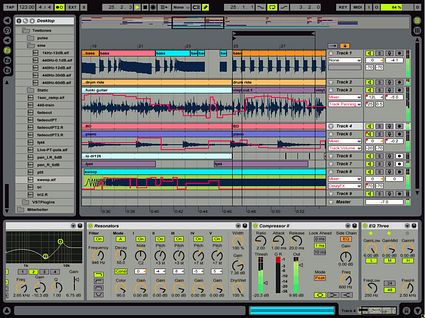
Here we have come to the most interesting part. The computer can change the very format of a DJ performance, erase the line between a live set and a DJ set. For the first time I saw this with my own eyes in Santiago de Chile during a performance by our friend Capri - a well-known Argentine musician and disc jockey. Ariel (as he is called on his passport) performs DJ sets with the help of the program Ableton Live. It turns out that, though not created precisely for this purpose, Ableton makes it easy and convenient to combine DJ material (compositions by other musicians) with his own, as well as with parts of them. Specially prepared loops, chord sequences, bass lines and even vocal phrases recorded specially for a particular mix finally wash away the line between a DJ set and a live performance. Naturally, Ableton Live also makes it easy to integrate MIDI (for controlling external devices) and controller-boxes specially adapted for this program.
So what does the future hold for us? Digital technology continues to develop, while the falling demand for vinyl not only makes its production more expensive but even threatens the further existence of the vinyl market. The large vinyl distributors, which had seemed unsinkable, complain of steadily falling sales (at the moment this material was being submitted, news came of the bankruptcy of the distributor Neuton). The legendary Richie Hawtin, who is a co-owner of the Beatport system, pursues such an aggressive commercial policy that even colleagues in the DJ trade accuse him of the deliberate murder of vinyl. Finally, criticism of the black slabs is heard from a completely unexpected quarter too: from environmental organisations. In particular, Greenpeace calls for the complete elimination of vinyl production and the use of its products in view of the obvious harmfulness of PVC (polyvinyl chloride) as such. The jazzmen with golden ears, having run into the discontinuation of magnetic tape production, have switched over to the Radar system and write high-bit files with a sampling rate of 192 kilohertz.
How I would love for vinyl to live forever! But now I am almost certain that it will not be long before parties with real vinyl come to be called nothing other than "oldschool revival" or "vinyl retro", and the international abbreviation "DJ" will mean only one thing: Digital Jockey.