Dancing at Stonehenge
Клубные российские · 23.01.2009
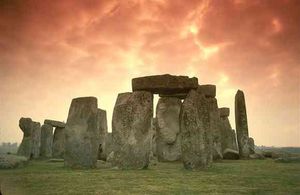
After studying the arrangement and surface of the stones of the well-known Neolithic structure Stonehenge, Professor Rupert Till from the University of Huddersfield (West Yorkshire, UK) concluded that the mysterious stone circle served as a dance arena for ancient people.
An expert in acoustics and musical technologies and also an amateur DJ, Till suggested that the vertically installed stone blocks of Stonehenge were ideally suited to enhance a repeating rhythm reminiscent of some types of modern trance music.
To confirm his guesses, the scientist conducted a series of sound experiments with a computer model of the ancient structure as it could have been before the destructions. However, the most interesting results were obtained after visiting a nearly concrete copy of Stonehenge erected as a war memorial by an American building engineer in the vicinity of Washington state. Acoustic analysis using special equipment and a computer showed that sounds originating from the center were well heard throughout the territory of the structure. Particularly impressive effects, such as echo overlay, occur when the tempo of the melody reaches 160 beats per minute. This is the rhythm of fast trance. It is likely that Stonehenge was a venue for ritual dances.
To date, there are many theories regarding the origin of one of the most mystical monuments in history, Stonehenge. According to the two most popular hypotheses, Stonehenge was a site where people were healed or buried. In both cases, certain rituals were presided over by a shaman from the center of the circle. However, it remains unclear how exactly these ceremonies were conducted: how people sang, danced, and performed rituals. Perhaps further research, including Professor Till's acoustic analysis, will help answer these questions.