Octex
Зарубежные
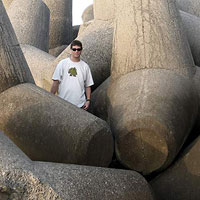
Octex (real name Jernej Marusic) hails from Slovenia. The musician began experimenting with electronics back in the nineties. Young Jernej set up a small laboratory in his bedroom, immersing himself in extracting warm trills from old analog synthesizers. This is where his alias comes from: Octex is an abbreviation for "Organic Crackle And Tone Experiments". In 2002, the promising young man caught the attention of the leading Slovenian techno artist Umek. Umek signed Jernej to his label Technika, where Octex debuted first with a twelve-inch record, followed by a full-length album "Idei Lahesna".
On the album, Octex managed to create a very distinctive atmosphere. He based his work on a delicate mix of techno and dub, which Moritz von Oswald (Maurizio) promoted at his label Basic Channel, but he played with the genre with a freedom typical of Southern Europeans. Marusic sometimes spices up his compositions with warm chords reminiscent of Detroit in the early nineties or early R&S label products, then he adds fog, allowing his resonant dub bass to crackle, stutter, and drown in a pool of digital noise and deep reverberations. He invokes thoughts of the German Pole and Detroit protégé Richie Hawtin, Dale Lawrence (Theorem).
The press responded with a chorus of admiration. "While techno became mechanical and detached, this music reveals as much soul as all the albums of Marvin Gaye combined," praised DJ Mag. "This guy wonderfully combines the legacy of two schools, Berlin and Detroit," echoed Wire.
Octex became a sought-after guest on many compilations – both DJ Mag and Wire included Marusic's tracks in their CD applications, and in 2005, one of the Slovenian's compositions was even released by the British giant Mute: a cover version of Kraftwerk's "Computer Love" appeared in the second volume of the compilation "Trans-Slovenia Express".
Jernej did not stop there – he tours Europe with concerts, performing in Berlin and London, records a remix for the famous compatriots Laibach, and even debuts as a video artist – the clip that Octex made for his composition "Emergon" aired on several European TV channels. In 2005, his second album "Variations" was released on the "rx-tx" label. The Slovenian moved towards a more experimental sound, mixing a significant amount of hip-hop and IDM into his audio cocktail, thereby gaining many new fans.